
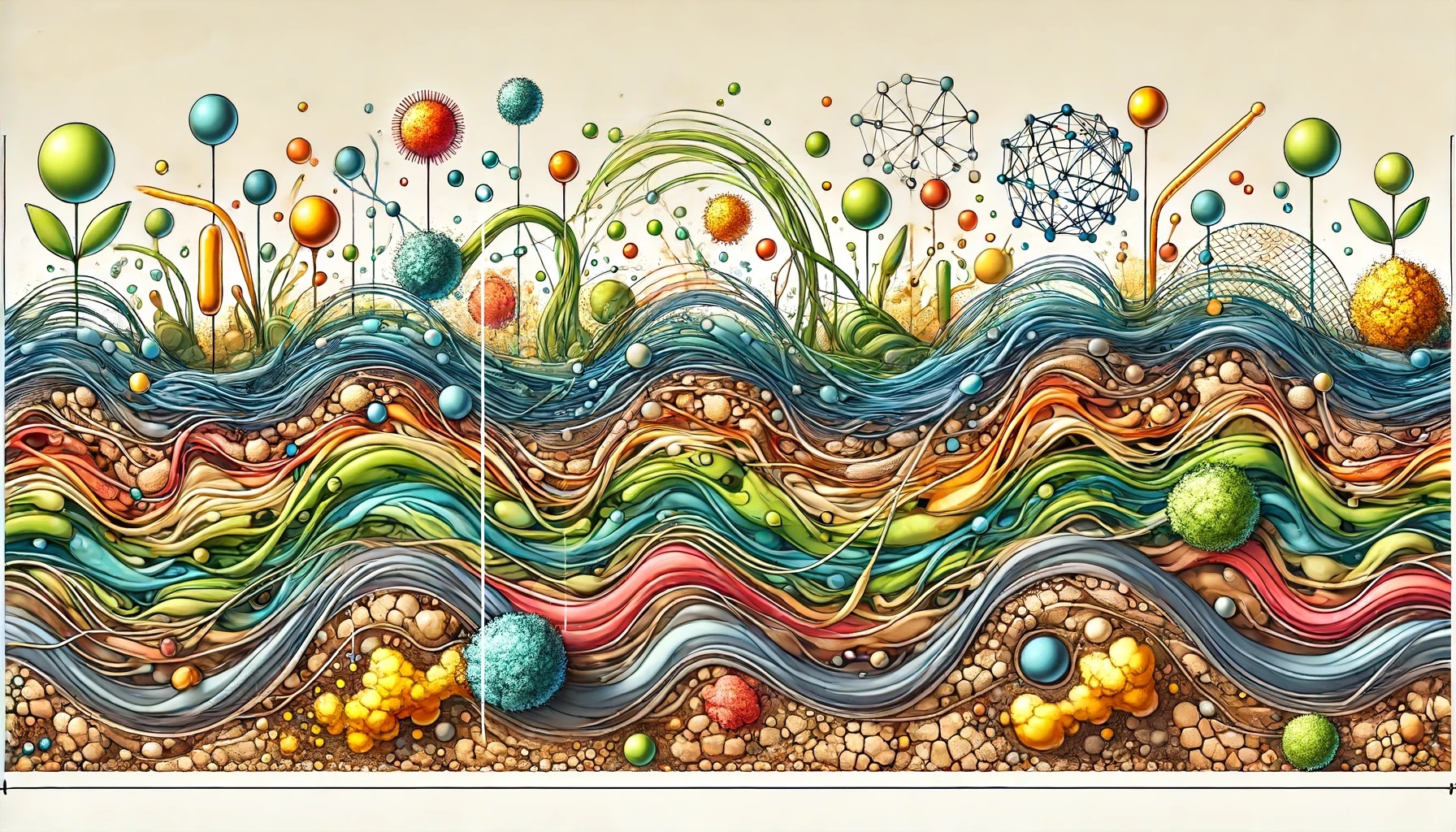

A recent study in Chemosphere explores how soil structure affects the cracking and cadmium (Cd) leaching behavior in biochar-amended fine-grained soils. The researchers, Yu Lu, Kai Gu, Xiang Wang, Zhengtao Shen, Chao-Sheng Tang, Bin Shi, and Qiyou Zhou, conducted semi-dynamic leaching tests on soil samples with varying dry densities and aggregate sizes, both with and without wetting-drying (W-D) cycles.
They discovered that soil structure significantly influences Cd leaching. Higher dry density and larger soil aggregates generally reduced the effective diffusion coefficient (De) of Cd by decreasing soil pore volume. BiocharBiochar is a carbon-rich material created from biomass decomposition in low-oxygen conditions. It has important applications in environmental remediation, soil improvement, agriculture, carbon sequestration, energy storage, and sustainable materials, promoting efficiency and reducing waste in various contexts while addressing climate change challenges. More played a crucial role in connecting isolated pores within large aggregates, initially increasing De but later decreasing it with higher biochar dosages due to the denser pore structure.
Biochar also effectively reduced soil cracking, with the highest reduction in surface crack ratio being 36.8%. However, W-D cycles increased De in samples with higher dry density due to aggravated soil cracking, suggesting preferential flow within the cracks.
This study highlights the need to consider soil structure and cracking potential when using biochar for in situ remediation of heavy metal-contaminated fine-grained soils. The findings emphasize that the effectiveness of biochar in immobilizing heavy metals like Cd depends significantly on soil structural properties, which must be carefully managed to optimize remediation outcomes.




Leave a Reply