

Key Takeaways
- Tobacco stem biocharBiochar is a carbon-rich material created from biomass decomposition in low-oxygen conditions. It has important applications in environmental remediation, soil improvement, agriculture, carbon sequestration, energy storage, and sustainable materials, promoting efficiency and reducing waste in various contexts while addressing climate change challenges. More completely eliminates a dangerous soil pathogen when processed at high temperatures.
- The processing temperature dictates whether the biochar uses free or non-free oxygen molecules to clean the soil.
- High-temperature biochar adds beneficial non-free radicals that create a more stable and complex soil ecosystem.
- Treated crops show a substantial drop in disease rates and maintain healthy growth equivalent to uninfected plants.
- The treatment helps the soil self-restructure by multiplying helpful microbes while shrinking populations of harmful bacteria.
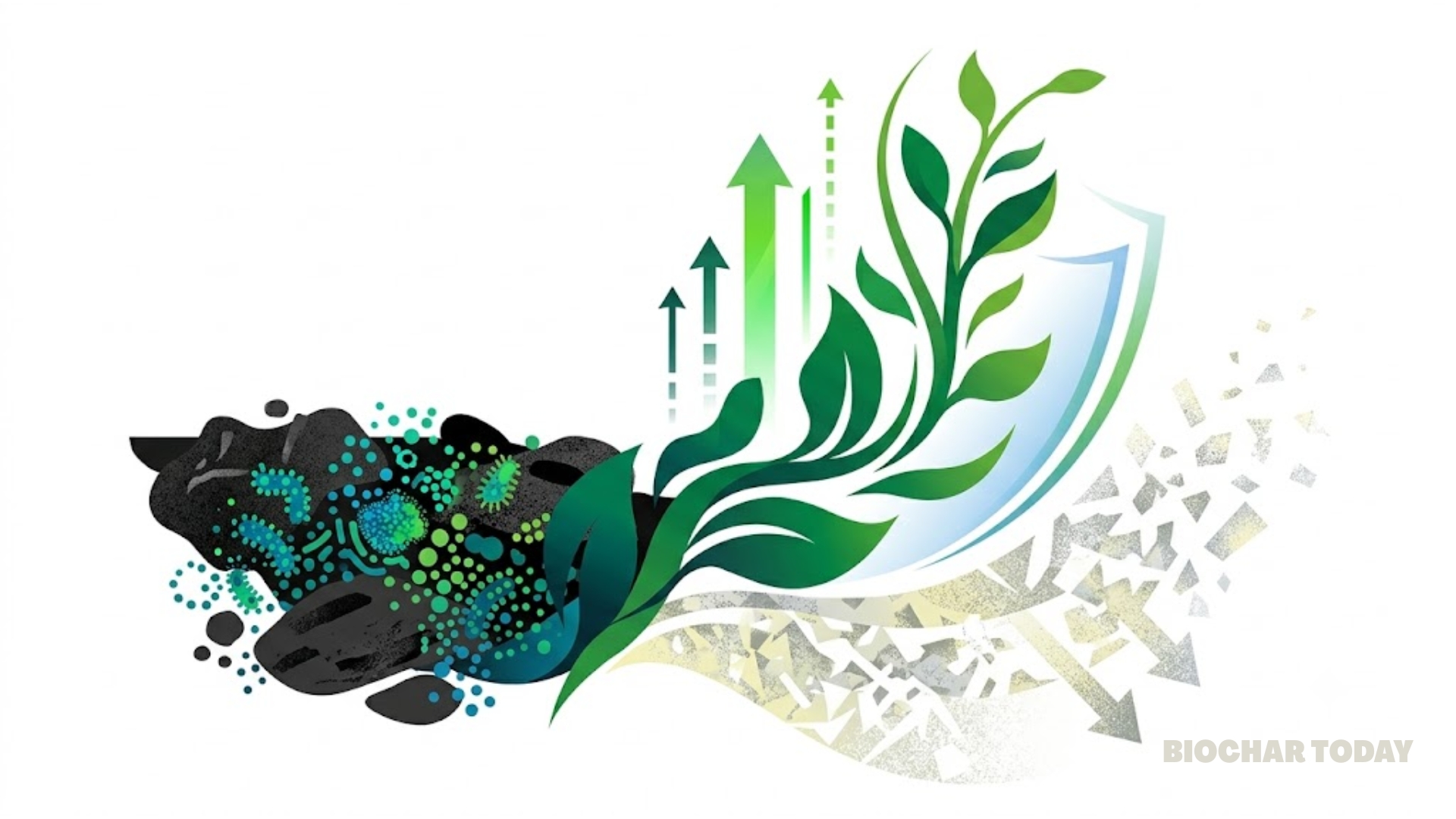
A recent study in Biochar by Meng Liu, Siqi Shen, Haiyang Qiao, Huiqiang Yang, Yaru Zhu, Yawei Zhou, and Hanzhong Jia demonstrates that tobacco stem biochar provides a highly effective, temperature-dependent solution for suppressing the devastating soil-borne plant pathogen known as Ralstonia solanacearum. Published in the journal Biochar, the investigation reveals that the thermal conversion of crop waste offers a direct, non-synthetic path to controlling agricultural disease. Crop diseases present an ongoing danger to international food security, and typical chemical remediation methods often wipe out critical microbial networks along with the target pathogens. This new research focuses heavily on the direct performance of biochar, showing that its inherent chemical components can selectively target harmful invaders without destabilizing the broader underground ecosystem. By mapping out how these organic materials interact directly with microscopic life, the researchers have uncovered an eco-friendly approach to crop protection that relies on precision chemistry rather than harsh, broad-spectrum industrial disinfectants.
The primary findings center around a natural defensive reaction triggered by the structural makeup of tobacco stem biochar. When this organic matter undergoes thermal processing, its high wood-fiber content aids in the formation of persistent free radicals. These stable configurations interact smoothly with surrounding oxygen to produce active oxygen molecules that place severe oxidative stress on invading organisms. The experiments prove that biochar processed at lower bands, specifically between 300 and 400 degrees Celsius, acts predominantly through free radical pathways to yield an inhibition rate between 92.91 percent and 99.60 percent. When the processing environment is raised to a window between 500 and 700 degrees Celsius, the material transitions to a non-free radical pathway dominated by hydrogen peroxide and singlet oxygen, achieving a perfect 100 percent elimination rate against the destructive pathogen. Testing under oxygen-free conditions caused a massive drop in performance, confirming that oxygen interaction drives the entire sterilization process.
Beyond merely destroying harmful organisms, the application of this processed tobacco stem waste completely reconfigures the living architecture of the surrounding soil. The inclusion of the material expands overall bacterial richness, adding a large number of unique biological connections that reinforce the underlying stability and complexity of the underground network. High-throughput genetic sequencing showed that the amendment intentionally suppresses disease-causing groups while expanding several highly beneficial, plant-friendly bacterial families. Useful strains like Cellvibrio, Rhizobium, Paracoccus, Fluviicola, and Pseudomonas grew by substantial margins, whereas harmful populations plummeted across the board. This targeted survival dynamic occurs because friendly soil bacteria naturally possess much higher baseline tolerances to oxidative stress, allowing them to thrive in an environment that quickly eliminates weaker pathogens.
When tested in living plant setups, the treated crops displayed total resistance to bacterial wilt, maintaining healthy physical development and green biomassBiomass is a complex biological organic or non-organic solid product derived from living or recently living organism and available naturally. Various types of wastes such as animal manure, waste paper, sludge and many industrial wastes are also treated as biomass because like natural biomass these More production identical to uninfected control groups. The biochar successfully arrested the typical root damage and internal oxidative decay associated with regular pathogen exposure, keeping the internal plant enzymes well-balanced. Crucially, the vital oxygen compounds generated by the biochar are not rapidly diluted or deactivated by complex natural soil blends, allowing them to exert lasting protective benefits over extended growing periods. These results offer a reliable, chemical-free path toward sustainable agricultural management, giving farmers a predictable tool to shield high-value crops from widespread biological decay while simultaneously preserving the long-term diversity of our global agricultural soils.
Source: Liu, M., Shen, S., Qiao, H., Yang, H., Zhu, Y., Zhou, Y., & Jia, H. (2026). Biochar modulates soil microbial communities via reactive oxygen species derived from its constituents. Biochar, 8(122), 1-13.



Leave a Reply