
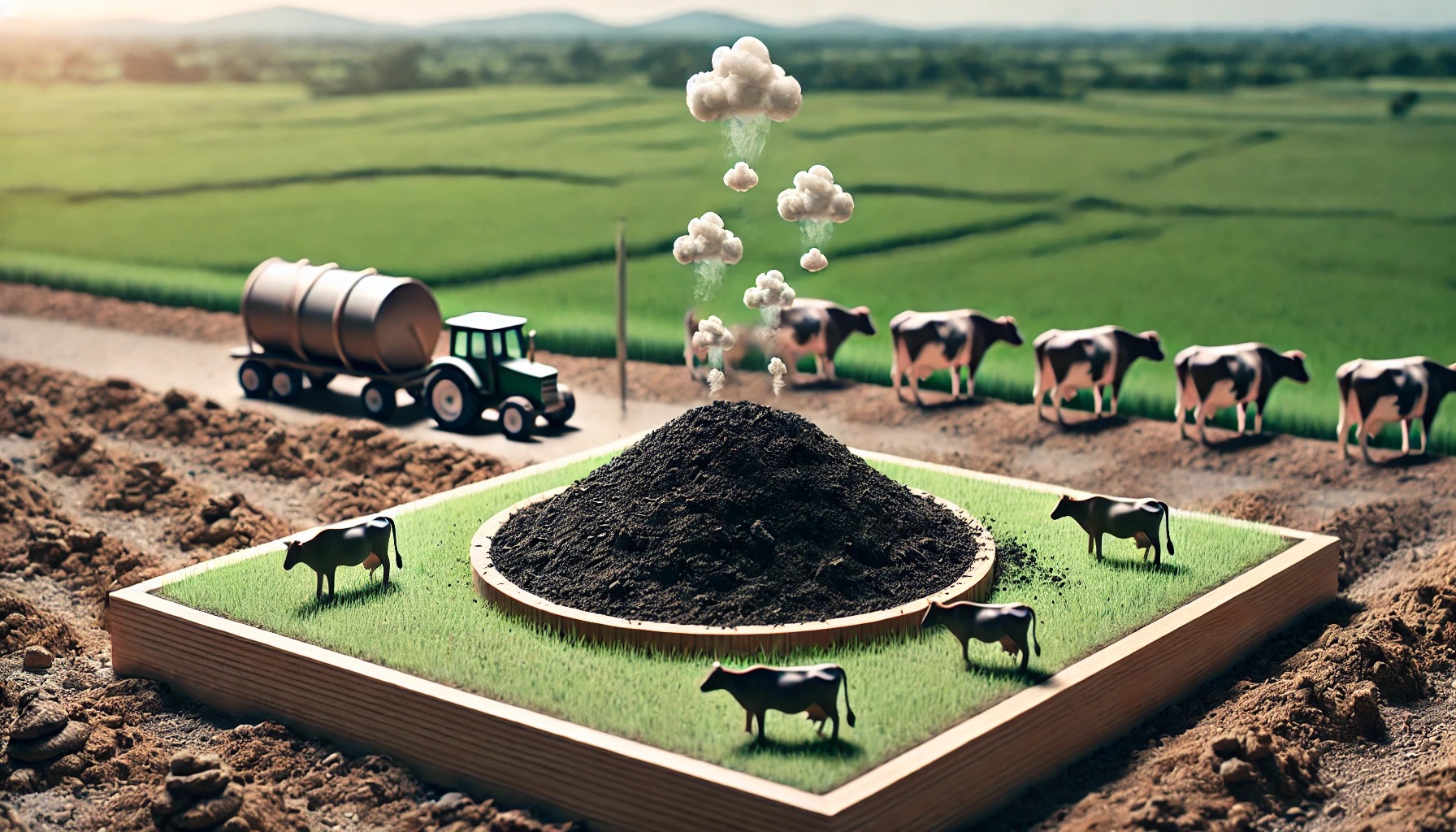

Livestock farming plays a crucial role in global agriculture but is a major contributor to environmental pollution, particularly through emissions from manure. These emissions include ammonia (NH3), hydrogen sulfide (H2S), greenhouse gases (GHGs)Greenhouse gases (GHGs) are gases in the atmosphere that trap heat, contributing to the warming of the planet. Carbon dioxide, methane, and nitrous oxide are examples of greenhouse gases. Biochar helps to mitigate the emission of GHGs through various mechanisms. More, and volatile organic compounds (VOCs), which pose challenges to air quality, climate, and health.
Biochar, a carbon-rich byproduct of biomassBiomass is a complex biological organic or non-organic solid product derived from living or recently living organism and available naturally. Various types of wastes such as animal manure, waste paper, sludge and many industrial wastes are also treated as biomass because like natural biomass these More pyrolysisPyrolysis is a thermochemical process that converts waste biomass into bio-char, bio-oil, and pyro-gas. It offers significant advantages in waste valorization, turning low-value materials into economically valuable resources. Its versatility allows for tailored products based on operational conditions, presenting itself as a cost-effective and efficient More, has emerged as a promising solution to mitigate these emissions. It has been studied for its ability to absorb gases, making it a potential manure treatment additive. The effectiveness of biochar, however, depends on factors like its source material, production conditions, application method, and dosage. For example, biochars derived from plant-based materials typically show better adsorption capabilities for organic compounds, while manure-based biochars offer high nutrient content.
Research has shown encouraging results, especially in laboratory trials, where biochar has significantly reduced NH3 and H2S emissions, as well as certain odorous VOCs. However, results for GHGs like methane (CH4) are mixed, with some studies reporting emission reductions and others noting increases. This variability highlights the need for further study, particularly on biochar’s long-term effects and its scalability to farm-level applications.
To fully harness biochar’s potential, there is a call for standardizing biochar properties for specific environmental applications. Additionally, combining biochar with other manure management strategies could improve the sustainability of livestock systems while enhancing manure’s value as a fertilizer.




Leave a Reply