
Mao, et al (2024) Assessment of the Effects of BiocharBiochar is a carbon-rich material created from biomass decomposition in low-oxygen conditions. It has important applications in environmental remediation, soil improvement, agriculture, carbon sequestration, energy storage, and sustainable materials, promoting efficiency and reducing waste in various contexts while addressing climate change challenges. More on the Physicochemical Properties of Saline–Alkali Soil Based on Meta-Analysis. Agronomy. https://doi.org/10.3390/agronomy14102431
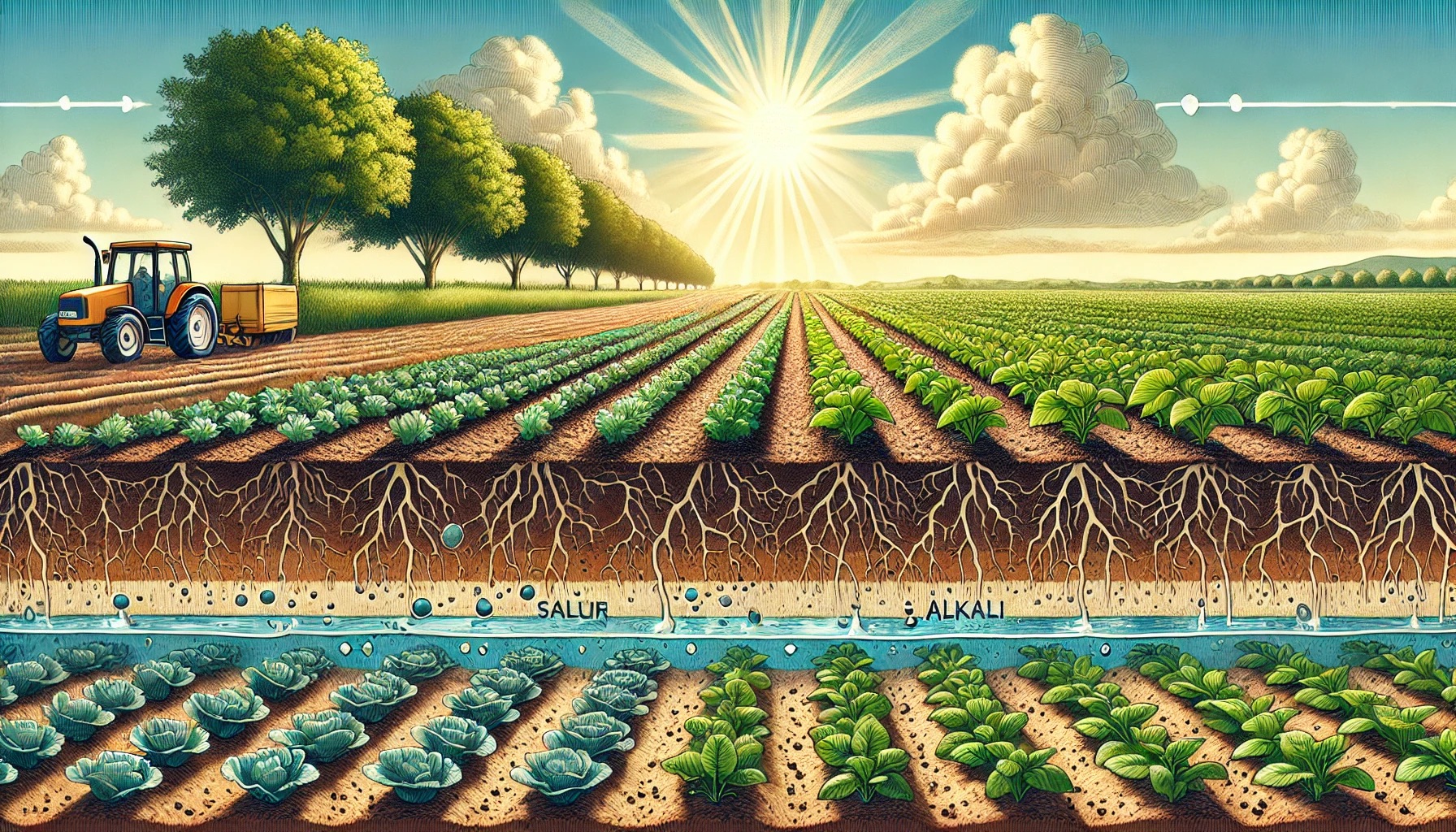
Soil salinization threatens 25% of global farmland, reducing crop yields and challenging agricultural sustainability. Recent research highlights biochar, a carbon-rich material made from organic waste, as a promising solution for restoring saline-alkali soils. A comprehensive meta-analysis of 137 studies has revealed biochar’s significant positive impact on the physical and chemical properties of these soils.
Biochar improves saline-alkali soils by enhancing cation exchange capacity (CEC) and total porosityPorosity of biochar is a key factor in its effectiveness as a soil amendment and its ability to retain water and nutrients. Biochar’s porosity is influenced by feedstock type and pyrolysis temperature, and it plays a crucial role in microbial activity and overall soil health. Biochar More, while lowering sodium adsorption ratios (SAR) and soil salinity levels. These changes help mitigate salt stress, support soil structure, and improve water retention. The analysis found that biochar pyrolyzed at 401–500°C was most effective, especially in water-deficient areas and mildly to moderately saline soils. Mixed biochar from multiple organic sources was identified as the most effective in enhancing soil quality, outperforming single-source biochar.
The study also emphasized that biochar’s properties, like pHpH is a measure of how acidic or alkaline a substance is. A pH of 7 is neutral, while lower pH values indicate acidity and higher values indicate alkalinity. Biochars are normally alkaline and can influence soil pH, often increasing it, which can be beneficial More and application rate, should be tailored to specific soil conditions. For example, neutral biochar (pH 6-8) applied at high rates (41-80 t/ha) showed the best results in low-salinity soils, while acidic biochar (pH ≤ 6) was more effective in highly saline environments.
In conclusion, biochar offers a viable, eco-friendly way to rehabilitate degraded soils, but long-term field studies are essential to fully understand its environmental effects and economic benefits.


![Eucalyptus Wood Waste-Derived Biochar Achieves a Ninety-Eight Percent Removal Efficiency for Benzo[ghi]perylene in Vehicle-Wash Wastewater](https://biochartoday.com/wp-content/uploads/2026/10/SCIENCE-BLOGS-2026-2026-10-19T160523.703.jpg)


Leave a Reply