
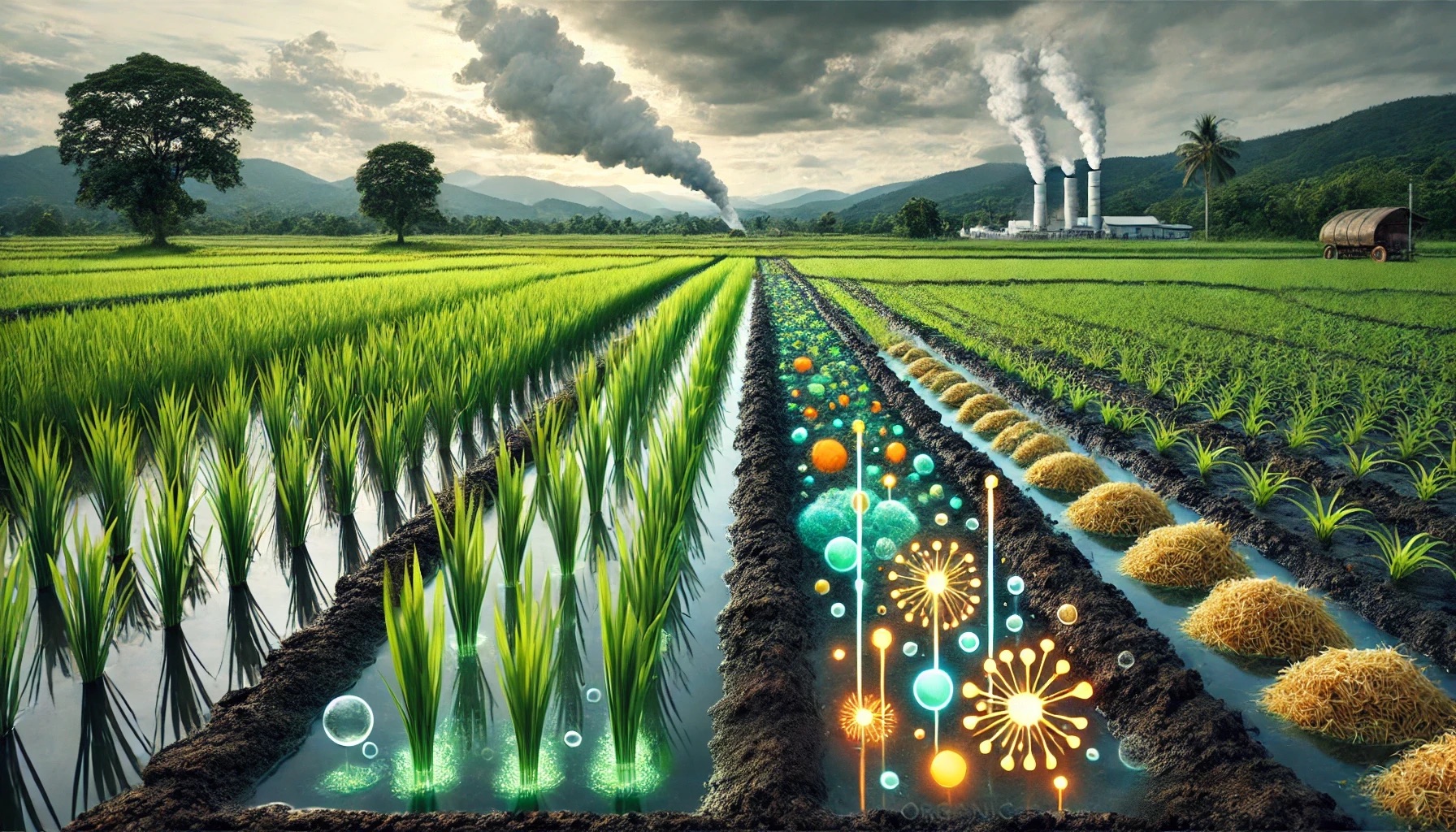
Xiao, et al (2024) Combined metabolomic and microbial community analyses reveal that biocharBiochar is a carbon-rich material created from biomass decomposition in low-oxygen conditions. It has important applications in environmental remediation, soil improvement, agriculture, carbon sequestration, energy storage, and sustainable materials, promoting efficiency and reducing waste in various contexts while addressing climate change challenges. More and organic manure alter soil C-N metabolism and greenhouse gas emissions. Environment International. https://doi.org/10.1016/j.envint.2024.109028
Recent research has explored how biochar (BC) and organic manure (OM) impact soil carbon and nitrogen metabolism, along with greenhouse gas (GHG) emissions, particularly carbon dioxide (CO2), methane (CH4), and nitrous oxide (N2O). Biochar and organic manure amendments were compared using advanced microbial community and soil metabolomic analyses.
Results showed that BC and OM influence GHG emissions in opposing ways. BC significantly reduced CO2 and N2O emissions while increasing CH4 emissions. In contrast, OM increased CO2 and N2O emissions. The combined use of BC and OM also led to higher CH4 emissions, potentially due to the enhanced activity of methanogenic and denitrifying bacteria, which are stimulated by these soil amendments.
Biochar appeared to favor the growth of methanogens (Methanobacterium and Methanocella), which increased CH4 emissions, while reducing N2O through the enhanced abundance of the nosZ gene responsible for converting N2O to nitrogen gas. Conversely, OM increased the abundance of methanogens like Caldicoprobacter and denitrifying bacteria such as Acinetobacter, further enhancing N2O and CH4 emissions.
This study highlights the complex interplay between soil amendments, microbial communities, and GHG emissions. While biochar reduces certain emissions like CO2 and N2O, its use may increase CH4 emissions, necessitating further research to optimize its use in sustainable agriculture.




Leave a Reply