
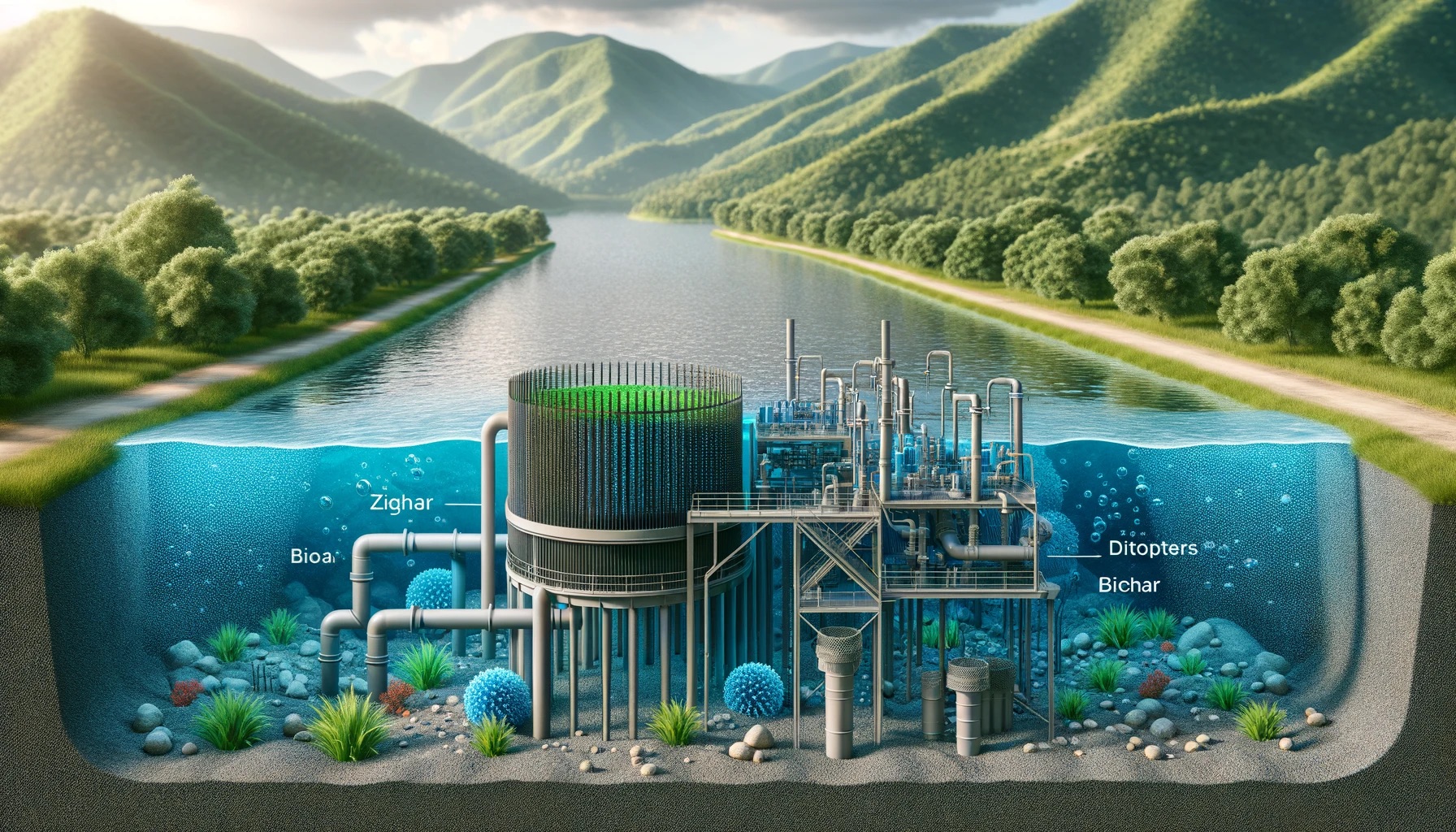
Mankomal, et al (2024) Sustainable removal of organic pollutants using biocharBiochar is a carbon-rich material created from biomass decomposition in low-oxygen conditions. It has important applications in environmental remediation, soil improvement, agriculture, carbon sequestration, energy storage, and sustainable materials, promoting efficiency and reducing waste in various contexts while addressing climate change challenges. More based ZnO composites: Experimental and theoretical studies of remediation process. Surfaces and Interfaces. https://doi.org/10.1016/j.surfin.2024.104399
Emerging pollutants, including endocrine-disrupting chemicals (EDCs), pose significant threats to human health and aquatic ecosystems. Traditional water treatment methods often fall short in terms of cost-effectiveness and efficiency. Recent research has focused on using biochar combined with metal oxide nanoparticles, particularly zinc oxide (ZnO), to enhance pollutant removal capabilities.
In a study published in the June 2024 issue of Surfaces and Interfaces, researchers Mankomal, Harpreet Kaur, and Tanmoy Roy investigated the efficacy of ZnO-biochar composites in removing three organic pollutants: phenol, dibutyl phthalate, and gallic acid. The study synthesized two types of biochar materials using metal oxide nanoparticles in various ratios, characterized by advanced techniques including XRD, FTIR, XPS, and SEM.
The composites demonstrated impressive removal efficiencies, with rates of up to 91.6% for phenol, 84% for dibutyl phthalate, and 95% for gallic acid. Key findings indicated that the band gap reduction from 3.1 eV to as low as 2.5 eV played a crucial role in enhancing photocatalytic activity. This reduction was attributed to the formation of Zn-O-C bonds in the composites.
Furthermore, density functional theory (DFT) calculations provided insights into the adsorption mechanisms, confirming the empirical results. The study highlights the importance of functional groups on the biochar surface, which enhance adsorption through hydrogen bonding, π-π interactions, and electrostatic forces.
This research underscores the potential of ZnO-biochar composites as a sustainable solution for water remediation, offering a dual mechanism of photocatalysis and adsorption for effective pollutant removal. Future studies will continue to optimize these materials for broader environmental applications.




Leave a Reply