


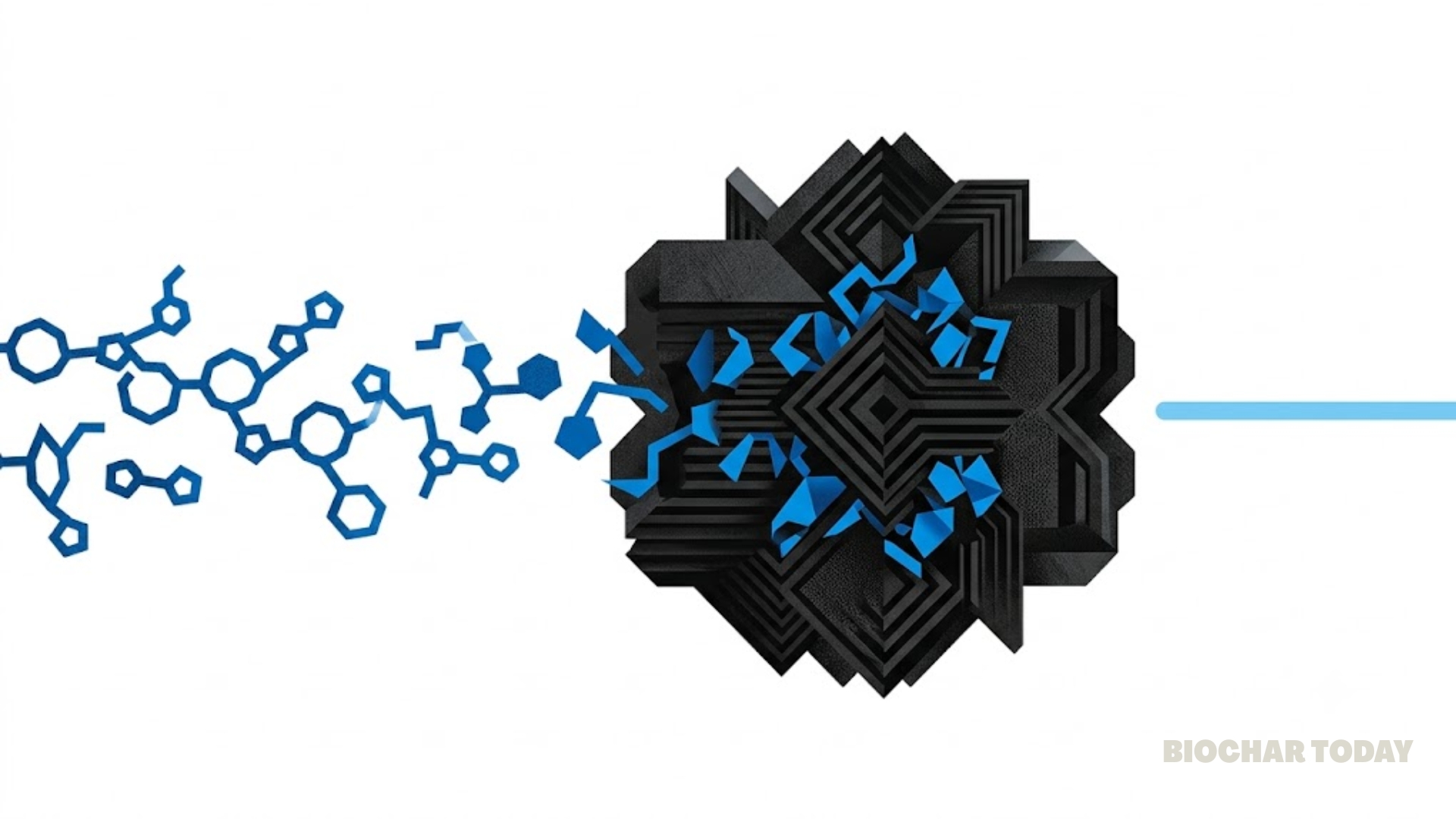
In the pursuit of cost-effective and sustainable wastewater treatment, a groundbreaking study has emerged, focusing on the photocatalytic degradation of 2,6-dichlorophenol (2,6-DCP). The research introduces a novel Fe/Zn@biochar nanocomposite that not only adsorbs 2,6-DCP efficiently but also facilitates its degradation through photocatalysis. The adsorption energy of Fe/Zn@biochar, calculated at -21.858 kJ/mol, highlights its efficacy in capturing 2,6-DCP molecules.
To optimize the complex operational factors influencing 2,6-DCP photodegradation, the study introduces an Artificial Neural Network (ANN) model. With a 4-10-1 topology, the ANN accurately predicts 2,6-DCP removal efficiency with an R2 of 0.967. The optimized conditions, derived from the ANN model, demonstrate over 90% elimination of 2,6-DCP at an initial concentration of 130 mg/L within approximately 4 hours. Remarkably, this optimized approach reduces the photocatalytic treatment cost by 15.6%, providing a practical and cost-effective solution for petrochemical wastewater treatment.
The study underscores the urgency of addressing the environmental impact of 2,6-DCP, a compound known for its toxicity and potential carcinogenicity. Traditional wastewater treatment methods face challenges, and the novel Fe/Zn@biochar nanocomposite, coupled with ANN optimization, presents a promising avenue to overcome these hurdles.
By integrating Fe/Zn@biochar into photocatalysts and leveraging artificial intelligence for operational optimization, this research not only pioneers a new frontier in wastewater treatment but also opens doors to enhanced techno-economic viability. The study’s objectives span from nanocomposite preparation and 2,6-DCP degradation pathways illustration to the application of ANN-optimized conditions, collectively contributing to a sustainable and efficient solution for the treatment of 2,6-DCP-rich petrochemical wastewater.



Leave a Reply