
Mansour, et al (2025) Activated carbonActivated carbon is a form of carbon that has been processed to create a vast network of tiny pores, increasing its surface area significantly. This extensive surface area makes activated carbon exceptionally effective at trapping and holding impurities, like a molecular sponge. It is commonly More and biocharBiochar is a carbon-rich material created from biomass decomposition in low-oxygen conditions. It has important applications in environmental remediation, soil improvement, agriculture, carbon sequestration, energy storage, and sustainable materials, promoting efficiency and reducing waste in various contexts while addressing climate change challenges. More prepared from date palm fiber as adsorbents of phosphorus from wastewater. Desalination and Water Treatment. https://doi.org/10.1016/j.dwt.2024.100925
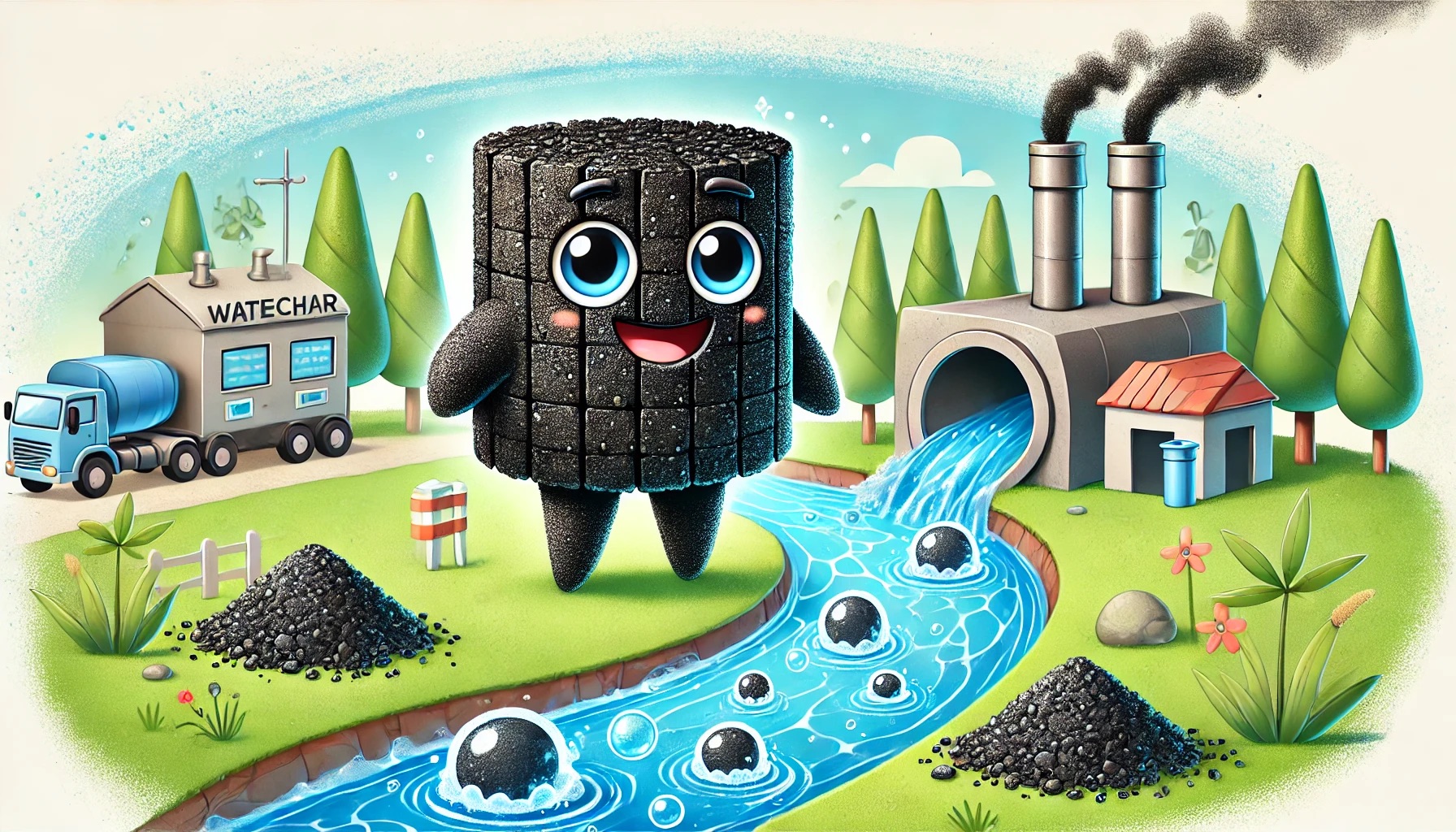
Efficient wastewater treatment is critical for water conservation and environmental protection. A recent study explored using biochar and chemically activated biochar (CAB) made from date palm fiber to remove phosphorus from wastewater. Excess phosphorus contributes to water pollution and eutrophication, making its removal a priority.
The study prepared four treatment media: CAB, CAB mixed with sand, biochar mixed with sand, and plain biochar. These were tested at a pilot plant in Egypt under controlled hydraulic conditions. Phosphorus removal efficiency varied, with CAB performing best (81-91% removal), followed by CAB with sand (68-86%), biochar with sand (71-85%), and biochar alone (59-83%). Even during simulated flooding conditions, all media maintained consistent performance.
Biochar and CAB differ primarily in surface properties. CAB, produced using chemical activation with phosphoric acid, had higher surface area and porosityPorosity of biochar is a key factor in its effectiveness as a soil amendment and its ability to retain water and nutrients. Biochar’s porosity is influenced by feedstock type and pyrolysis temperature, and it plays a crucial role in microbial activity and overall soil health. Biochar More, enhancing its adsorption capabilities. When mixed with sand, the media’s performance was slightly reduced due to dilution of active components but still showed resilience under stress.
This research highlights the potential of using agricultural waste for sustainable wastewater treatment. Biochar technologies could address water pollution while offering a cost-effective, environmentally friendly alternative. Future studies should focus on large-scale applications and long-term stability to ensure reliability in diverse conditions.



Leave a Reply