
Ahmad, A. A. (2024) The Impact of Pelletized BiocharBiochar is a carbon-rich material created from biomass decomposition in low-oxygen conditions. It has important applications in environmental remediation, soil improvement, agriculture, carbon sequestration, energy storage, and sustainable materials, promoting efficiency and reducing waste in various contexts while addressing climate change challenges. More Soil Application on Sweetcorn Growth and Productivity. Malaysian Journal of Soil Science. https://msss.com.my/mjss/Full%20Text/vol28/V28_40.pdf
A recent study explored whether compressing biochar into pellets affects its effectiveness as a soil amendmentA soil amendment is any material added to the soil to enhance its physical or chemical properties, improving its suitability for plant growth. Biochar is considered a soil amendment as it can improve soil structure, water retention, nutrient availability, and microbial activity. More. Biochar, a carbon-rich material derived from biomassBiomass is a complex biological organic or non-organic solid product derived from living or recently living organism and available naturally. Various types of wastes such as animal manure, waste paper, sludge and many industrial wastes are also treated as biomass because like natural biomass these More, improves soil health, recycles agricultural waste, and stores carbon. However, its fine, dusty nature poses health risks during application, prompting researchers to examine pelletization as a solution.
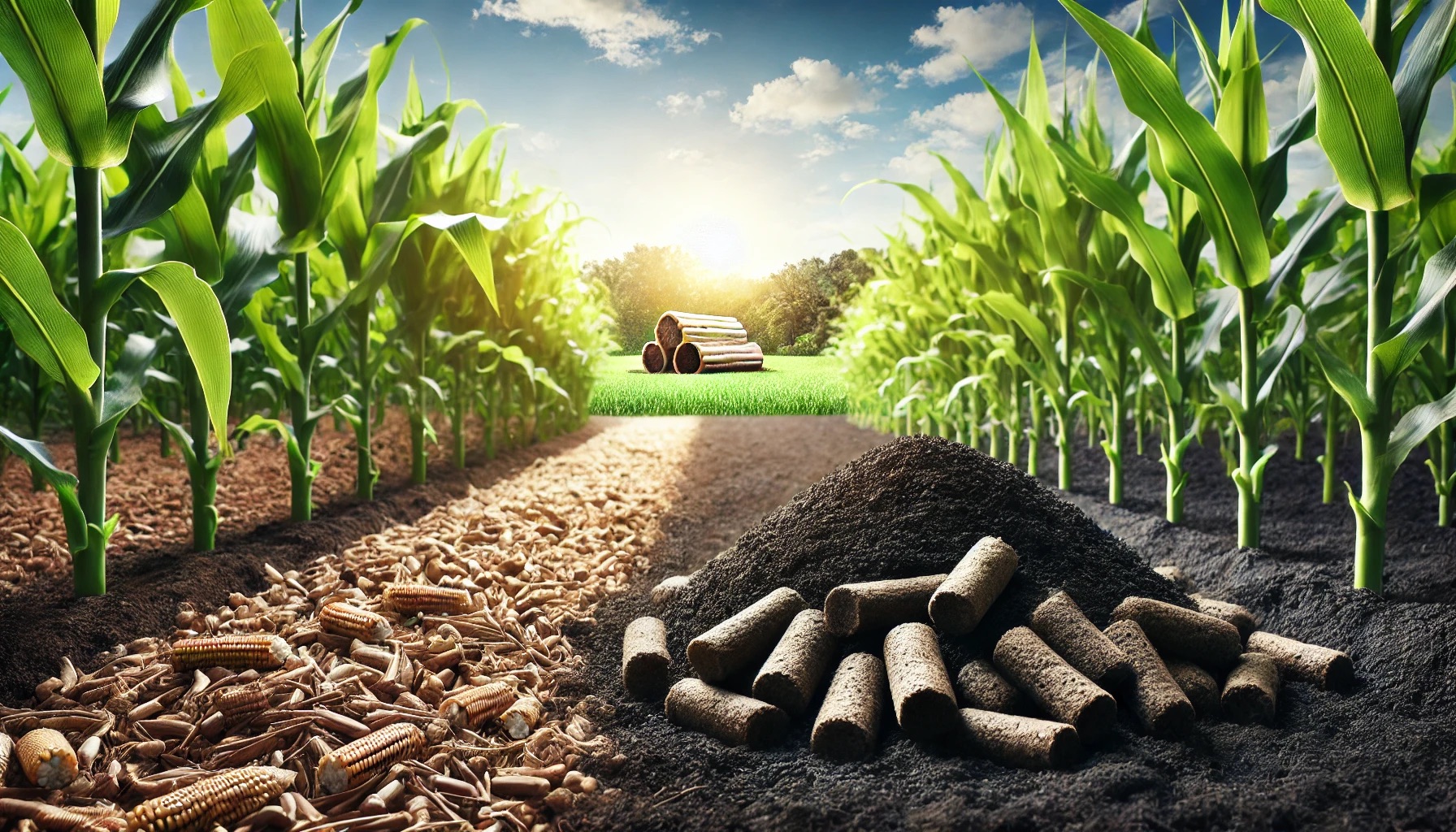
The study, conducted on sweetcorn crops in Malaysia, compared pelletized and unpelletized biochar derived from bamboo and rice husk. Five treatments were applied: unpelletized bamboo biochar, pelletized bamboo biochar, unpelletized rice husk biochar, pelletized rice husk biochar, and a control group without biochar. Researchers analyzed soil chemical properties, plant growth, photosynthetic rates, and crop yields over 63 days.
Results revealed no significant differences in soil or plant performance between pelletized and unpelletized biochar. Both forms maintained similar levels of nutrient retention, photosynthetic activity, and crop yields. The study suggests that pelletizing biochar mitigates health hazards without compromising its agricultural benefits. Additionally, biochar application increased soil carbon content, highlighting its potential for carbon sequestration.
Despite the findings, researchers noted that the short study duration might have limited biochar’s measurable impact on soil and crop outcomes. Long-term studies are recommended to fully understand pelletized biochar’s effects.
This research supports pelletized biochar as a safer, equally effective alternative to traditional biochar, offering a practical solution for sustainable agriculture.





Leave a Reply