
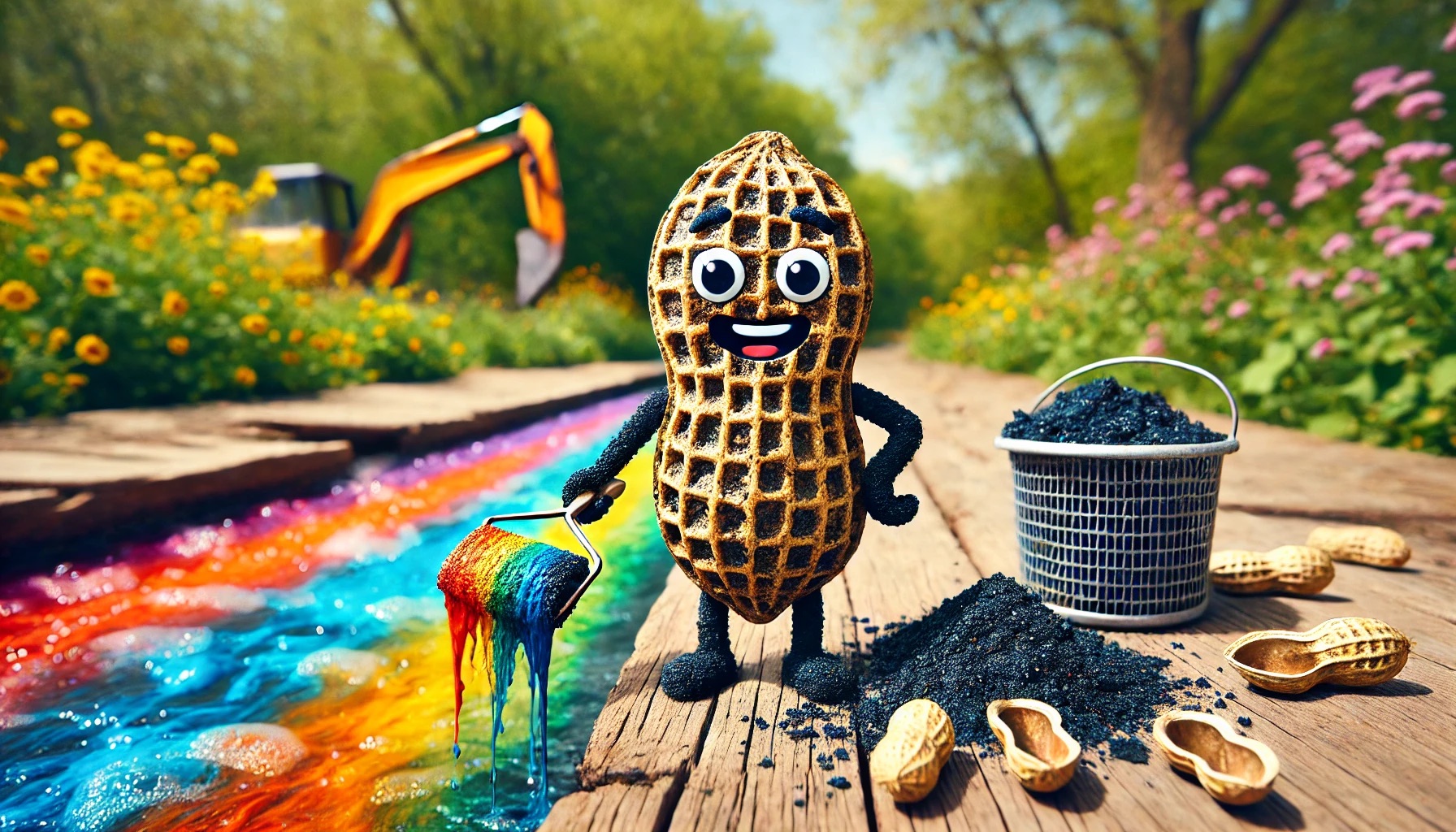

Peanut shells—yes, the things we toss aside after eating peanuts—are proving unexpectedly useful in cleaning up industrial wastewater. Researchers have found that biochar made from peanut shells can effectively remove Rhodamine B (RhB), a toxic dye often used in textiles, from water. With a surface area of 351.11 m² per gram, peanut shell biochar (PSB) provides numerous active sites for capturing the dye molecules. In trials, it removed up to 94% of RhB at a low pHpH is a measure of how acidic or alkaline a substance is. A pH of 7 is neutral, while lower pH values indicate acidity and higher values indicate alkalinity. Biochars are normally alkaline and can influence soil pH, often increasing it, which can be beneficial More of 3, making it a promising low-cost solution for industrial dye pollution.
The biochar is not only efficient but also reusable. After regenerating the biochar, it could still remove the dye, although its effectiveness decreased slightly after the third cycle. Researchers found that PSB’s adsorption process was spontaneous and worked best at temperatures lower than room temperature, making it energy-efficient too.
What’s interesting is that using peanut shells for this purpose addresses both environmental and financial concerns. Normally, these shells are just waste—about 1.6-1.9 million tons of them are produced annually—but converting them into biochar transforms this agricultural by-product into a tool for sustainable waste management. While further studies are needed, peanut shell biochar offers a cost-effective and eco-friendly alternative to more expensive, energy-intensive dye removal methods. Who knew peanuts could help us clean up our act?



Leave a Reply