
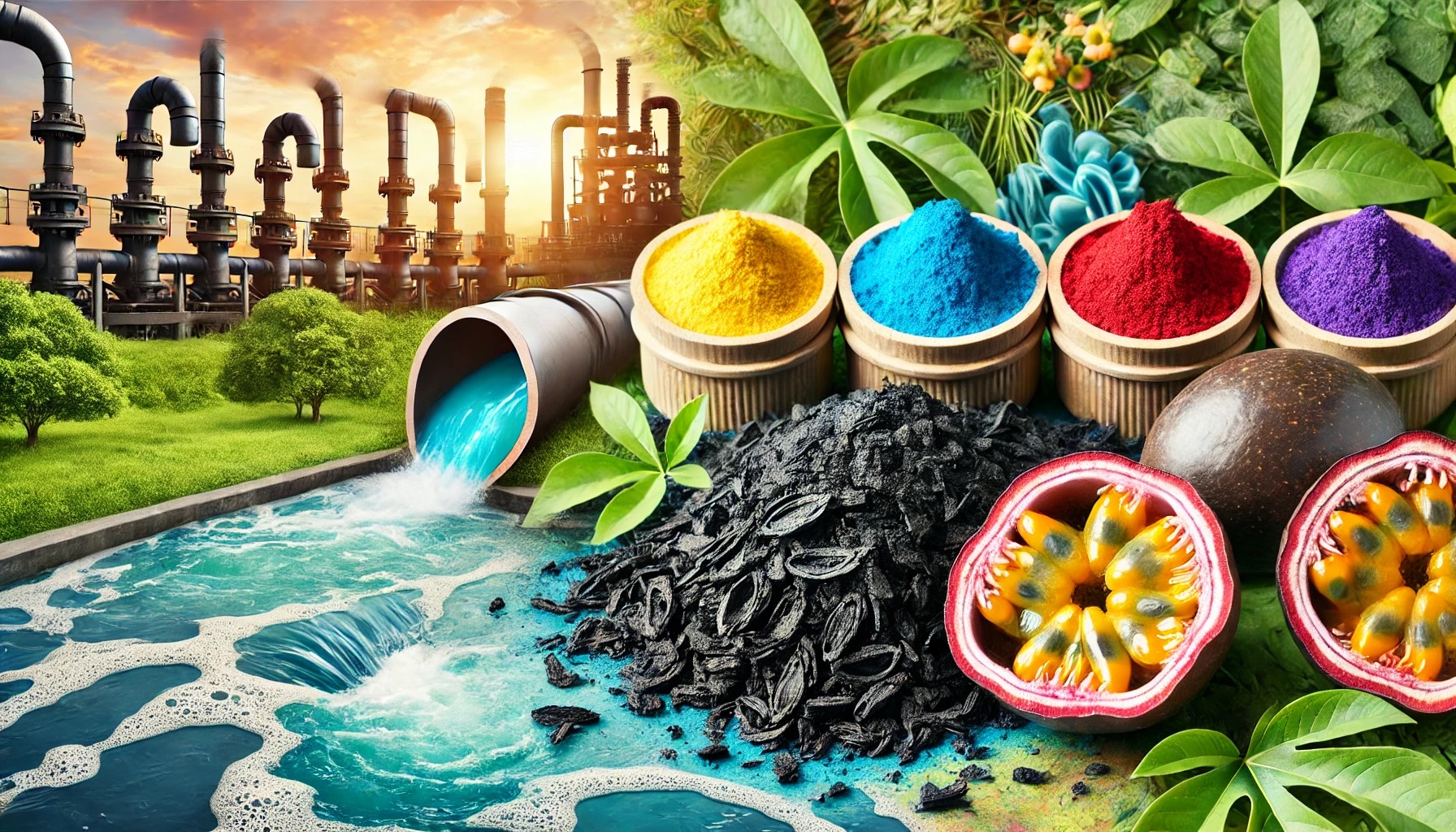

A recent study explored the potential of passion fruit peel biochar (PFPB) as a cost-effective adsorbent for removing synthetic food dyes from wastewater. The research focused on three common food dyes: indigotine blue (IB), tartrazine yellow (TY), and ponceau 4R (P4R), which are widely used in the food industry but can be harmful to ecosystems and human health when released into the environment.
PFPB was tested in both single and ternary systems to assess its adsorption efficiency. In single systems, it removed 99.6% of IB, 60.2% of TY, and 51.8% of P4R from synthetic wastewater. The study also examined how the dyes interact in ternary systems, where mixed dye adsorption sometimes showed reduced efficiency due to antagonistic effects.
The adsorption process was optimized using response surface methodology (RSM), revealing that PFPB performs best at low pHpH is a measure of how acidic or alkaline a substance is. A pH of 7 is neutral, while lower pH values indicate acidity and higher values indicate alkalinity. Biochars are normally alkaline and can influence soil pH, often increasing it, which can be beneficial More (around 2.0). Kinetic and thermodynamic analyses suggested that electrostatic interactions, hydrogen bonding, and covalent bonding were key mechanisms driving the adsorption.
Given its high efficiency and low cost, PFPB presents a promising alternative to commercial activated carbonActivated carbon is a form of carbon that has been processed to create a vast network of tiny pores, increasing its surface area significantly. This extensive surface area makes activated carbon exceptionally effective at trapping and holding impurities, like a molecular sponge. It is commonly More for food dye removal. This study demonstrates the potential of agro-industrial waste like passion fruit peel to offer sustainable solutions for addressing wastewater pollution in the food industry.

Leave a Reply