
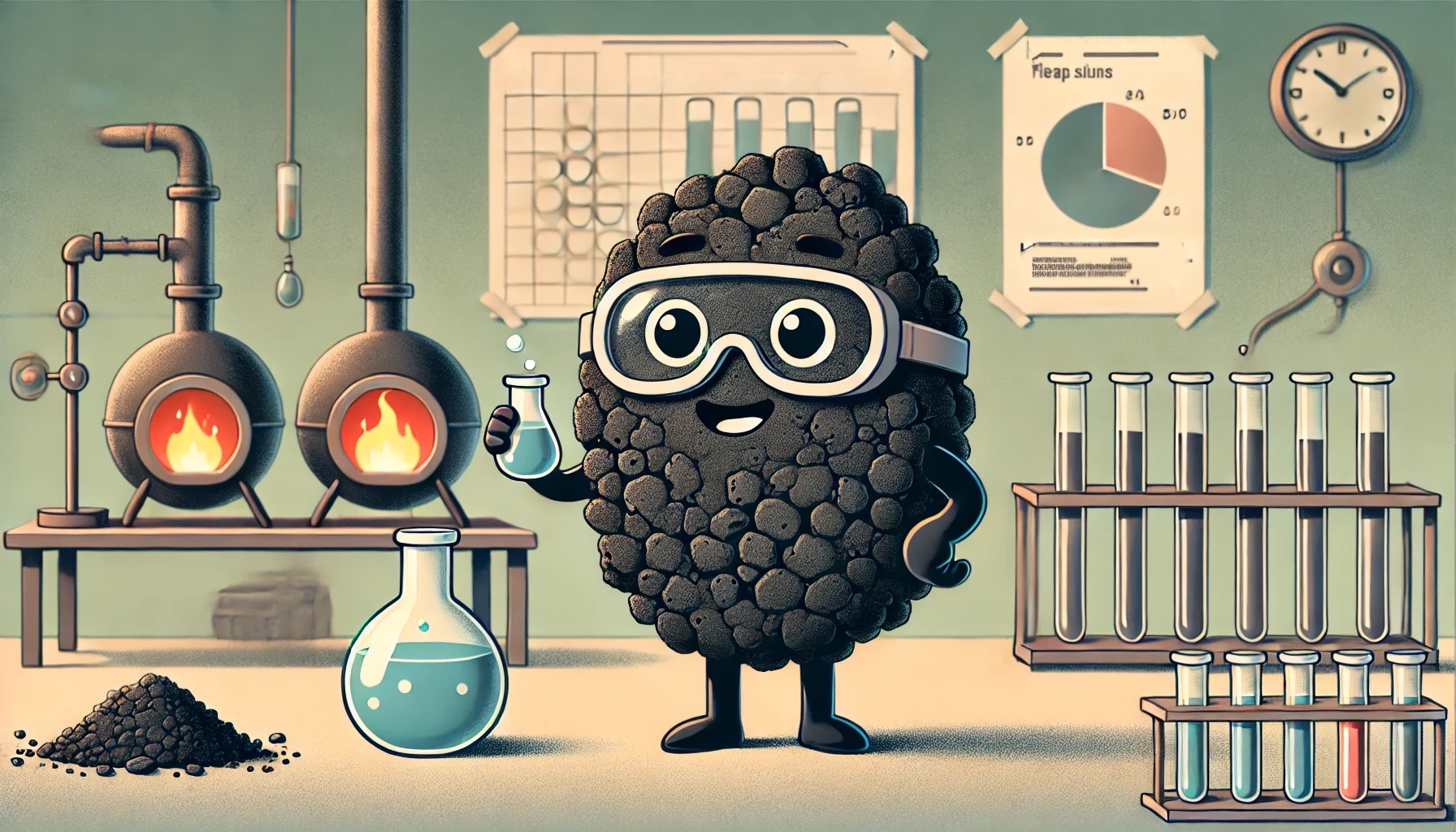

Biochar produced from algae, specifically Oedogonium sp., has shown promise in removing heavy metals from water. A recent study investigated how the pyrolysis time, or the duration of heating the biomass to form biochar, influences its effectiveness at removing contaminants like cobalt, nickel, copper, zinc, and cadmium from water.
Researchers tested three pyrolysis times: 20, 40, and 60 minutes at a constant temperature of 600°C. Among these, biochar produced after 40 minutes (Oed-40) demonstrated the highest adsorption capacity for all tested heavy metals. This was attributed to its larger surface area, higher pore volume, and the presence of functional groups that are beneficial for heavy metal adsorption.
The study found that while all biochars performed well at lower metal concentrations, Oed-40 outperformed the others at higher concentrations. The adsorption process followed the Langmuir isotherm model, indicating monolayer adsorption on a surface with homogeneous active sites. Kinetics data further showed that the process is best described by the pseudo-second-order model, suggesting that chemical interactions were involved.
The results suggest that optimizing pyrolysis time is crucial for maximizing biochar’s efficiency in environmental applications, such as water purification. The findings also highlight the potential for using algae-based biochars as a low-cost and effective alternative to traditional adsorbents.


Leave a Reply