
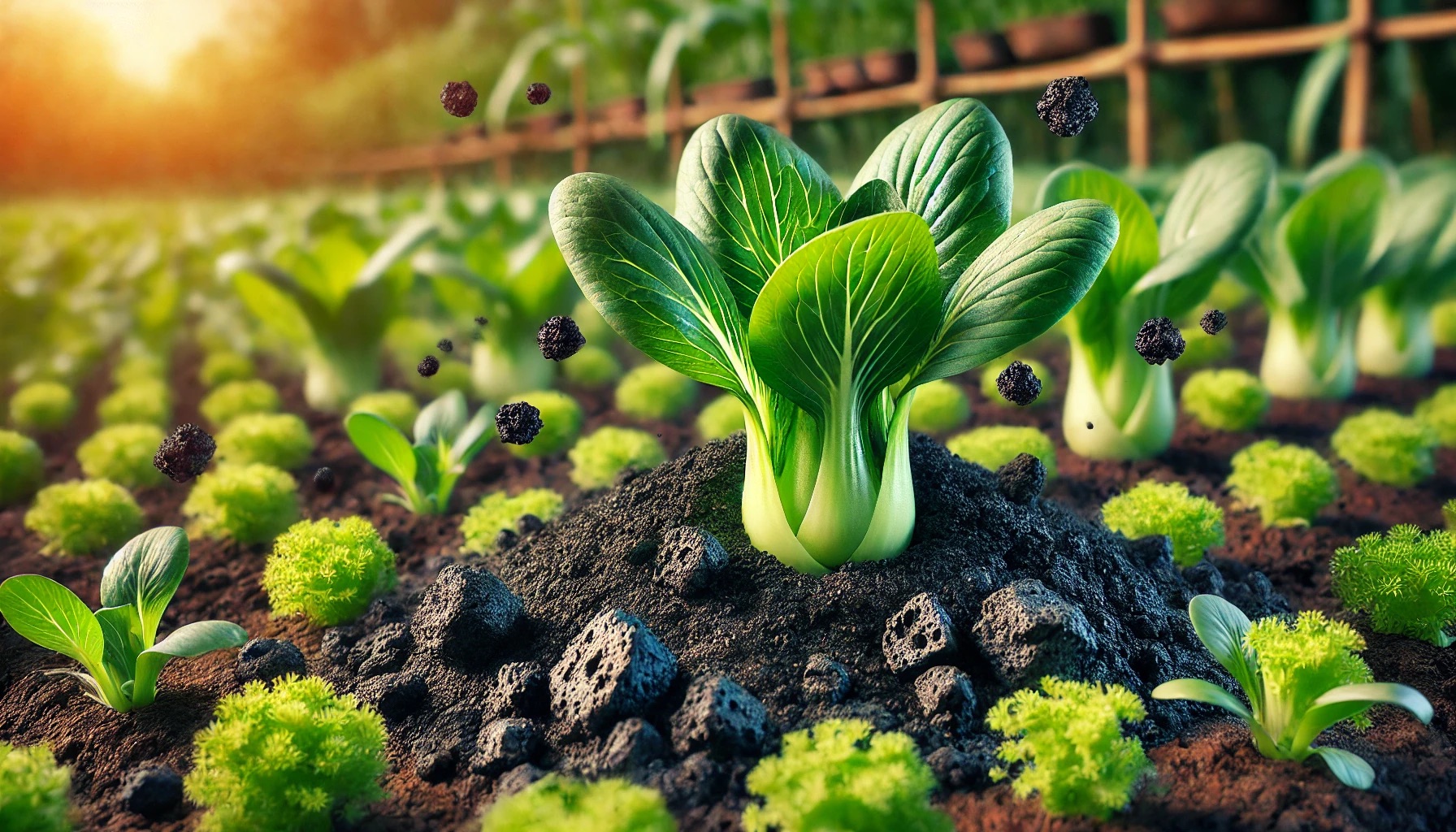

A recent study in Industrial Crops and Products explores the development of biochar-integrated coated fertilizers to enhance nutrient efficiency and reduce environmental impact. The research tested three designs where biochar was placed either within the coating, on the outer surface, or inside the fertilizer capsule. Among these, fertilizers with biochar integrated into the capsule’s core (BCin/PVA/ST-SRF) demonstrated superior performance.
The BCin formulation reduced nitrogen and phosphorus leachingLeaching is the process where nutrients are dissolved and carried away from the soil by water. This can lead to nutrient depletion and environmental pollution. Biochar can help reduce leaching by improving nutrient retention in the soil. More by 71.54% and 44.19%, respectively, outperforming commercial fertilizers. This slow-release effect was attributed to Fickian diffusion, where biochar acts as a nutrient barrier. The coating, made from polyvinyl alcohol (PVA) and starch, provided additional benefits, including durability and biodegradability.
In pot trials with bok choy, BCin/PVA/ST-SRF enhanced nutrient uptake and plant growth, improving nitrogen use efficiency by 84.91%. This formulation not only boosted agricultural productivity but also demonstrated economic scalability for large-scale production.
The study highlights the promise of biochar-based fertilizers in addressing environmental concerns such as nutrient leaching and soil degradation. By combining biochar’s nutrient retention capabilities with innovative coating materials, these fertilizers offer a cost-effective solution for sustainable agriculture.
This research underscores the importance of continued exploration into biochar applications to support global food security while mitigating environmental impacts.




Leave a Reply