
Agilandeswari, et al (2024) Synthesis and functional mechanism evaluation of Novel Polymer-Graphene Oxide-Biochar Nanocomposite for Efficient Removal of Diethyl Phthalate. Environmental Research. https://doi.org/10.1016/j.envres.2024.120032
A recent study published in Environmental Research presents a novel nanocomposite designed to remove diethyl phthalate (DEP) from water. DEP is a phthalate, a group of chemicals known for their harmful endocrine-disrupting effects, widely used in plastic products and personal care items. Their improper disposal leads to contamination of water bodies, posing risks to both human health and the environment.
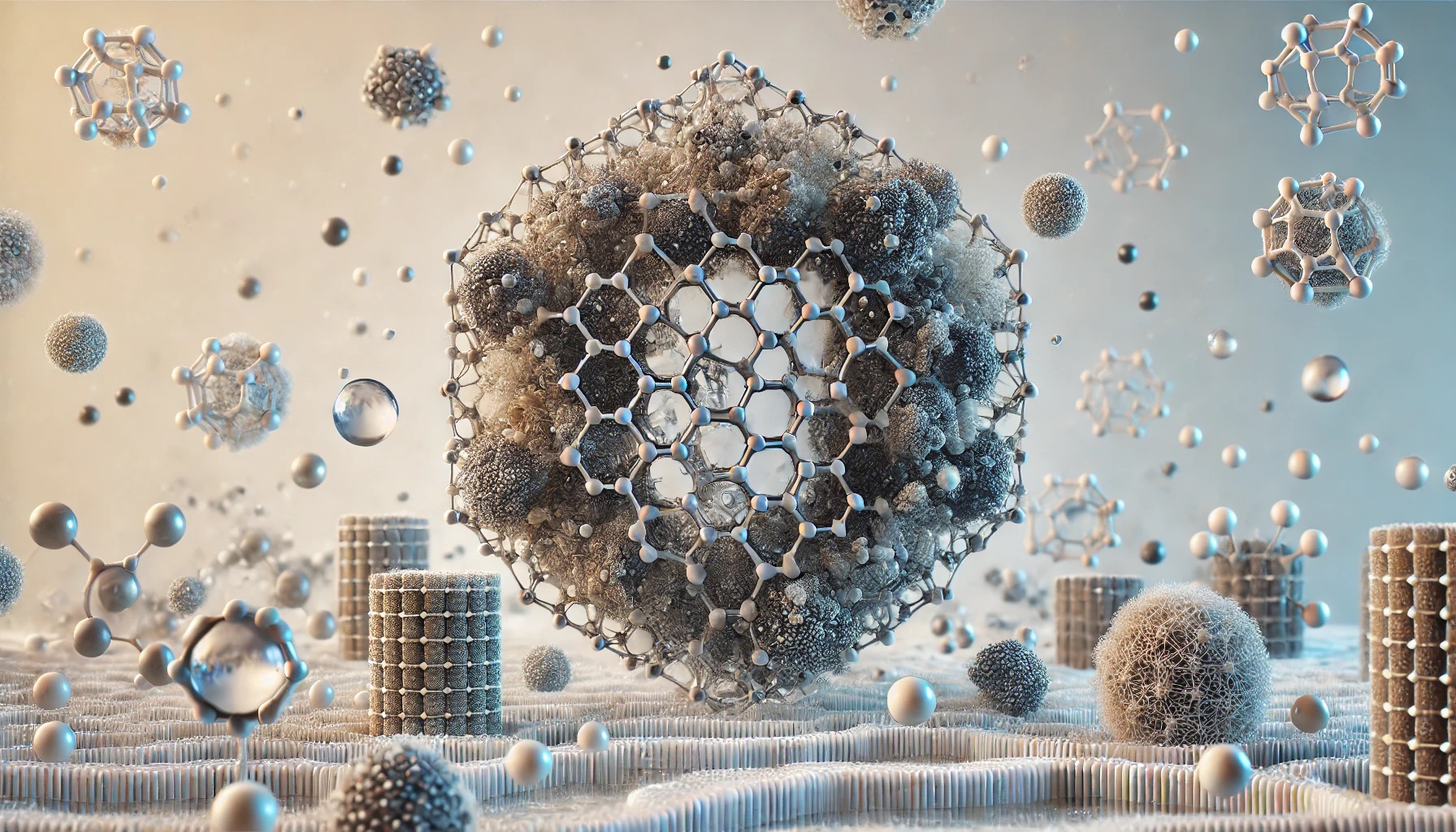
The study synthesized a nanocomposite made from polypyrrole (a polymer), graphene oxide, and biocharBiochar is a carbon-rich material created from biomass decomposition in low-oxygen conditions. It has important applications in environmental remediation, soil improvement, agriculture, carbon sequestration, energy storage, and sustainable materials, promoting efficiency and reducing waste in various contexts while addressing climate change challenges. More derived from palmyra seeds. The nanocomposite’s properties were analyzed using Scanning Electron Microscopy (SEM), X-Ray Diffraction (XRD), and Fourier Transform Infrared Spectroscopy (FTIR). Results showed that DEP adsorption followed a pseudo-second-order kinetic model and aligned with the Langmuir isotherm, indicating that the process involved monolayer adsorption on the nanocomposite surface.
A key finding from molecular docking revealed a strong interaction between DEP and the graphene oxide component, with a binding affinity of -13.36 kcal/mol. The high adsorption capacity and eco-friendliness of the nanocomposite make it a promising candidate for environmental remediation.
This study highlights the potential of polymer-graphene oxide-biochar composites for removing toxic contaminants like DEP from water, offering a sustainable and efficient alternative for water treatment processes.





Leave a Reply