
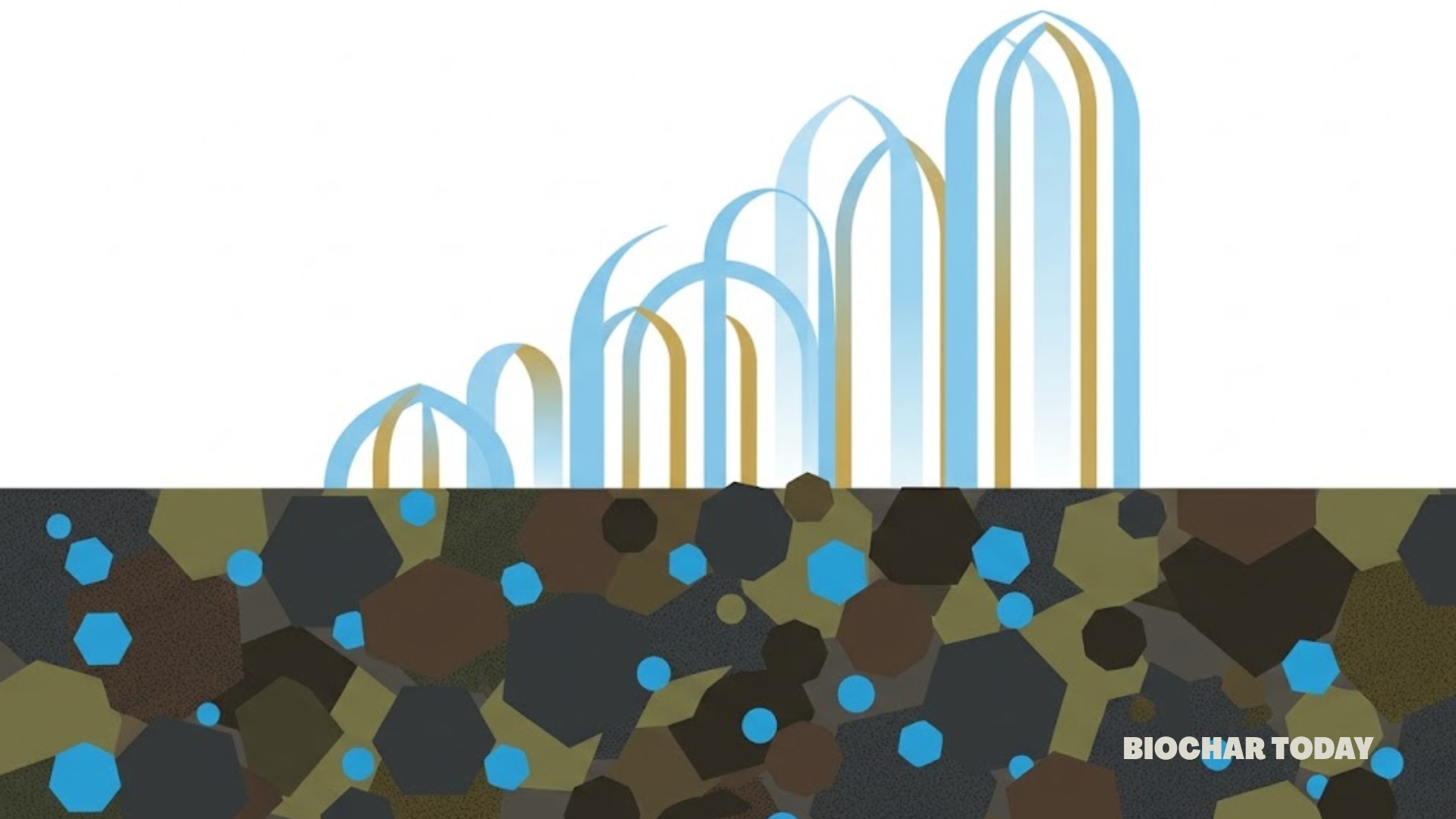
Key Takeaways
- Mixing a small amount of rice husk waste and natural soil bacteria reduces the swelling and shrinking of expansive soils by more than eighty percent.
- The combined eco-friendly treatment doubles the load-bearing strength of unstable clay, making it a reliable foundation for roads and buildings.
- Soil bacteria are activated to produce natural limestone crystals that cement loose soil grains together from within.
- Utilizing agricultural waste products like rice husks reduces our reliance on carbon-heavy chemical stabilizers like cement and lime.
- This natural engineering method offers a highly sustainable and cost-effective solution for improving rural infrastructure in agricultural regions.
Expansive clay soils pose a notorious threat to civil engineering infrastructure globally, as they swell dramatically when wet and shrink when dry. This unstable volume change generates intense internal stress, often leading to pavement heaving, slab fractures, and severe structural deformations in lightly loaded structures. To resolve these challenges sustainably, researchers writing in the KSCE Journal of Civil Engineering, Anas Bin Faruque, Shantanu Paul, and Mohammad Shariful Islam, investigated a creative dual-action stabilization method. By combining microbially induced calcite precipitation with rice husk biocharBiochar is a carbon-rich material created from biomass decomposition in low-oxygen conditions. It has important applications in environmental remediation, soil improvement, agriculture, carbon sequestration, energy storage, and sustainable materials, promoting efficiency and reducing waste in various contexts while addressing climate change challenges. More, a porous byproduct of the agricultural industry, the team successfully transformed unstable fat clay into a highly durable engineering medium.
The core of this research focuses on the remarkable engineering improvements achieved when these two green additives work in tandem. The researchers discovered that the optimal treatment configuration requires mixing the clay with two percent rice husk biochar and allowing a four-day mellowing period for the native soil bacteria to thrive. This specific combination reduced the free swell index of the soil by an astonishing ninety-eight percent and cut down linear shrinkage by eighty-five percent. More importantly, the internal swelling pressure exerted by the wet clay collapsed by ninety-three percent, shifting the soil’s volumetric stability closer to that of traditional cement-treated options without the associated carbon footprint.
Beyond keeping the clay from shifting under environmental moisture changes, the bio-treatment yielded massive upgrades in structural strength. Adding biochar alone can sometimes weaken clay because of increased water absorption and high organic content, but triggering the natural bacterial cementation completely neutralized this strength penalty. The unconfined compressive strength and the split tensile strength of the stabilized clay both increased by over one hundred percent. These mechanical upgrades mean that subgrade layers treated with this process can distribute traffic loads much more efficiently, preventing issues like rutting and fatigue cracking while allowing engineers to significantly reduce the required thickness of imported road base materials.
Chemical and biological testing confirmed the exact mechanisms behind these outstanding results. The treatment solutions successfully stimulated native, urease-positive soil bacteria, triggering a sharp rise in local pHpH is a measure of how acidic or alkaline a substance is. A pH of 7 is neutral, while lower pH values indicate acidity and higher values indicate alkalinity. Biochars are normally alkaline and can influence soil pH, often increasing it, which can be beneficial More up to nearly nine and boosting the overall calcite content within the clay matrix by two hundred fifteen percent. This natural limestone precipitation was further enhanced by the highly porous structure of the rice husk biochar, which served as a protective habitat and nutrient reservoir for the growing microbial communities. Simultaneously, the amorphous silica within the agricultural biochar triggered a pozzolanic reaction with free calcium ions to form a dense cementitious gel.
Ultimately, this study bridges a major gap in civil engineering by proving that living microbial systems can be paired with processed agricultural waste to stabilize problematic clay soils. This self-sustaining, dual-cementation pathway of biogenic limestone and silica gel provides a robust alternative to carbon-heavy traditional stabilizers like lime and industrial cement. By utilizing local, low-cost feedstocks and eliminating the need to cultivate external bacterial strains in a laboratory, this biotechnology presents a highly practical, sustainable, and economically viable stabilization framework for low-volume rural roads, embankment fills, and shallow foundations in developing, rice-producing regions.
Source: Faruque, A. B., Paul, S., & Islam, M. S. (2026). Stabilization of expansive soil using rice husk biochar and stimulation of soil-native bacteria: Mechanical and microstructural analysis. KSCE Journal of Civil Engineering.



Leave a Reply