
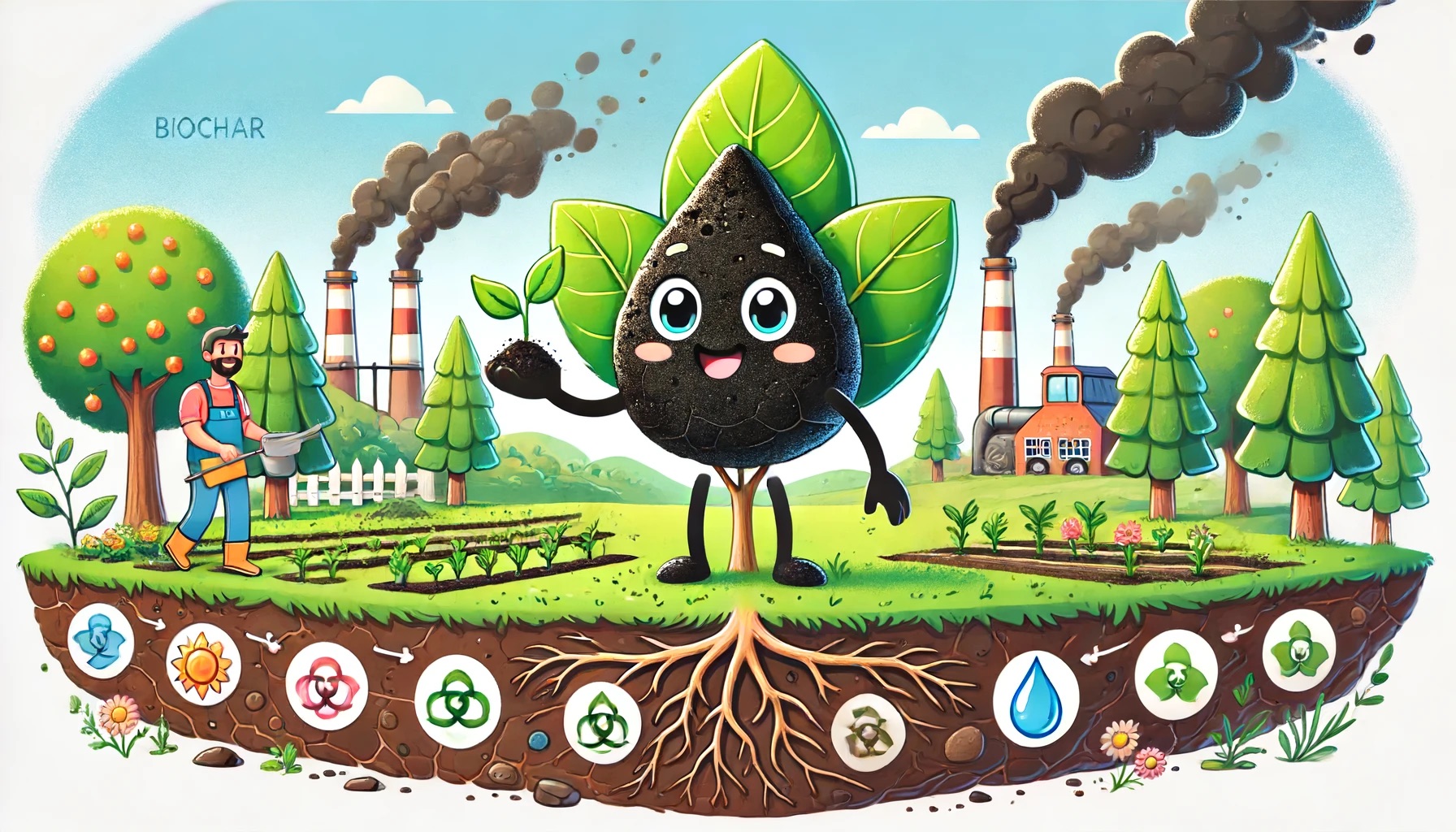

Nano-biochar (Nano-BC), derived from biocharBiochar is a carbon-rich material created from biomass decomposition in low-oxygen conditions. It has important applications in environmental remediation, soil improvement, agriculture, carbon sequestration, energy storage, and sustainable materials, promoting efficiency and reducing waste in various contexts while addressing climate change challenges. More (BC), has shown promising potential in enhancing soil quality and addressing environmental contaminants. Unlike traditional bulk-BC, Nano-BC, produced through methods like hydrothermal synthesis and ball-milling, boasts higher surface area, increased porosityPorosity of biochar is a key factor in its effectiveness as a soil amendment and its ability to retain water and nutrients. Biochar’s porosity is influenced by feedstock type and pyrolysis temperature, and it plays a crucial role in microbial activity and overall soil health. Biochar More, and greater reactivity. These properties enable Nano-BC to effectively adsorb pollutants such as heavy metals and organic contaminants, contributing to improved soil health and plant growth.
The rhizosphere, the soil layer surrounding plant roots, is rich in microbial activity essential for plant development. Roots secrete organic compounds that nourish these microbes and alter soil characteristics. Nano-BC’s enhanced properties allow it to interact dynamically within the rhizosphere through mechanisms like electrostatic and redox interactions. These interactions influence soil microbial communities, promote nutrient availability, and help plants cope with environmental stresses, such as drought and heavy metal toxicity.
The review highlights that aged Nano-BC fosters beneficial microorganism growth, enhancing soil fertility and plant resilience. It also delves into the mechanistic processes leading to Nano-BC formation, including surface oxidation and mineral dissolution. While Nano-BC’s potential in sustainable agriculture and environmental management is evident, challenges remain in scaling up its production and ensuring its safety.
Future research should focus on overcoming these hurdles to fully unlock Nano-BC’s capabilities, making it a viable solution for improving soil health, supporting plant growth, and mitigating environmental pollution.



Leave a Reply