
López-Mireles, et al (2024) Magnetic biocharBiochar is a carbon-rich material created from biomass decomposition in low-oxygen conditions. It has important applications in environmental remediation, soil improvement, agriculture, carbon sequestration, energy storage, and sustainable materials, promoting efficiency and reducing waste in various contexts while addressing climate change challenges. More from spent coffee grounds as filler in bioplastic composites. Materials Letters. https://doi.org/10.1016/j.matlet.2024.137046
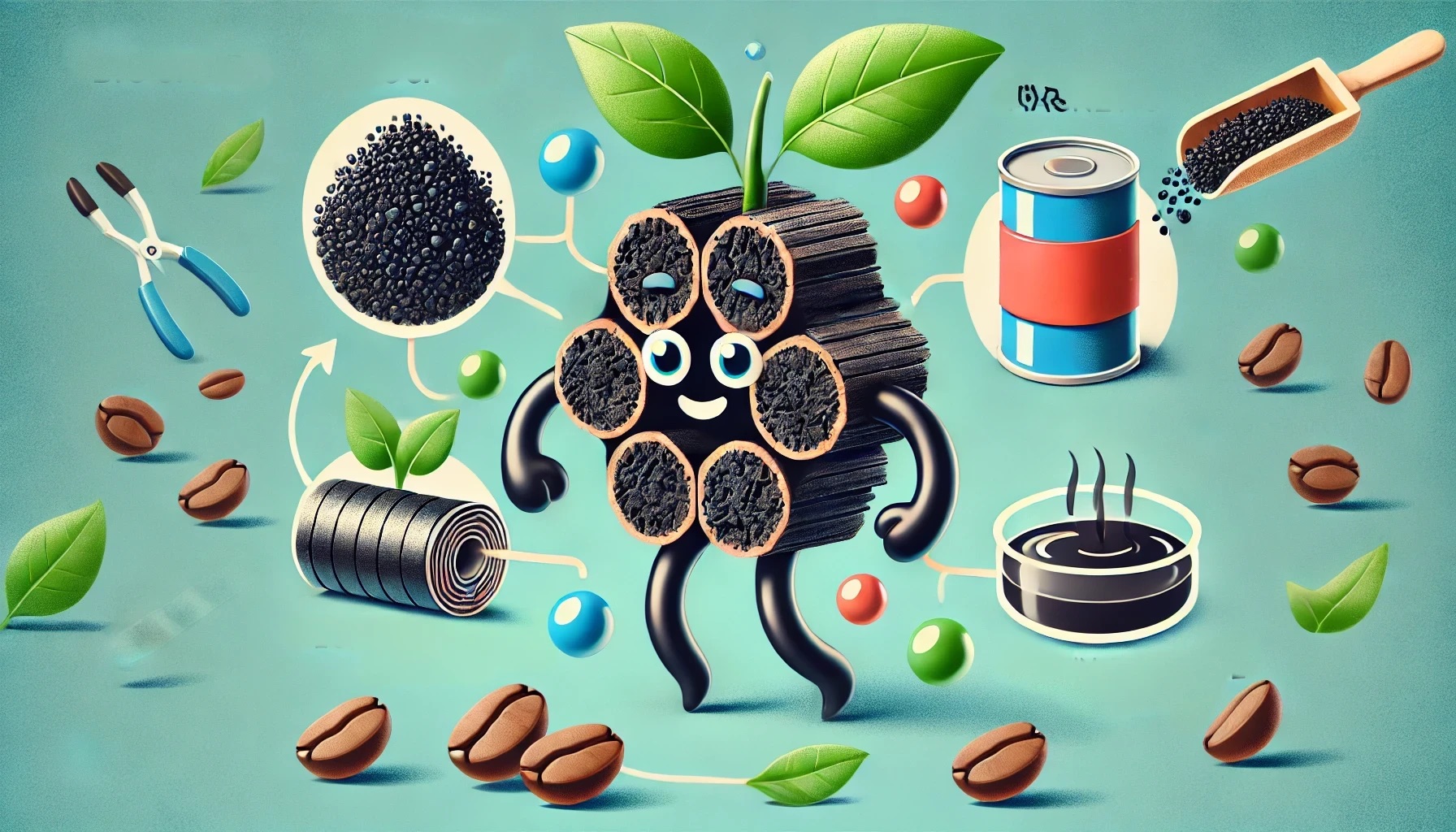
Researchers have discovered an innovative use for spent coffee grounds, transforming this common waste product into magnetic biochar. This biochar is then used to enhance biodegradable pectin composite films. Through a straightforward two-step carbonization process, the researchers produced magnetic biochar with embedded crystalline magnetite, confirmed by X-ray diffraction and Raman spectroscopy.
The magnetic biochar, when integrated into pectin films, exhibited strong magnetic behavior, similar to a soft magnet. These films demonstrated a low coercive field and significant remanence. Additionally, thermogravimetric analysis showed that the composite films had improved thermal stability compared to pure pectin films.
The study highlights the potential of using waste materials to create valuable products with enhanced properties. The magnetic biochar-infused composites offer promising applications in sustainable packaging, electromagnetic shielding, and environmental sensing. This approach not only valorizes spent coffee grounds but also contributes to the development of advanced biodegradable materials.
Overall, this research represents a novel method of integrating magnetic biochar into bioplastics, promoting both waste reduction and the creation of functional, eco-friendly materials.




Leave a Reply