
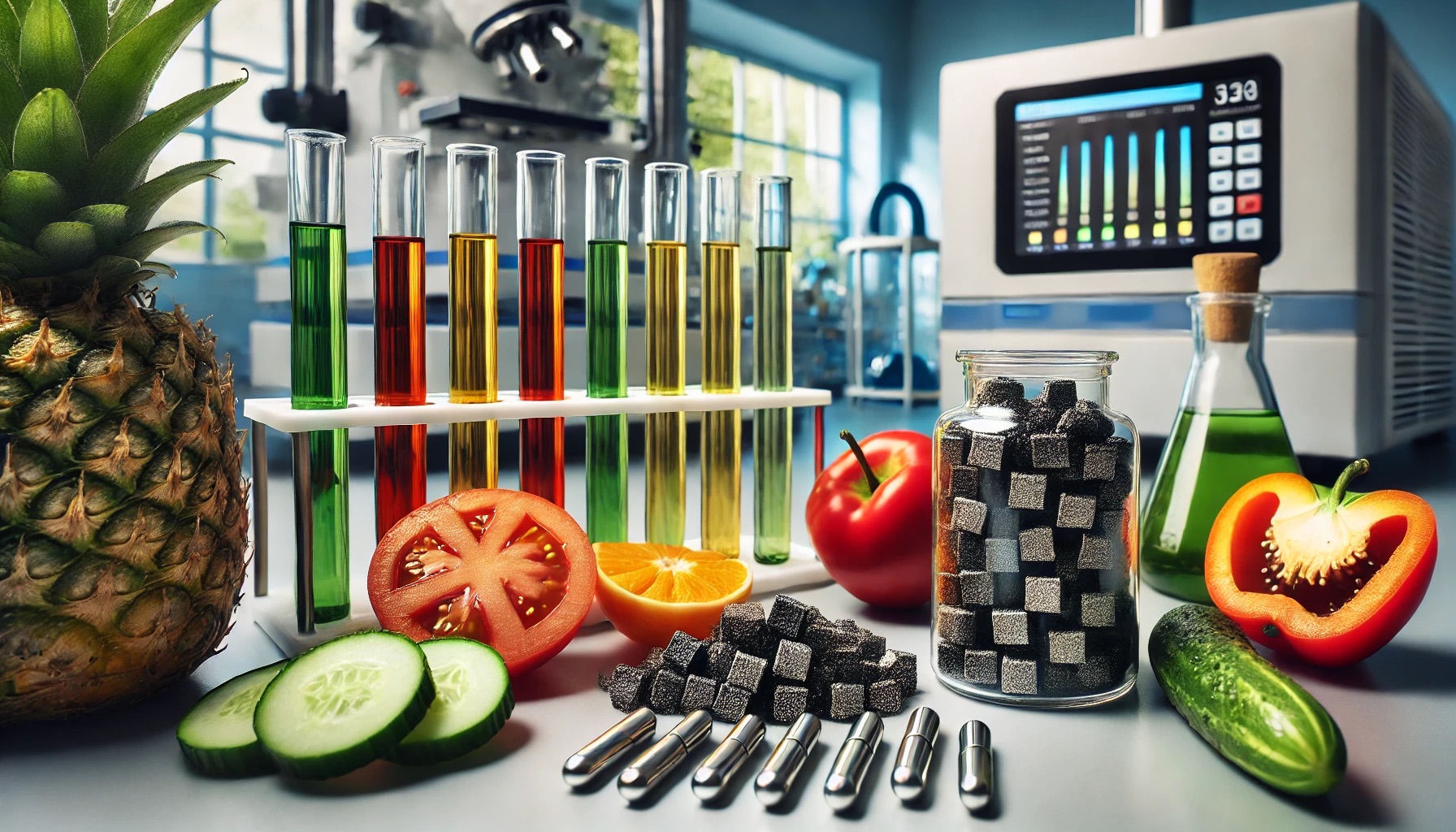

Researchers have developed a novel method for detecting pesticide residues in agricultural products using a modified QuEChERS process with biochar made from coconut clothing. This biochar, magnetized with Fe3O4 particles, was synthesized for the first time and incorporated into a quick and efficient pesticide extraction system.
The study focused on using this magnetic coconut clothing biochar (MCCBC) to improve the analysis of 12 pesticides, including organophosphorus insecticides and strobilurins, in common fruits and vegetables such as tomatoes, cucumbers, and apples. The method showed higher sensitivity, better recovery rates, and easier operation compared to existing techniques. The detection limits for these pesticides ranged from 0.01 to 2.67 ng/g, with recovery rates between 71.1% and 114%.
By using MCCBC, the researchers were able to reduce the matrix effects (interference from food components) that often hinder pesticide detection. This new approach provides a cost-effective and environmentally friendly way to monitor pesticide residues, crucial for food safety and public health.
The study highlights the potential of coconut waste, typically discarded, as a valuable resource for producing biochar. This opens the door to broader applications of magnetic biochar in environmental clean-up and food safety, addressing both waste management and health concerns simultaneously.



Leave a Reply