


Life cycle assessment of biocharBiochar is a carbon-rich material created from biomass decomposition in low-oxygen conditions. It has important applications in environmental remediation, soil improvement, agriculture, carbon sequestration, energy storage, and sustainable materials, promoting efficiency and reducing waste in various contexts while addressing climate change challenges. More and cattle manure application in sugar beet cultivation – Insights into root yields, white sugar quality, environmental aspects in field and factory phases. Journal of Cleaner Production. https://doi.org/10.1016/j.jclepro.2024.143772
A study published in the Journal of Cleaner Production explores the environmental impacts and crop outcomes of using biochar (B) and cattle manure (CM) as alternatives to conventional chemical fertilizers (CH) in sugar beet cultivation. The research focuses on both spring and autumn planting seasons, assessing how these organic inputs affect root yield, sugar content, and greenhouse gas emissions.
The findings show that cattle manure treatments (CM10 and CM15) yielded the highest root outputs, increasing yields by 24.5% to 34.8% compared to chemical fertilizers. However, biochar applications (B5, B10, B15) produced higher sugar content, with B5 yielding 17% sugar compared to CM15’s 10.9%. Biochar also significantly reduced molasses, enhancing white sugar quality by up to 43.7%.
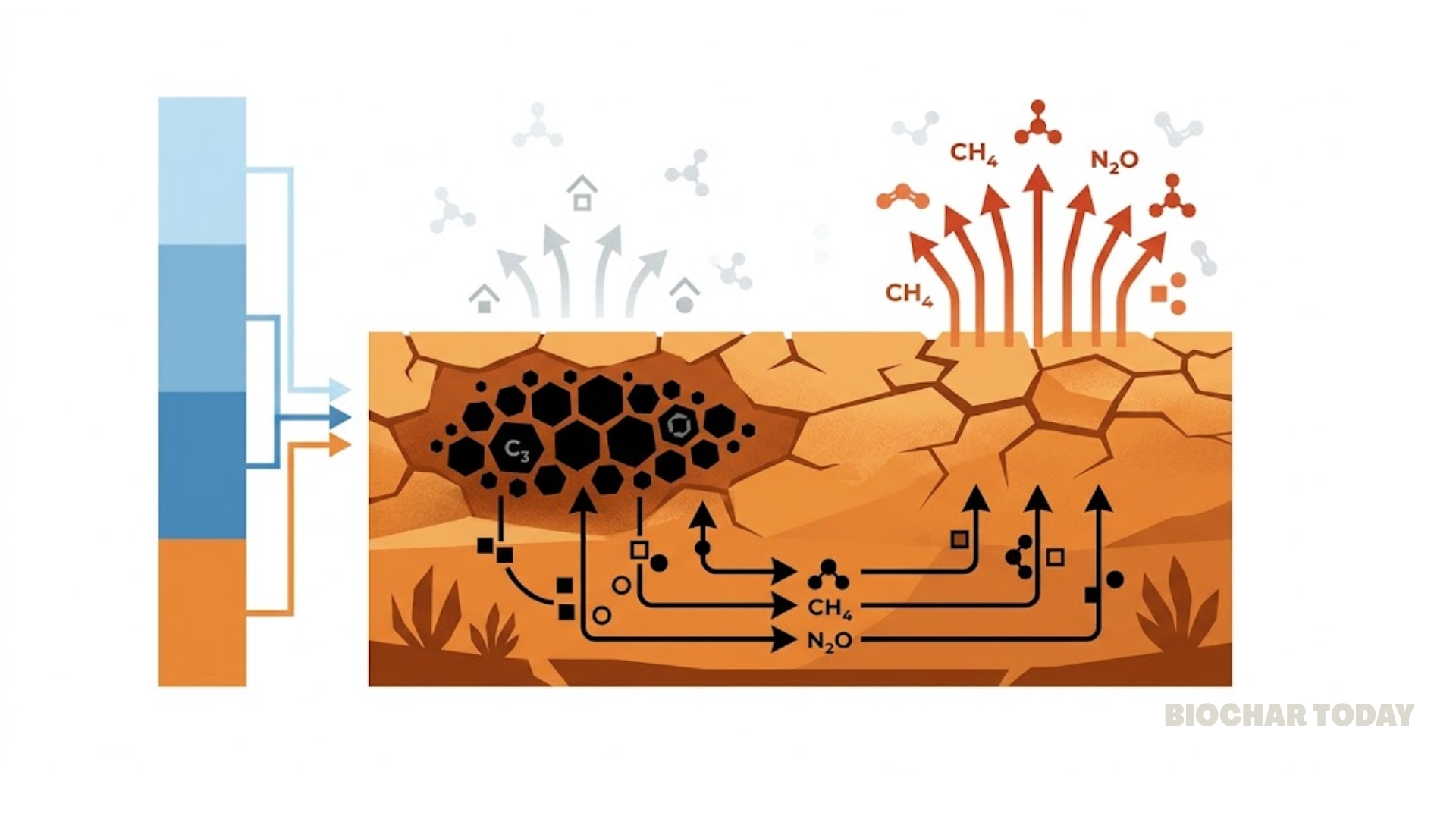
From an environmental perspective, biochar treatments reduced greenhouse gas emissions, with B15 showing a 31% lower global warming potential (437.2 CO2-eq ton−1) compared to CM15. However, manure had higher freshwater and marine eutrophication risks, indicating nutrient runoff concerns.
Overall, the study suggests that biochar not only boosts white sugar production but also mitigates environmental impacts, making it a viable strategy for sustainable sugar beet farming. Conversely, while cattle manure enhances root yields, its environmental footprint needs careful management.
These insights provide a pathway for optimizing organic amendments in sugar beet cultivation while minimizing negative environmental consequences.



Leave a Reply