

Preparation of co-doped biocharBiochar is a carbon-rich material created from biomass decomposition in low-oxygen conditions. It has important applications in environmental remediation, soil improvement, agriculture, carbon sequestration, energy storage, and sustainable materials, promoting efficiency and reducing waste in various contexts while addressing climate change challenges. More to improve electron transfer and modulate 1O2generation: Unraveling the radical-unradical mechanism. Chemical Engineering Journal. https://doi.org/10.1016/j.cej.2024.151985
Researchers developed a novel co-doped biochar system to address the environmental challenge of tetracycline (TC) contamination in water. The study, published in the Chemical Engineering Journal, reveals the potential of nitrogen and copper oxide co-doped biochar (CNB-500) in conjunction with persulfate (PS) to effectively degrade TC.
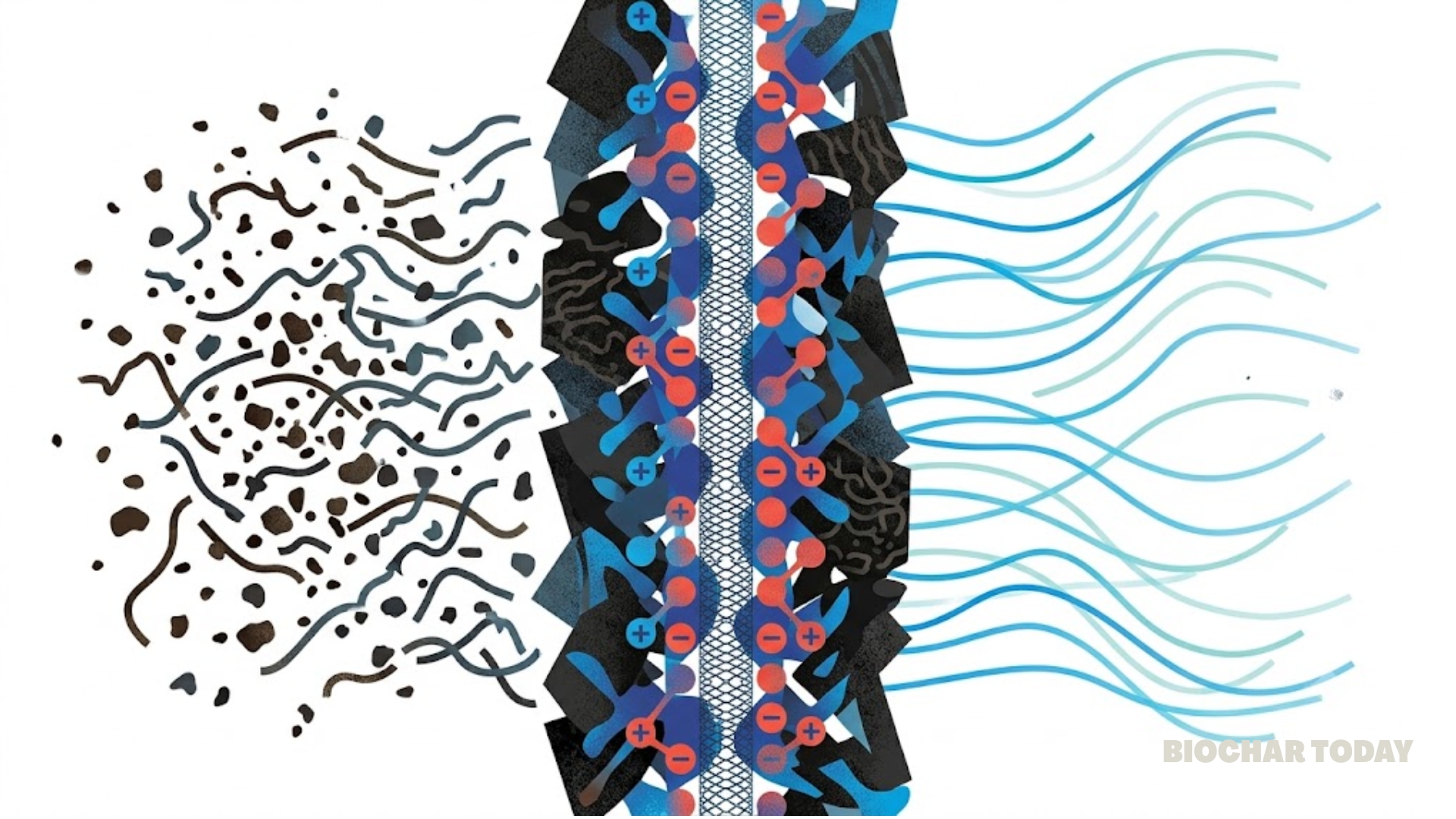
The team synthesized CNB-500 by doping biochar with non-metallic heteroatoms and transition metal oxides, constructing multi-pathway electron transfer channels (C-N, C-O-Cu, and N-Cu bonds). This innovative design enhances non-radical electron transfer interactions, breaking the surface charge distribution of the catalyst and modulating the adsorption of dissolved oxygen to favor the generation of singlet oxygen (1O2). This process significantly improves the degradation efficiency of TC.
Advanced oxidation technologies (AOPs), particularly PS-based electrocatalytic oxidation, have been recognized for their efficacy in degrading organic pollutants. However, traditional methods often face limitations such as high energy consumption, complex processes, and susceptibility to secondary pollution. The CNB-500-PS system addresses these issues, providing a robust and efficient solution for water purification.
The study’s findings highlight the radical-unradical synergy within the CNB-500-PS system, offering insights into the pathways and modes of electron transfer and 1O2 derivation. This breakthrough not only enhances the understanding of biochar’s catalytic mechanisms but also opens new avenues for developing sustainable and effective water treatment technologies. By leveraging the unique properties of co-doped biochar, this research marks a significant step towards mitigating antibiotic pollution and advancing environmental sustainability.




Leave a Reply