

Rani, et al (2024) BiocharBiochar is a carbon-rich material created from biomass decomposition in low-oxygen conditions. It has important applications in environmental remediation, soil improvement, agriculture, carbon sequestration, energy storage, and sustainable materials, promoting efficiency and reducing waste in various contexts while addressing climate change challenges. More Production Using a Flexible Counter Flow Multi-Baffle (F-COMB) Reactor. Journal of Cleaner Production. https://doi.org/10.1016/j.jclepro.2024.142875
A new study published in the Journal of Cleaner Production introduces the Flexible Counter Flow Multi-Baffle (F-COMB) reactor, an innovative solution for efficient and scalable biochar production. Biochar, a form of carbon capture and storage, plays a crucial role in mitigating climate change by sequestering carbon dioxide from the atmosphere.
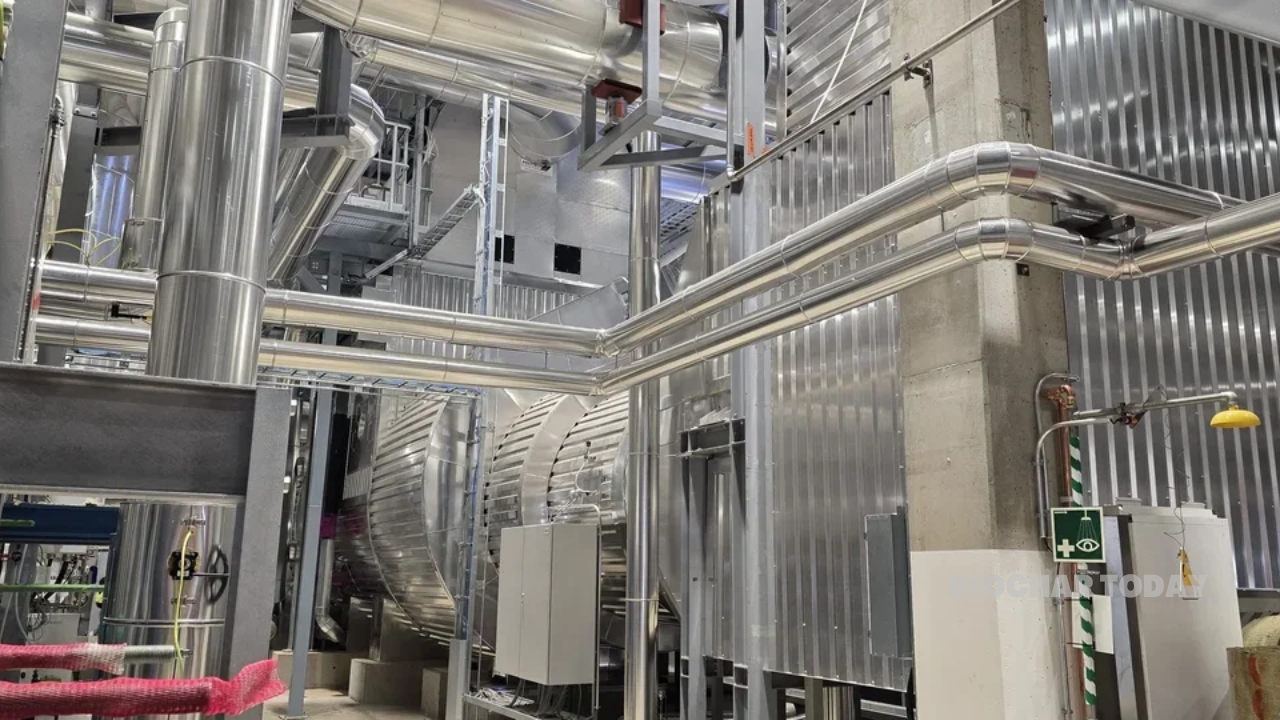
The F-COMB reactor, designed for continuous biochar production, operates at a pilot scale of 1 ton per day. It employs a unique design featuring multiple baffles that enhance the contact between feedstockFeedstock refers to the raw organic material used to produce biochar. This can include a wide range of materials, such as wood chips, agricultural residues, and animal manure. More and hot gas through vortex mixing. This configuration results in high energy efficiency and precise control over the pyrolysisPyrolysis is a thermochemical process that converts waste biomass into bio-char, bio-oil, and pyro-gas. It offers significant advantages in waste valorization, turning low-value materials into economically valuable resources. Its versatility allows for tailored products based on operational conditions, presenting itself as a cost-effective and efficient More process, including temperature, retention time, gas flow rate, and feedstock loading.
Traditional biochar production methods, such as batch-type slow pyrolysis and rotary kiln reactors, often suffer from high operational costs, inefficient heat transfer, and scalability issues. The F-COMB reactor addresses these challenges by ensuring efficient heat distribution and reducing the residence timeResidence time refers to the duration that the biomass is heated during the pyrolysis process. The residence time can influence the properties of the biochar produced. More of feedstock, making it economically viable for larger-scale operations.
The study highlights the successful production of wood pellet biochar using the F-COMB reactor, demonstrating its potential for significant scale-up. Continuous production was achieved with three flexible baffle configurations, showcasing the reactor’s adaptability and effectiveness.
As the demand for biochar is projected to exceed 150 million tons annually by 2050, the F-COMB reactor represents a promising advancement in biochar technology, offering a sustainable and scalable solution to support global carbon reduction efforts and enhance soil health.




Leave a Reply