
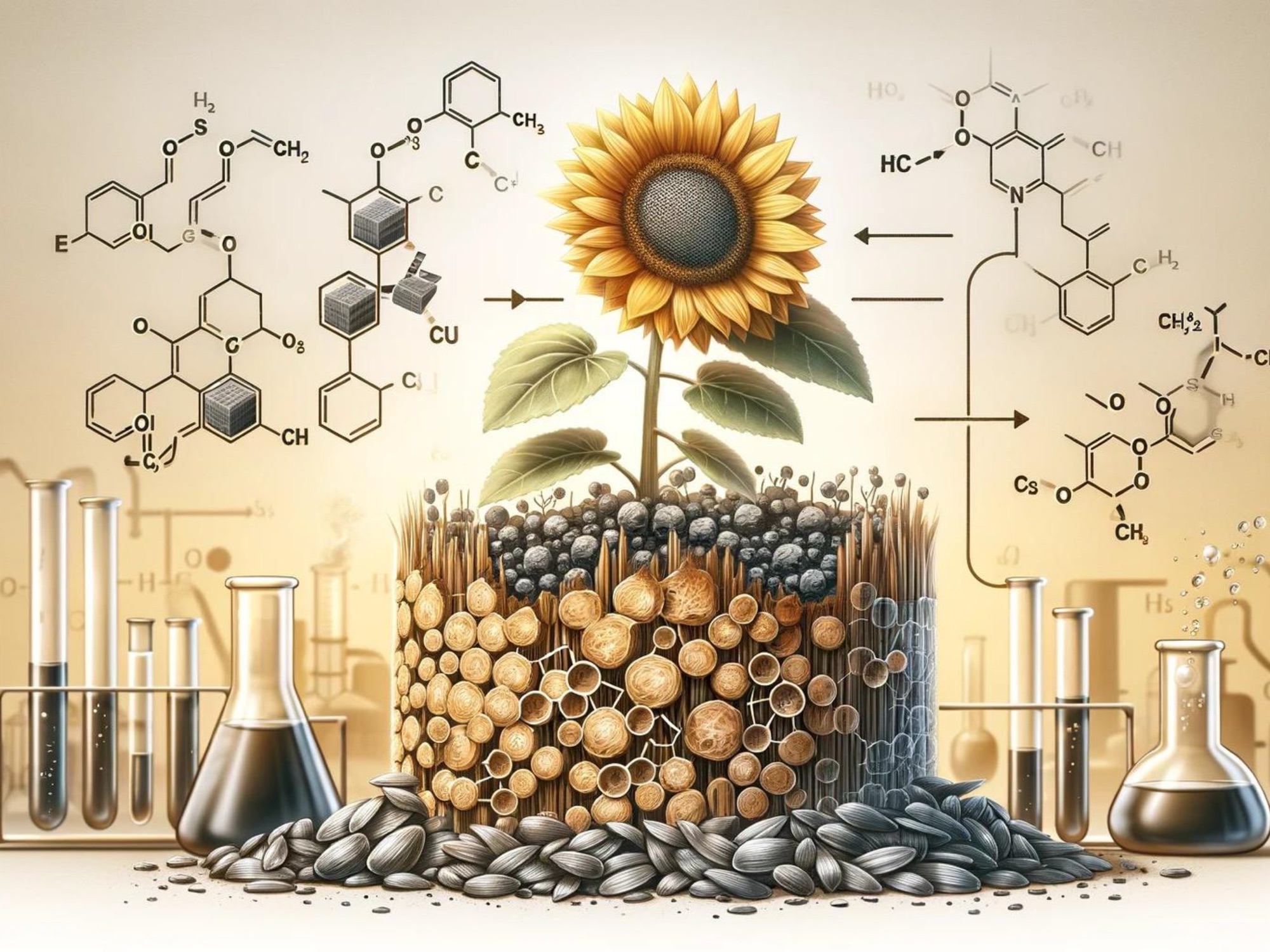

Sunflower seed husks, a common by-product of oil production, have been transformed into a novel catalyst, Fe-Cu-biochar-MOFs, showing remarkable potential in environmental pollutant removal. This innovative material, synthesized through a straightforward one-pot method and pyrolysisPyrolysis is a thermochemical process that converts waste biomass into bio-char, bio-oil, and pyro-gas. It offers significant advantages in waste valorization, turning low-value materials into economically valuable resources. Its versatility allows for tailored products based on operational conditions, presenting itself as a cost-effective and efficient More, harnesses the natural benefits of biocharBiochar is a carbon-rich material created from biomass decomposition in low-oxygen conditions. It has important applications in environmental remediation, soil improvement, agriculture, carbon sequestration, energy storage, and sustainable materials, promoting efficiency and reducing waste in various contexts while addressing climate change challenges. More enhanced with iron and copper compounds.
The study revealed that adjusting the amount of biochar significantly impacts the catalyst’s characteristics. The optimal formulation, FeCu-BC0.25, demonstrated exceptional performance in acidic and neutral conditions, degrading 95.9% of the antibiotic sulfadiazine (SDZ) in just 60 minutes.
Mechanistic studies showed that peroxydisulfate (PDS) activation by FeCu-BC generates abundant reactive oxygen species, facilitated by the interplay between iron and copper ions. These ions convert Fe0 to Fe2+ and Cu0 to Cu+, crucial for efficient PDS activation.
The rough, irregular surfaces of the FeCu-biochar-MOFs provide extensive reactive sites, boosting the catalytic activity. The catalyst’s robustness and efficiency make it a promising candidate for large-scale water treatment applications.
This research highlights the potential of agricultural waste, like sunflower seed husks, in creating high-value, sustainable materials for environmental remediation, offering a green and economical solution to water pollution.




Leave a Reply