
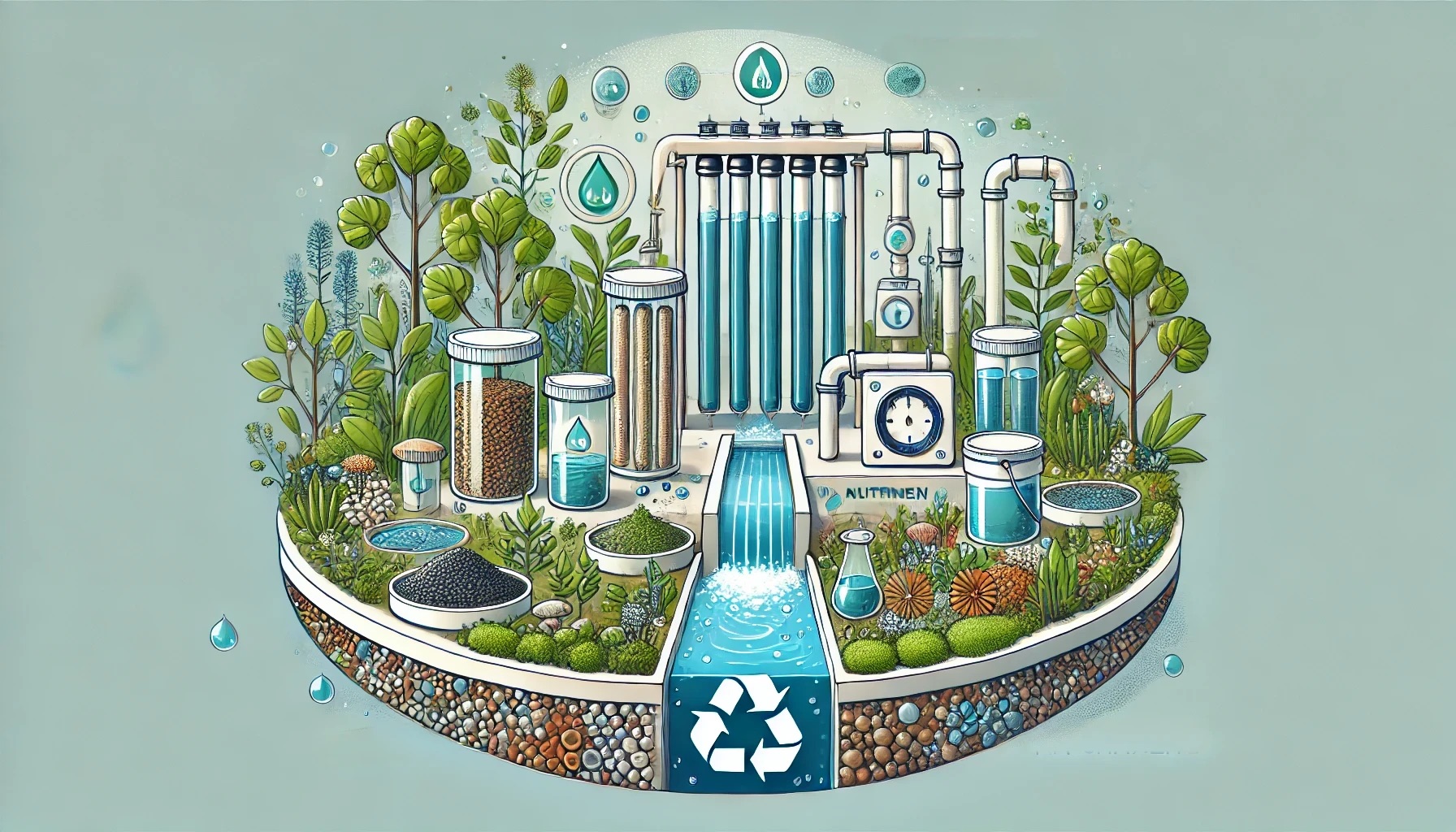

A recent study introduces a new method for nutrient recovery from source-separated urine using biochar and Na-chabazite. The process focuses on recovering essential nutrients like potassium (K), nitrogen (N), and phosphorus (P). The challenge arises from the high concentration of ammonium (NH4+) in hydrolyzed urine, which competes with potassium recovery. To address this, the study proposes using Na-chabazite as a urease inhibitor to prevent the conversion of urea into ammonium, allowing better K and urea recovery from fresh urine.
Biochar, made from wood, plays a critical role in urea adsorption, with a capacity of 25.4 mg/g, which increases after steam activation. The combination of Na-chabazite and biochar effectively adsorbs urea, while Na-chabazite selectively captures potassium through cation exchange. The study also integrates processes for further recovery: after urea hydrolysis, ammonium is recovered via ammonia stripping, and phosphorus through struvite precipitation.
This integrated approach offers an efficient solution to recover multiple nutrients from urine, with applications in sustainable agriculture and wastewater treatment. By recovering urea, ammonium, K, and P, this method minimizes nutrient loss and reduces reliance on synthetic fertilizers, while promoting resource recovery from wastewater. The results highlight the potential for decentralized nutrient recovery systems in urban settings.




Leave a Reply