
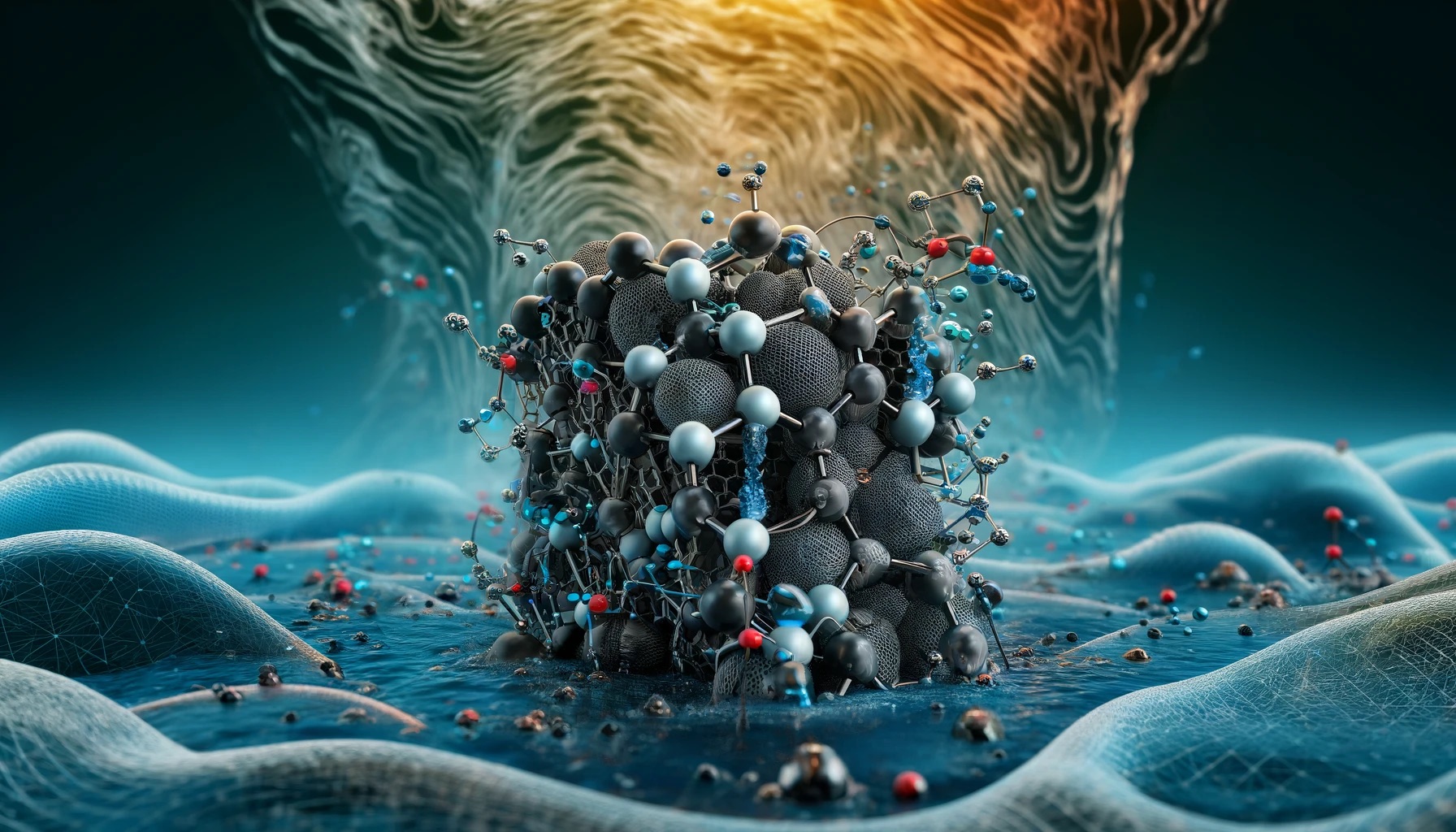

A recent study published in the Chemical Engineering Journal introduces a new biochar-based catalyst that could revolutionize water purification, particularly in the removal of antibiotics like tetracycline hydrochloride (TCH). The research focuses on designing a multistage biocharBiochar is a carbon-rich material created from biomass decomposition in low-oxygen conditions. It has important applications in environmental remediation, soil improvement, agriculture, carbon sequestration, energy storage, and sustainable materials, promoting efficiency and reducing waste in various contexts while addressing climate change challenges. More material composed of nitrogen-doped carbon nanotubes encapsulating cobalt nanoparticles, grown on kapok biomass. This material, referred to as Co-N-KBC, exhibits a unique structure that forms a built-in electric field, significantly enhancing electron transfer during peroxymonosulfate (PMS) activation.
The study highlights that this biochar catalyst improves the degradation rate of TCH by a factor of 11.8 compared to traditional kapok biochar. The porous structure and high surface area of the material boost its ability to generate active free radicals (such as SO4•− and •OH) and non-free radicals (such as 1O2) during the PMS activation process. These radicals are crucial in breaking down pollutants in water.
The work also demonstrates how density-functional theory (DFT) calculations confirm the role of the built-in electric field in enhancing electron migration. The results provide a promising approach for creating cost-effective, biomass-derived carbon materials capable of addressing environmental pollution. This advancement in advanced oxidation processes (AOPs) represents a practical and scalable method for tackling recalcitrant pollutants in wastewater, with applications extending to a wide range of contaminants.



Leave a Reply