
Leonard, et al (2024) Effect of BiocharBiochar is a carbon-rich material created from biomass decomposition in low-oxygen conditions. It has important applications in environmental remediation, soil improvement, agriculture, carbon sequestration, energy storage, and sustainable materials, promoting efficiency and reducing waste in various contexts while addressing climate change challenges. More and Clay on Growth Performance and Organ Weight of
Broiler. Egyptian Journal of Nutrition. https://journals.ekb.eg/article_356650_4037d090182c8cbbb31dc47da0fe9f71.pdf
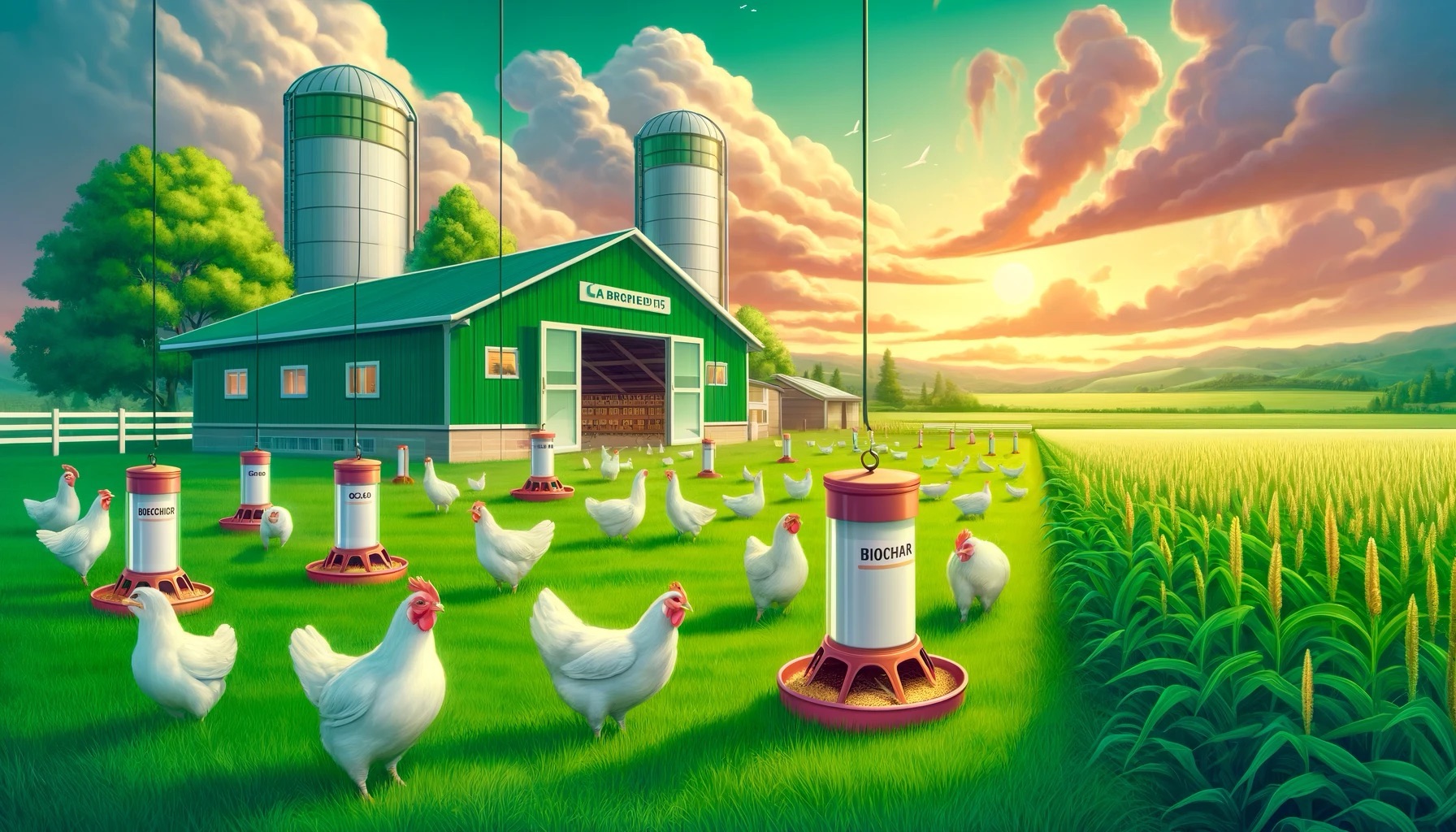
In the ever-evolving world of poultry farming, sustainability and efficiency are key. Recent research from Nnamdi Azikiwe University in Nigeria has uncovered a novel way to boost broiler chicken growth: the magical combination of biochar and clay.
In a 56-day trial, ninety-six Ross 308 broiler chicks were divided into four groups, each receiving a different diet. The control group had standard feed, while the others had feed supplemented with 5% biochar, 5% clay, or a mix of 2.5% biochar and 2.5% clay. The results were remarkable!
The group fed the biochar-clay mix (T4) exhibited the highest final weight at 1.4067 kg per bird, a significant increase compared to the control group. These birds also showed the highest total weight gain, average daily weight gain, and feed intake. This magical mix seems to be a powerful growth booster, surpassing even the groups with single additives.
But it’s not just about weight. Organ health is critical too. While most organ weights, such as heart, liver, and lungs, showed no adverse effects, the kidney weight in the supplemented groups was notably different. Despite this, the overall health benefits and growth performance enhancements are promising.
Biochar, derived from organic biomassBiomass is a complex biological organic or non-organic solid product derived from living or recently living organism and available naturally. Various types of wastes such as animal manure, waste paper, sludge and many industrial wastes are also treated as biomass because like natural biomass these More, acts as a prebiotic, fostering beneficial gut bacteria and improving nutrient absorption. Clay, rich in minerals, helps absorb toxins in the gut, promoting a healthier digestive system. Together, they create a synergistic effect that transforms ordinary feed into a super diet.
This study opens doors to more sustainable and effective poultry farming practices. By embracing natural additives like biochar and clay, farmers can achieve better growth performance while reducing reliance on synthetic growth promoters. The future of poultry farming might just be a bit more down-to-earth—and a lot more promising!



Leave a Reply