
Jin, et al (2024) External carbon addition alters soil photosynthetic carbon accumulation and rhizosphere processes of carbon. Applied Soil Ecology. https://doi.org/10.1016/j.apsoil.2024.105478
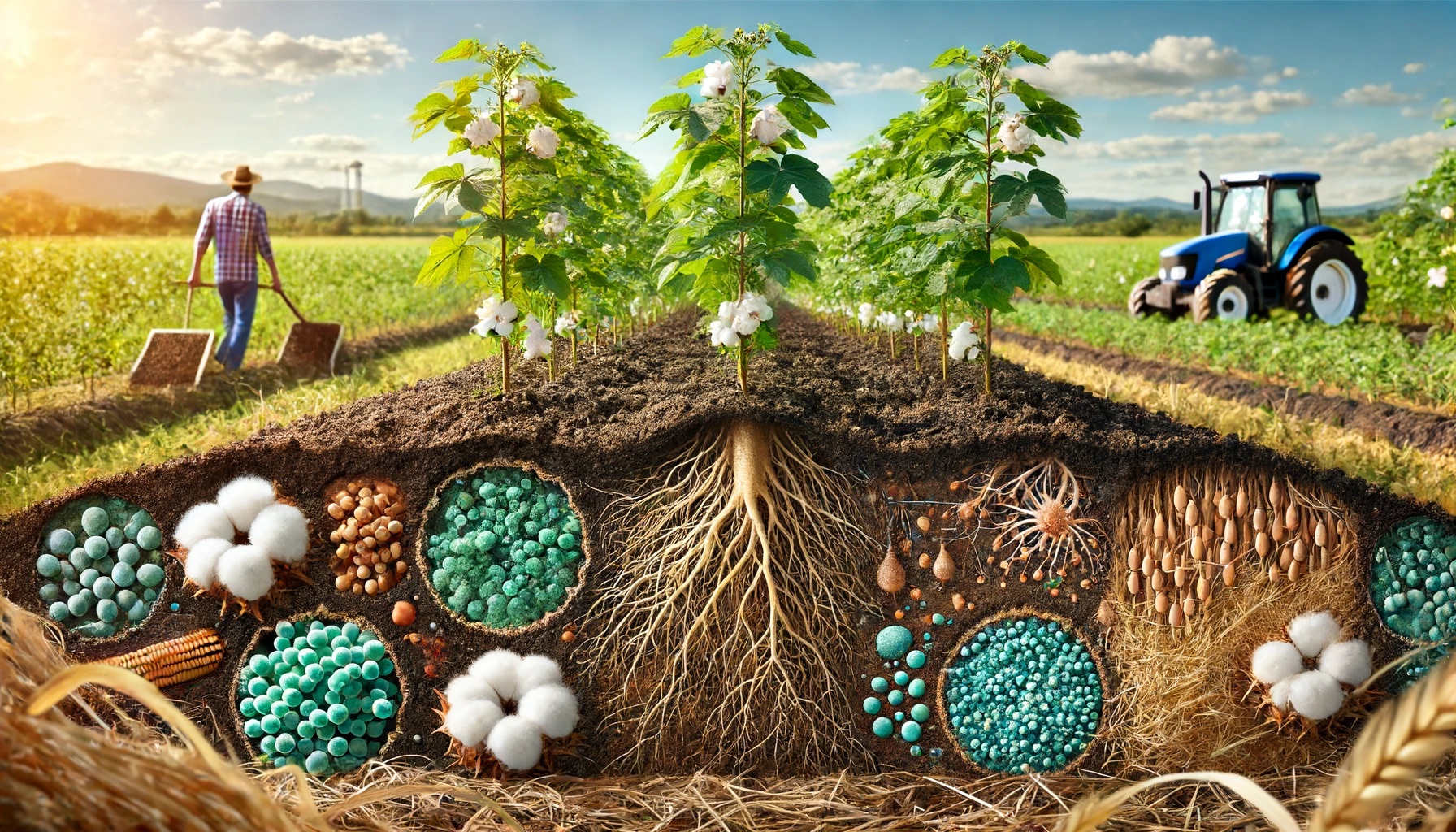
A recent study published in Applied Soil Ecology explores how adding carbon-rich organic matter, specifically straw and biocharBiochar is a carbon-rich material created from biomass decomposition in low-oxygen conditions. It has important applications in environmental remediation, soil improvement, agriculture, carbon sequestration, energy storage, and sustainable materials, promoting efficiency and reducing waste in various contexts while addressing climate change challenges. More, affects soil carbon sequestration and rhizosphere processes in crop-soil systems. Conducted over six years, this research compared four carbon management treatments: biochar incorporation (BI), straw incorporation (SI), straw mulching (SM), and a control with no carbon addition (CK). The findings reveal significant insights into how these treatments influence soil organic carbon (SOC) dynamics, photosynthetic carbon accumulation, and enzyme activities in both rhizosphere and bulk soils.
The study employed a 13CO2 pulse-labelling method to trace photosynthetic carbon in the cotton-soil system. Results showed that the addition of biochar and straw significantly boosted photosynthetic carbon accumulation and SOC sequestration, with biochar incorporation leading to the highest increases. This treatment enhanced carbon rhizodeposition—carbon inputs and concentrations in the rhizosphere—by improving photosynthetic carbon accumulation and root biomassBiomass is a complex biological organic or non-organic solid product derived from living or recently living organism and available naturally. Various types of wastes such as animal manure, waste paper, sludge and many industrial wastes are also treated as biomass because like natural biomass these More. Both biochar and straw incorporation heightened the activities of cellulose, invertase, and β-glucosidase enzymes and increased the contents of labile organic carbon fractions in the rhizosphere soil. However, in bulk soil, these indices were higher under straw incorporation than biochar.
After six years, SOC storage in the 0-40 cm soil layer increased significantly under all carbon addition treatments compared to the control. Specifically, biochar incorporation led to an increase of 4659 kg/ha, while straw incorporation and straw mulching resulted in increases of 2036 kg/ha and 1947 kg/ha, respectively. The study concludes that biochar incorporation is particularly effective in enhancing soil carbon sequestration by increasing carbon rhizodeposition and reducing SOC loss in both rhizosphere and bulk soils.
The research highlights the crucial role of root-mediated rhizosphere processes in SOC sequestration, driven by the input of rhizosphere-deposited carbon and the resulting rhizosphere effects. These effects can either enhance SOC sequestration or lead to SOC depletion, depending on the dynamics of rhizosphere secretions and their interactions with soil microorganisms. The study provides a detailed analysis of how different carbon addition treatments influence these dynamics, offering valuable insights for improving soil carbon sequestration in agricultural systems.
Cotton, the crop used in this study, has a significant global planting area and an indeterminate growth habit, which may influence photosynthetic carbon rhizodeposition. The findings suggest that different external carbon additions can alter the rhizosphere effects on SOC by changing the accumulation and allocation of photosynthetic carbon in the cotton-soil system. Notably, biochar incorporation appears to be more effective than straw in enhancing soil carbon sequestration potential by boosting soil photosynthetic carbon accumulation and reducing organic carbon loss.
Overall, this study provides a comprehensive understanding of how straw and biochar additions affect soil carbon dynamics, emphasizing the importance of selecting appropriate carbon management strategies to enhance soil carbon sequestration and promote agricultural sustainability. By improving our understanding of photosynthetic carbon partitioning in plant-soil systems and the associated rhizosphere processes, these findings contribute to the development of more effective soil carbon management practices in farmland systems.





Leave a Reply