
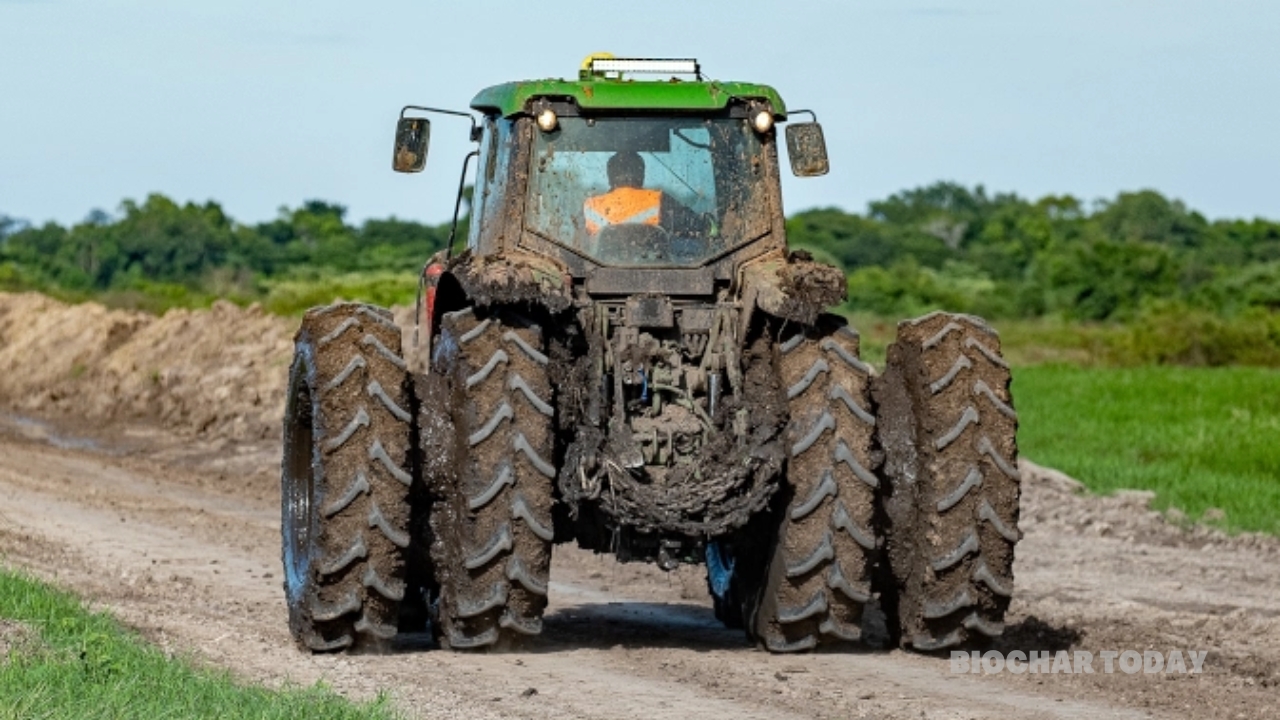
The FLS Group recently announced Project Alfheim, an industrial-scale biocharBiochar is a carbon-rich material created from biomass decomposition in low-oxygen conditions. It has important applications in environmental remediation, soil improvement, agriculture, carbon sequestration, energy storage, and sustainable materials, promoting efficiency and reducing waste in various contexts while addressing climate change challenges. More production and carbon removal initiative situated in eastern Paraguay. The venture converts regional waste biomassBiomass is a complex biological organic or non-organic solid product derived from living or recently living organism and available naturally. Various types of wastes such as animal manure, waste paper, sludge and many industrial wastes are also treated as biomass because like natural biomass these More residues into stable, carbon-rich biochar via industrial pyrolysisPyrolysis is a thermochemical process that converts waste biomass into bio-char, bio-oil, and pyro-gas. It offers significant advantages in waste valorization, turning low-value materials into economically valuable resources. Its versatility allows for tailored products based on operational conditions, presenting itself as a cost-effective and efficient More, delivering durable carbon removal credits while concurrently generating renewable energy for local industrial users. Designed around circular-economy principles, the initiative integrates agricultural waste management with soil regeneration by returning processed biochar to local partners for agricultural application, supported by digital monitoring, reporting, and verification (MRV) frameworks aligned with Puro.earth standards.
Project development in emerging biochar markets frequently contends with fragmented supply chains, opaque feedstockFeedstock refers to the raw organic material used to produce biochar. This can include a wide range of materials, such as wood chips, agricultural residues, and animal manure. More sourcing, and inadequate data traceability. Carbon removal verification demands rigorous laboratory sampling and documented chains of custody to prove permanence and avoid leakage, yet many operations lack the digital infrastructure required to securely connect raw biomass inputs with final soil applications. Furthermore, aligning industrial pyrolysis facilities with international carbon registries while meeting local energy demands requires coordination across diverse technical and logistical disciplines.
To address these vulnerabilities, Project Alfheim establishes an integrated operational model backed by specialized strategic partnerships. The initiative deploys pyrolysis and gasificationGasification is a high-temperature, thermochemical process that converts carbon-based materials into a gaseous fuel called syngas and solid by-products. It takes place in an oxygen-deficient environment at temperatures typically above 750°C. Unlike combustion, which fully burns material to produce heat and carbon dioxide (CO2), gasification More technology supplied by HaiQi Environmental Technologies, combined with thermochemical conversion engineering from DecarboEngineering. To secure data integrity, the project integrates Cula Technologies’ carbon removal software to automate digital MRV, independent sampling protocols, and digital record-keeping. This infrastructure targets an annual production of approximately 11,500 tons of certified biochar and roughly 17,000 tons of verified carbon dioxide removal (CDR) credits.
The deployment of Project Alfheim is projected to establish a scalable template for industrial biochar operations across South America. By coupling high-volume carbon removal with localized renewable energy generation and agricultural soil enhancement, the initiative mitigates regional waste management challenges while supplying verifiable credits to global carbon markets. Ultimately, the project’s emphasis on independent sampling and digital traceability aims to set a benchmark for integrity and transparency in international biochar project development.




Leave a Reply