
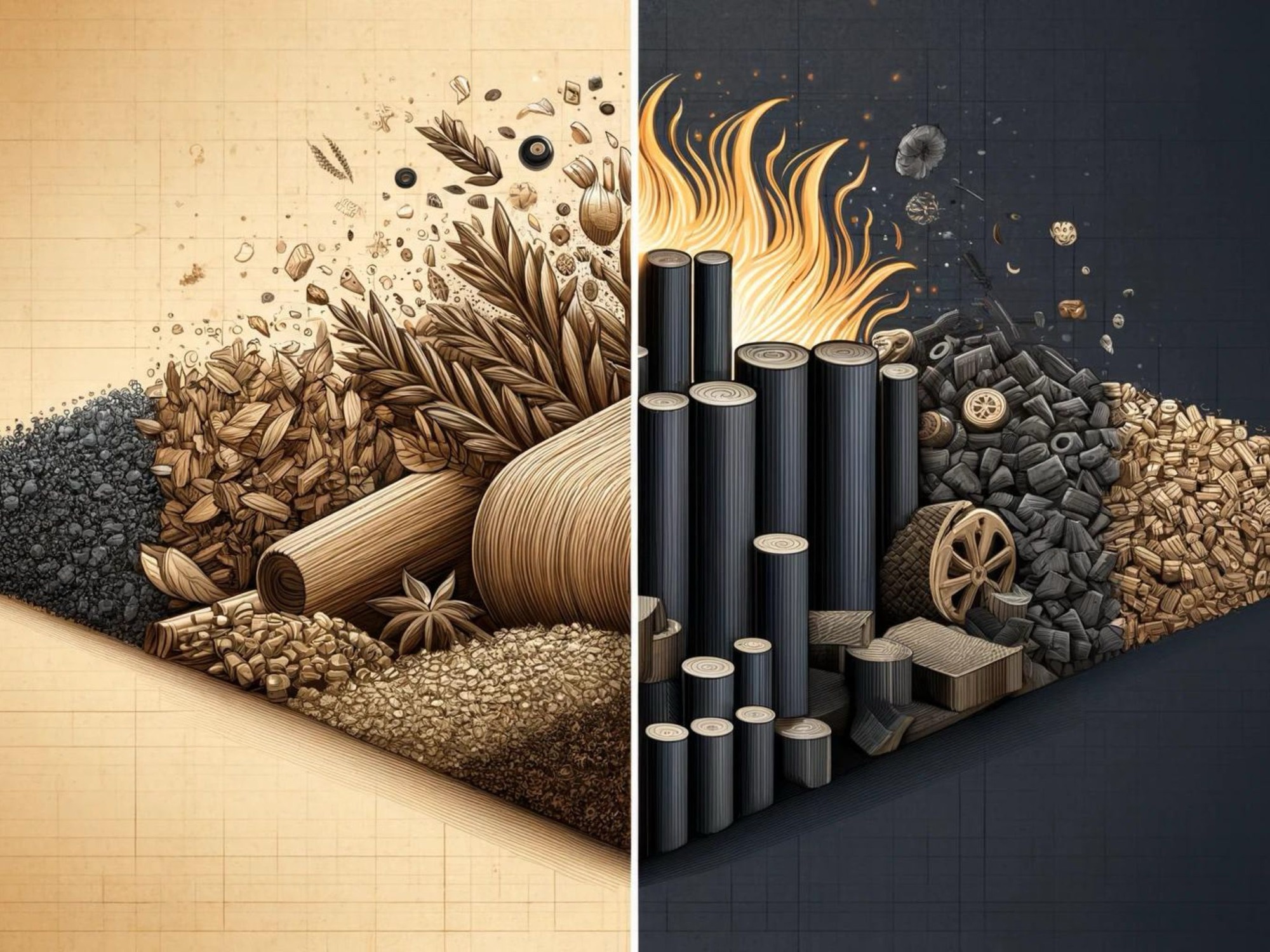
Eling, et al (2024) Densification of raw and torrefied biomassBiomass is a complex biological organic or non-organic solid product derived from living or recently living organism and available naturally. Various types of wastes such as animal manure, waste paper, sludge and many industrial wastes are also treated as biomass because like natural biomass these More: A review. Biomass & Bioenergy. https://doi.org/10.1016/j.biombioe.2024.107210
The shift towards sustainable energy is critical in achieving the United Nations’ Sustainable Development Goals, particularly those targeting affordable and clean energy and climate action. Lignocellulosic biomass from agricultural, municipal, and industrial residues presents a viable solution. This review paper delves into the valorization of such residues through densification and torrefaction, processes that enhance the biomass’s energy properties for use as solid biofuels like briquettes and pellets.
Lignocellulosic residues, characterized by properties such as low density and high moisture content, typically undergo poor combustion, which limits their direct use as fuel. However, torrefaction—a thermal pretreatment where biomass is heated in an inert atmosphere—modifies these properties to improve the biomass’s energy density, combustion efficiency, and storage stability. Following torrefaction, densification can further enhance the fuel’s properties by forming it into high-density pellets or briquettes, which are easier to handle and burn more efficiently.
This process not only improves the energy density but also the mechanical strength and combustion performance of the briquettes or pellets. For example, torrefaction of wheat straw and corn cob at high temperatures significantly increased their energy content. These briquettes and pellets exhibit lower emissions of particulate matter and carbon monoxide compared to traditional biomass fuels, aligning with environmental health standards and reducing their carbon footprint.
Economically, the feasibility of producing densified biomass fuels depends on the availability of feedstocks, the technologies used, and the market demand for the products. Studies have shown varying economic outcomes based on these factors, with profitability largely hinging on efficient production practices and local market conditions.
The review highlights the need for further research to address gaps in knowledge, particularly in comparing the properties of briquettes and pellets made from raw versus torrefied biomass. By consolidating scattered data on the subject, this paper aims to provide a comprehensive resource that can inform future projects and contribute to the advancement of bioenergy, particularly in regions heavily reliant on traditional biomass fuels. The ongoing transition to renewable energy sources, therefore, not only supports sustainable development but also promotes environmental health and economic benefits.

-
alternative energy carriers, biofuels, biomass residues, briquettes, clean energy production, combustion efficiency, densification, Economic feasibility, emissions characteristics, energy density, environmental health, lignocellulosic biomass, modern bioenergy, pellets, physicomechanical properties, renewable energy, Sustainable development goals, Sustainable energy, thermal pretreatment, torrefaction





Leave a Reply