
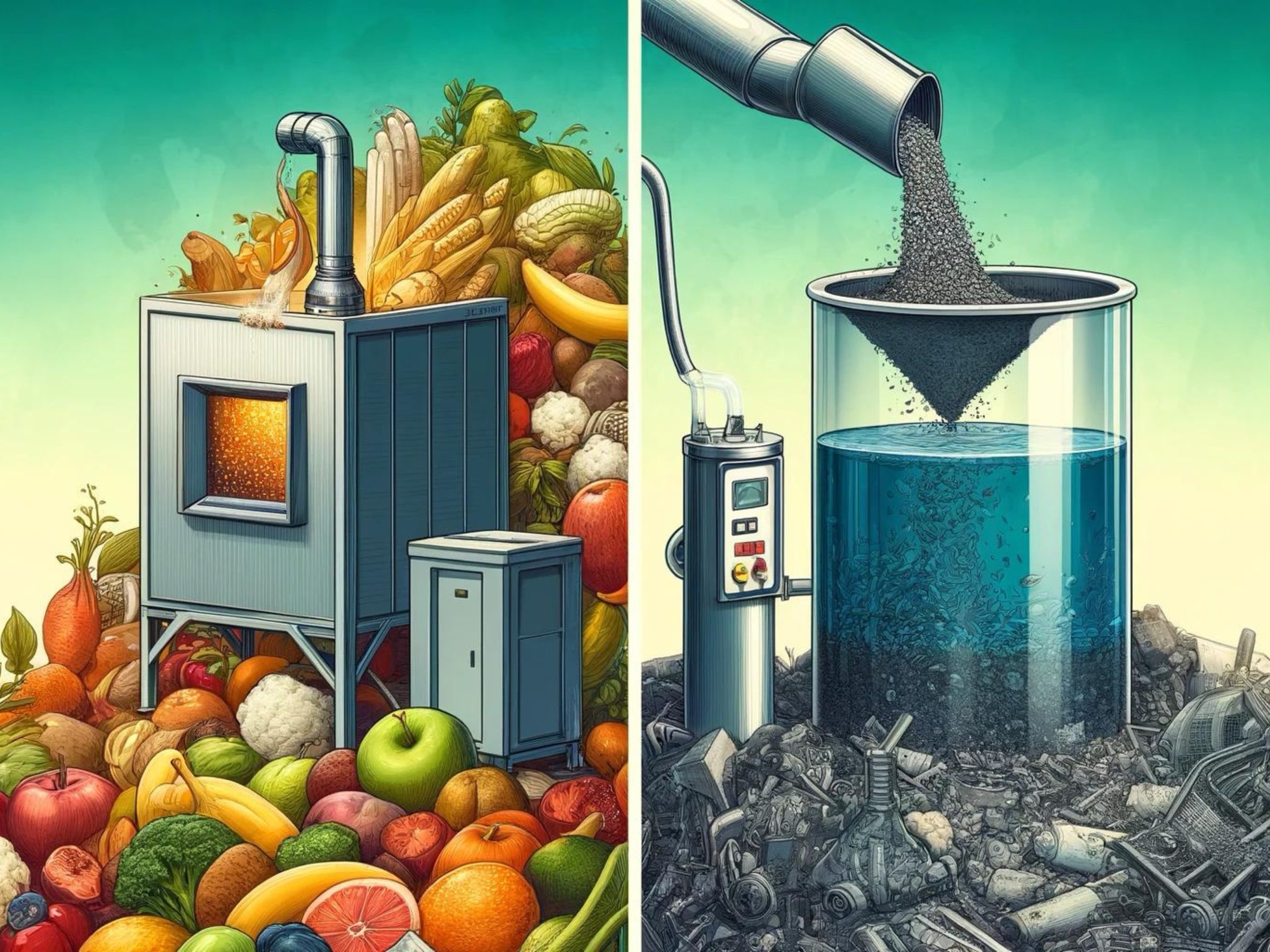

Recent research has demonstrated the successful transformation of food waste (FW) into biochar through pyrolysisPyrolysis is a thermochemical process that converts waste biomass into bio-char, bio-oil, and pyro-gas. It offers significant advantages in waste valorization, turning low-value materials into economically valuable resources. Its versatility allows for tailored products based on operational conditions, presenting itself as a cost-effective and efficient More at varying temperatures, highlighting a novel method to tackle the issue of heavy metal contamination in water resources. This study has meticulously analyzed how different pyrolysis temperatures affect the physiochemical properties of biochar and its efficiency in adsorbing heavy metals from wastewater.
The conversion process revealed that increasing the pyrolysis temperature from 350°C to 550°C reduced the yield of biochar from 18.4% to 14.31% while enhancing its ashAsh is the non-combustible inorganic residue that remains after organic matter, like wood or biomass, is completely burned. It consists mainly of minerals and is different from biochar, which is produced through incomplete combustion. Ash Ash is the residue that remains after the complete More content and alkalinity, indicating a transformation conducive to adsorption processes. Specifically, the biochar produced at 550°C exhibited superior adsorption capabilities which can be attributed to its high pHpH is a measure of how acidic or alkaline a substance is. A pH of 7 is neutral, while lower pH values indicate acidity and higher values indicate alkalinity. Biochars are normally alkaline and can influence soil pH, often increasing it, which can be beneficial More level (10.17), negative charge on active sites, and presence of oxygen-containing functional groups that favor the adsorption of heavy metals.
Optimal conditions for the adsorption were identified at a pH of 8, with a biochar dosage of 2.5 g/L and a contact time of 120 minutes, achieving maximum heavy metal removal. The study employed both Langmuir and Freundlich isotherms to model the adsorption equilibrium, with the Freundlich isotherm providing the best correlation, suggesting that adsorption occurs on heterogeneous surfaces.
This research underscores the efficacy of FW-derived biochar as a cost-effective and environmentally friendly adsorbent for the remediation of heavy metals from contaminated water. The findings advocate for the utilization of biochar not only as a means to mitigate environmental pollution but also as a tool to enhance public health safety through the provision of cleaner water. By converting waste into a valuable resource, this study contributes to the sustainable practices aimed at achieving environmental conservation and pollution reduction.



Leave a Reply