


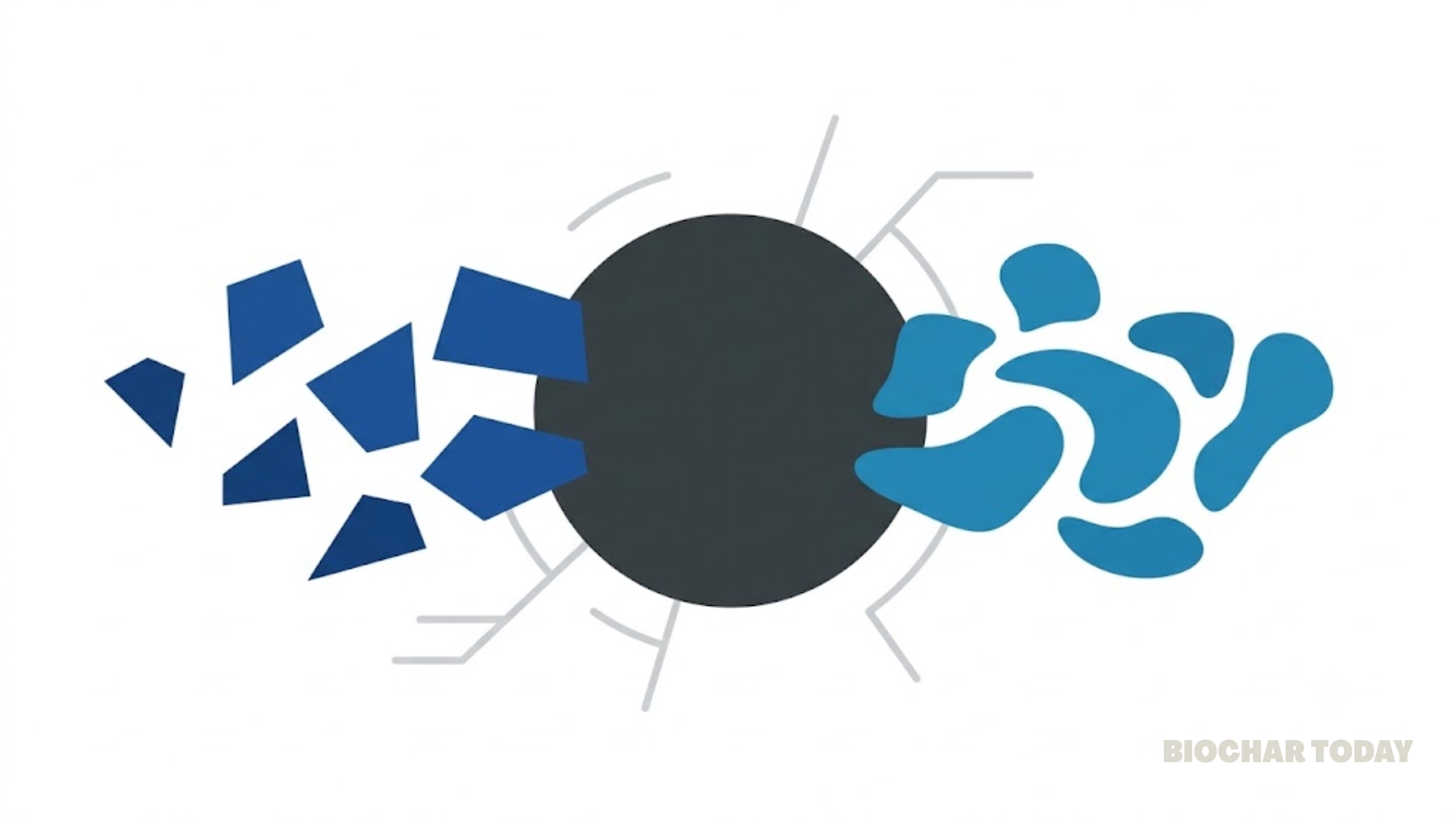
Recent research highlights the significant potential of ball-milled biochar in activating peroxydisulfate (PDS) for the efficient degradation of tetracycline hydrochloride (TCH), a common antibiotic known for its persistence in the environment. The study investigates the mechanics behind the ball-milling process, revealing that extending the milling time increases the biochar’s surface area, reduces particle size, and develops beneficial oxygen-containing groups and carbon defects.
The enhanced catalytic performance of biochar becomes evident as the degradation rate of TCH jumps from 62.3% to an impressive 86.9% with increased milling time up to 120 minutes. This research also delves into various process factors such as PDS dosage, TCH concentration, reaction temperature, and water quality, confirming the method’s efficacy across different water matrices and with various antibiotics.
Notably, the study identifies that the primary agents in TCH degradation within this system are singlet oxygen and electron transfer, rather than the commonly assumed sulfate and hydroxyl radicals. This finding is supported by radical quenching experiments and electron paramagnetic resonance analysis, which point to the crucial role of enhanced electron transport capabilities induced by ball-milling.
This research not only clarifies the degradation pathways and mineralization of TCH but also establishes a quantitative relationship between the biochar’s surface properties and its catalytic performance. These insights underscore the potential of ball-milled biochar as a cost-effective and environmentally friendly catalyst in the remediation of antibiotic pollution, offering a promising solution to a pressing environmental challenge.





Leave a Reply