
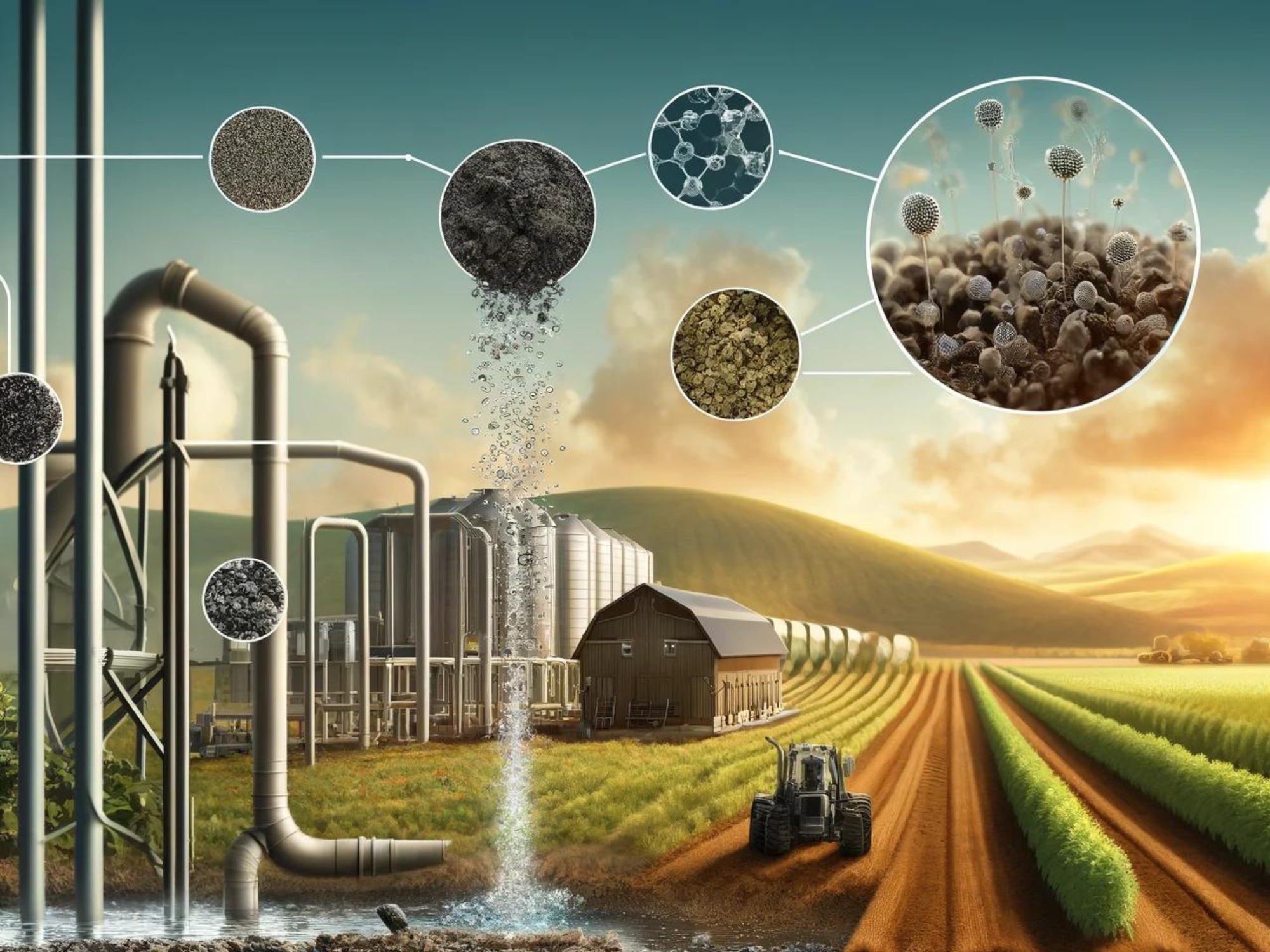

Recent studies have highlighted biochar’s potential as a sustainable adsorbent for mitigating the contamination of agricultural systems by per- and polyfluoroalkyl substances (PFAS). Biochar, produced through the pyrolysisPyrolysis is a thermochemical process that converts waste biomass into bio-char, bio-oil, and pyro-gas. It offers significant advantages in waste valorization, turning low-value materials into economically valuable resources. Its versatility allows for tailored products based on operational conditions, presenting itself as a cost-effective and efficient More of organic materials such as crop waste, wood waste, and manures, presents a low-cost solution for PFAS removal, addressing the increasing regulatory scrutiny over these persistent pollutants.
Principal component analysis (PCA) of over 100 data points has identified the carbon to oxygen (C/O) ratio and specific surface area (SSA) as critical factors in determining the PFAS adsorption efficiency of biochar. The analysis underscores that both the feedstockFeedstock refers to the raw organic material used to produce biochar. This can include a wide range of materials, such as wood chips, agricultural residues, and animal manure. More used and the biochar’s preparation method significantly influence its performance, often making it a competitive alternative to traditional granulated activated carbonActivated carbon is a form of carbon that has been processed to create a vast network of tiny pores, increasing its surface area significantly. This extensive surface area makes activated carbon exceptionally effective at trapping and holding impurities, like a molecular sponge. It is commonly More (GAC) and ion exchange (IX) methods.
This review systematically evaluates the role of biochar in PFAS remediation within agricultural contexts—spanning soil, water, and other compartments. It considers various application strategies such as water filtration and soil amendmentA soil amendment is any material added to the soil to enhance its physical or chemical properties, improving its suitability for plant growth. Biochar is considered a soil amendment as it can improve soil structure, water retention, nutrient availability, and microbial activity. More to highlight both the benefits and complexities of employing biochar in diverse scenarios. Life cycle analysis (LCA) indicates that using biochar for PFAS adsorption could result in negative global warming potential, thereby offering environmental benefits beyond mere contaminant removal.
Biochar’s efficacy in adsorbing PFAS effectively turns it into a viable candidate for large-scale applications aimed at protecting agricultural productivity and food safety. The current findings promote a better understanding of the material’s adsorptive properties and encourage the optimization of biochar formulations to enhance PFAS remediation efforts. This comprehensive analysis not only delineates the environmental advantages of biochar but also assists in refining strategies for its practical application in agriculture, potentially establishing biochar as a cornerstone in sustainable agricultural practices.






Leave a Reply