
Faiz, et al (2024) Carbon dioxide emission evaluation of biocharBiochar is a carbon-rich material created from biomass decomposition in low-oxygen conditions. It has important applications in environmental remediation, soil improvement, agriculture, carbon sequestration, energy storage, and sustainable materials, promoting efficiency and reducing waste in various contexts while addressing climate change challenges. More based vegetation concrete for ecological restoration projects. Case Studies in Construction Materials. https://doi.org/10.1016/j.cscm.2024.e03874
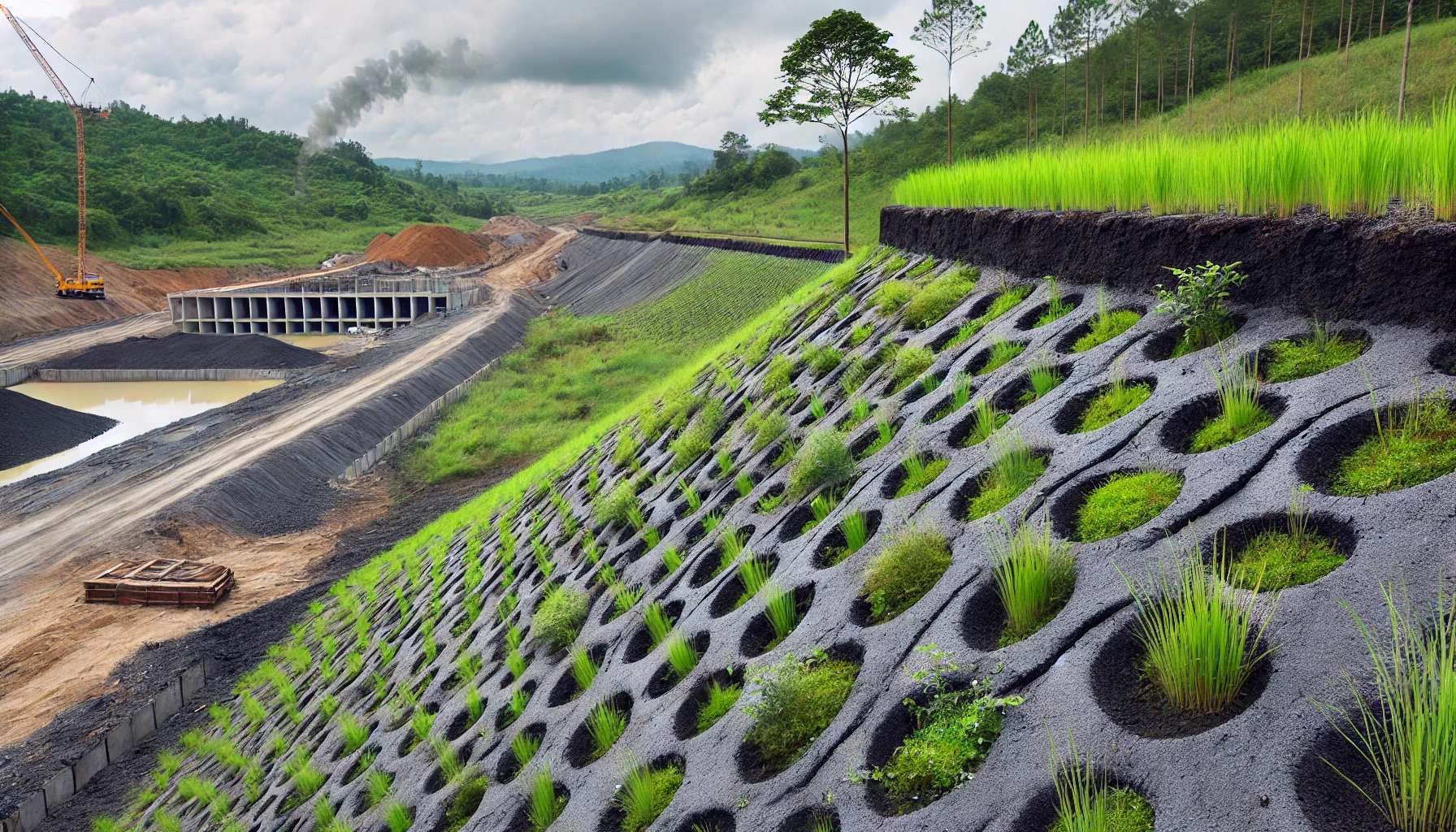
Biochar-based vegetation concrete offers a sustainable solution for ecological restoration in projects like slope stabilization and green roofing. This research explores how incorporating biochar and sulfoaluminate cement affects carbon dioxide (CO2) emissions, compressive strength, porosityPorosity of biochar is a key factor in its effectiveness as a soil amendment and its ability to retain water and nutrients. Biochar’s porosity is influenced by feedstock type and pyrolysis temperature, and it plays a crucial role in microbial activity and overall soil health. Biochar More, and plant growth.
The study tested various mix proportions, focusing on biochar (5%, 10%, and 15%) and cement content (4%, 8%, and 12%) to identify optimal combinations. Results showed that adding biochar improved concrete strength but reduced porosity. Increasing biochar content from 0% to 15% decreased porosity by 16% and boosted compressive strength by 92%. However, higher biochar levels (above 5%) hindered plant growth. Cement also played a crucial role, with increased cement content reducing porosity and significantly enhancing strength—up to a 200% increase.
From an environmental perspective, the study found that using sulfoaluminate cement reduced CO2 emissions by 31.8% compared to traditional Portland cement. Biochar, while offering some benefits, still contributed to emissions, but its carbon sequestration potential offsets some of these effects. The recommended mix for balancing sustainability and performance is 5% biochar and 8% sulfoaluminate cement.
This research highlights the potential of biochar-based vegetation concrete as a sustainable material, reducing CO2 emissions and supporting plant growth while being cost-effective. Future research should explore field trials to confirm the long-term viability of these findings in real-world applications.




Leave a Reply