
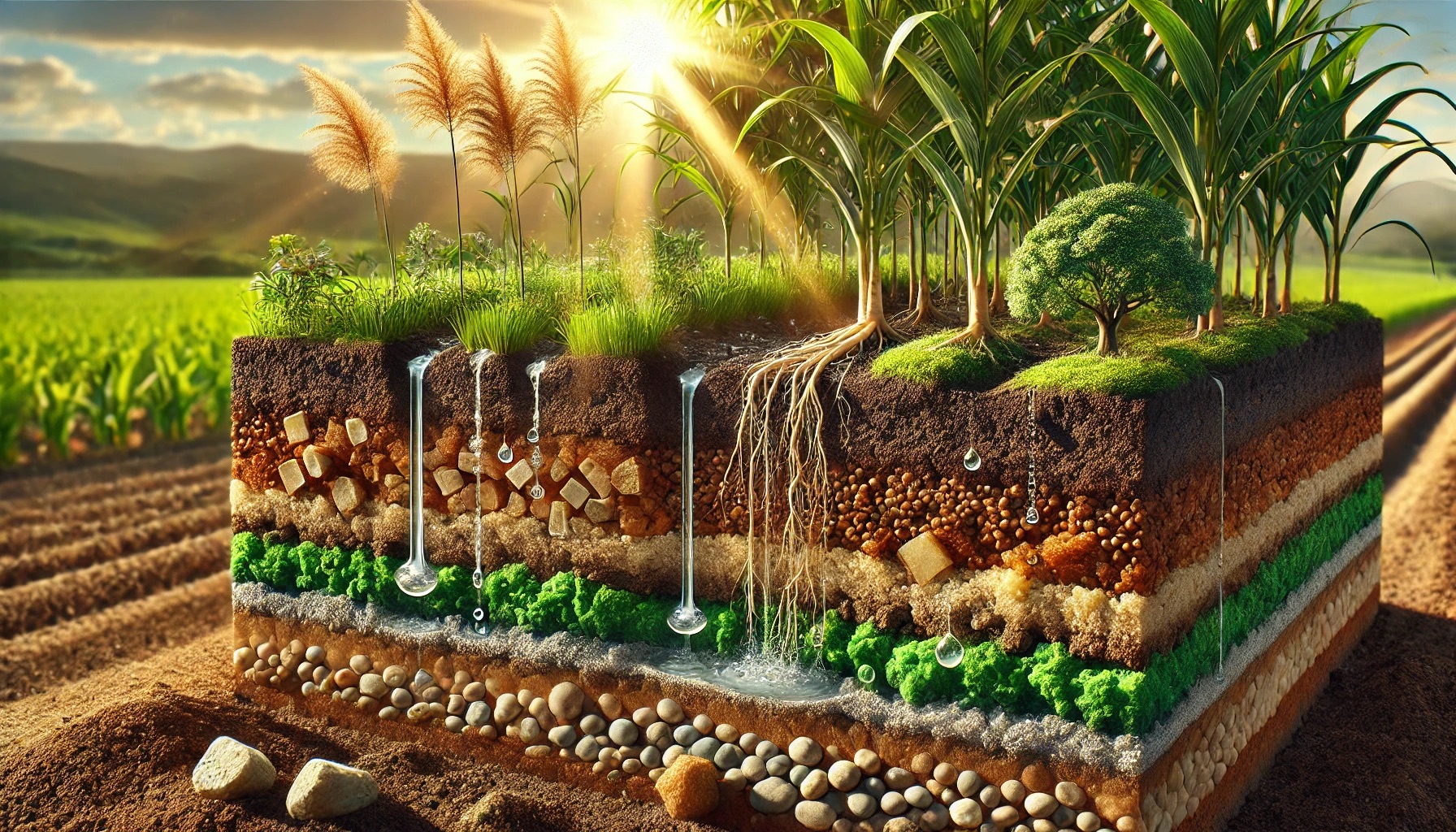
Moradi-Choghamarani, F., Moosavi, A.A. & Sepaskhah, A.R. Sugarcane bagasse derived biocharBiochar is a carbon-rich material created from biomass decomposition in low-oxygen conditions. It has important applications in environmental remediation, soil improvement, agriculture, carbon sequestration, energy storage, and sustainable materials, promoting efficiency and reducing waste in various contexts while addressing climate change challenges. More potential to improve soil structure and water availability in texturally different soils. Sci Rep 14, 26541 (2024). https://doi.org/10.1038/s41598-024-77700-3
Biochar, derived from sugarcane bagasse, offers a sustainable solution to improve soil health in arid regions. By adding biochar produced at different pyrolysisPyrolysis is a thermochemical process that converts waste biomass into bio-char, bio-oil, and pyro-gas. It offers significant advantages in waste valorization, turning low-value materials into economically valuable resources. Its versatility allows for tailored products based on operational conditions, presenting itself as a cost-effective and efficient More temperatures (300°C and 600°C), researchers tested its impact on soil structure, water retention, and stability across three soil types in Iran. The study reveals that biochar at a 3% concentration significantly boosts soil stability, increasing the structural stability index (SSI) by 21–28% and improving water retention in certain soil types.
For clay-heavy soils like silty-clay Inceptisols and silty-clay-loam Alfisols, biochar addition improved the soil’s pore structure, helping water distribution and availability. However, water retention indicators—such as plant available water (PAW) and least limiting water range (LLWR)—decreased due to increased micropore content, which holds water less accessible to plants. Conversely, in loam-based Aridisols, biochar addition led to higher PAW, LLWR, and overall water storage capacity, supporting crops in these coarser soils with better water availability.
The study concludes that biochar, especially at a higher dose, can stabilize soil structure and optimize water retention. This enhancement is particularly valuable in arid and semi-arid climates, where improved water storage directly benefits crop productivity and sustainability. Sugarcane bagasse biochar thus stands out as a promising amendment to enrich soil health, offering potential for regions challenged by low organic content and frequent drought.



Leave a Reply