
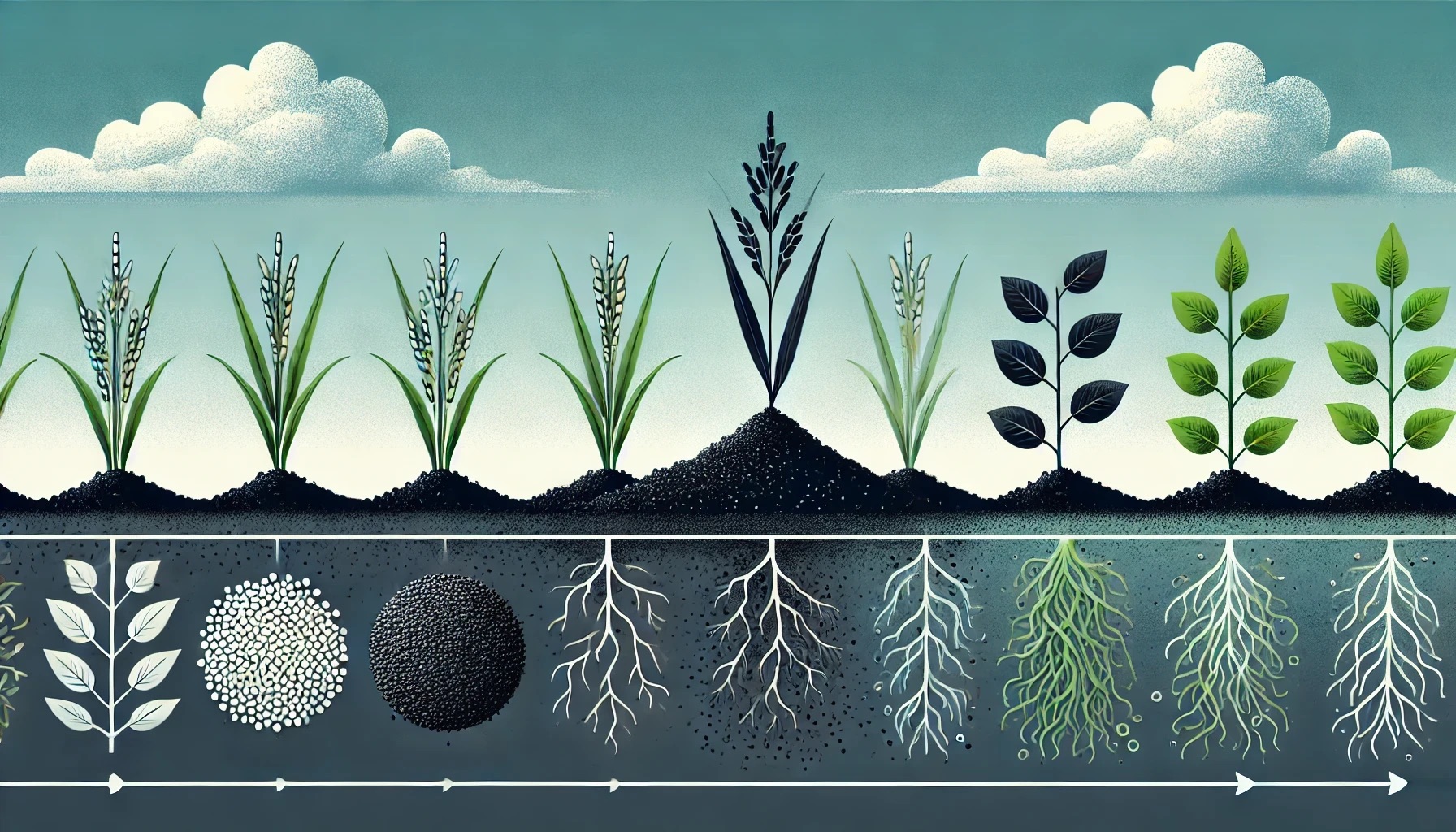

Antimony (Sb), a toxic metalloid used in industrial applications, poses significant risks to both crop production and human health. Its accumulation in soils reduces plant growth, photosynthesis, and nutrient absorption while increasing oxidative stress in plants. Rice, a global staple, is particularly vulnerable when grown in Sb-contaminated soils, raising concerns about food safety and sustainability.
A recent study explored how combining biochar (BC) and seaweed-based fertilizer (SBF) can mitigate Sb toxicity in rice. Biochar, known for its soil-enhancing properties, and SBF, rich in nutrients and plant hormones, were tested for their effectiveness in reducing Sb uptake and improving plant resilience. The study evaluated rice growth under various treatments: control, Sb stress, and Sb stress combined with BC, SBF, or both.
The results were promising. The BC and SBF blend reduced Sb accumulation in rice by converting it into more stable, less bio-accessible forms, lowering Sb concentration in the soil by 52.74%. This treatment also improved photosynthesis, nutrient uptake, and antioxidant activity, leading to better plant growth and yield. Oxidative damage markers, such as hydrogen peroxide and malondialdehyde, significantly decreased.
This research highlights the potential of BC and SBF co-application as an effective, sustainable strategy for managing Sb contamination in agricultural soils. By enhancing soil health and reducing metal toxicity, this approach can improve crop production and protect food safety in polluted regions.


Leave a Reply