


Heavy metals in water, such as lead (Pb2+) and cadmium (Cd2+), pose significant environmental and health risks. To tackle this issue, researchers have developed an innovative solution using biochar modified with manganese dioxide (MnO2) and amino groups, called MNBC. This modified biochar, derived from rice straw, shows promising results in removing Pb2+ and Cd2+ from water.
In experiments, MNBC demonstrated impressive adsorption capabilities. It was able to adsorb 109.5 mg/g of Pb2+ and 27.2 mg/g of Cd2+, even after four usage cycles. This enhanced performance is due to the combined modification, which increases the variety of functional groups and improves the pore structure of the biochar. As a result, MNBC achieved maximum removal rates of 96.18% for Pb2+ and 64.26% for Cd2+, which remained high after multiple cycles.
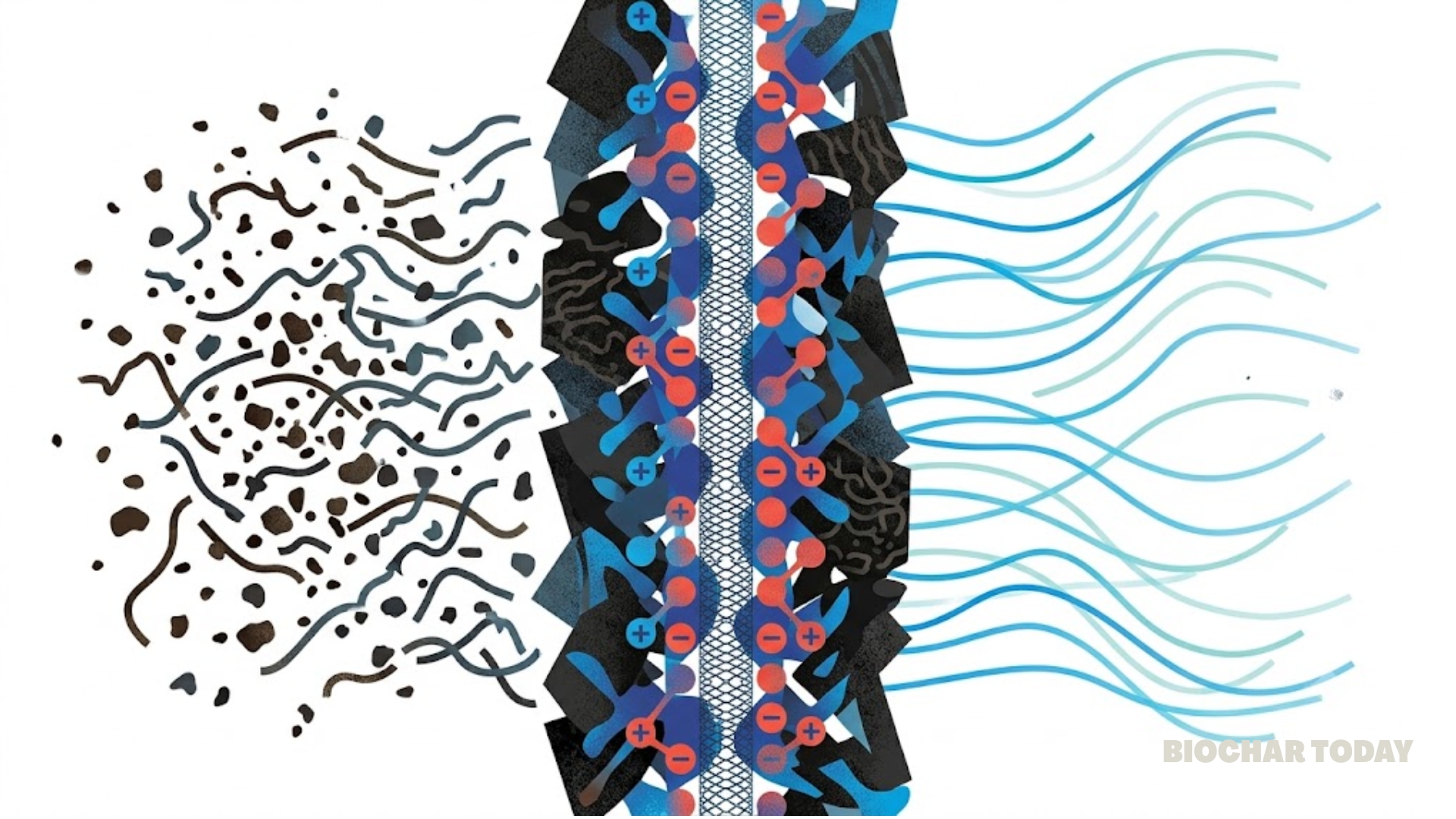
The study found that the primary mechanisms for adsorption were complexation and electrostatic attraction. Additionally, theoretical calculations showed that Pb2+ had a higher tendency to transfer electrons with the adsorbent compared to Cd2+, explaining the competitive adsorption results. The hybridization of MnO2’s oxygen and amino groups’ nitrogen with Pb2+ and Cd2+ further enhanced the adsorption efficiency.
MNBC’s ability to maintain high removal rates over multiple cycles and its stability in treating heavy metals in water highlight its potential for practical applications. This study suggests that combining MnO2 and amino groups in biochar is an effective method to address heavy metal pollution in aqueous solutions.




Leave a Reply