
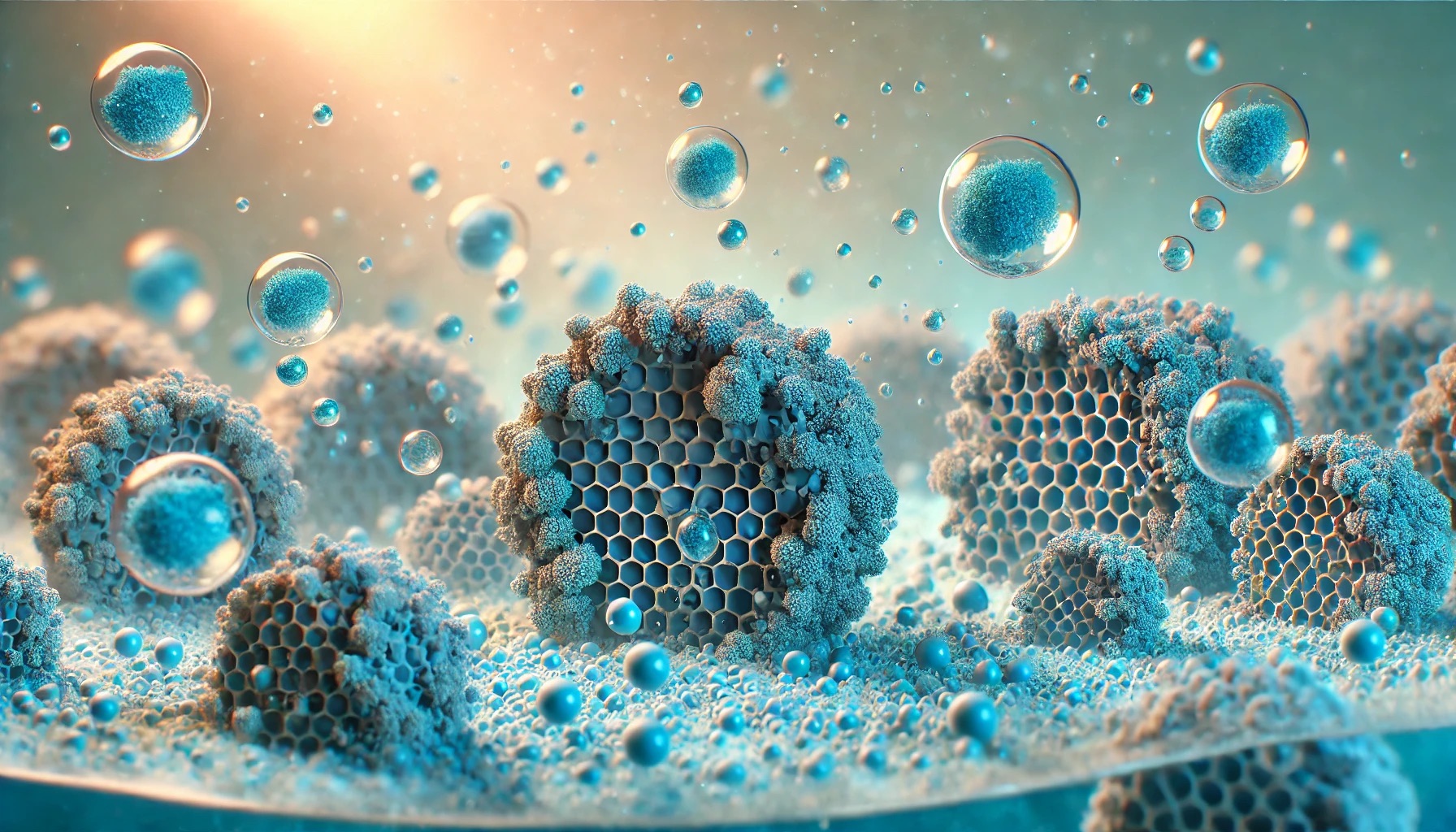

A recent study explored the use of magnetron sputtering to deposit thin films of niobium onto wood biochar, aiming to improve its ability to adsorb anionic pollutants, such as the brilliant blue dye, from water. Magnetron sputtering, a physical vapor deposition process, creates a uniform niobium layer on the biochar surface without requiring additional chemicals or liquid waste.
The results showed that niobium coatings increased the point of zero charge (PZC) of biochar by up to 0.94 pHpH is a measure of how acidic or alkaline a substance is. A pH of 7 is neutral, while lower pH values indicate acidity and higher values indicate alkalinity. Biochars are normally alkaline and can influence soil pH, often increasing it, which can be beneficial More units. This alteration expanded the pH range in which the biochar surface remains positively charged, favoring electrostatic attraction of anionic molecules. Among tested samples, the optimal configuration used a power of 150 W for 30 minutes, achieving a maximum adsorption capacity of 43.64 mg/g at pH 2.4 and 25°C.
Niobium-coated biochar demonstrated improved efficiency compared to untreated biochar, driven by the balance of niobium loading and accessible surface area. Excessive niobium deposition, however, blocked pores, reducing adsorption performance. The adsorption process was best described by the Sips isotherm model, highlighting the importance of surface chemistry and charge distribution in achieving high adsorption capacity.
This research demonstrates that niobium thin films can shift adsorption mechanisms from simple pore diffusion to electrostatic interactions, significantly improving the biochar’s selectivity and reusability for environmental applications like dye removal from wastewater.
For successful implementation, the study emphasizes the need for precise control over deposition parameters to preserve the biochar’s porous structure and functional groups.



Leave a Reply