
Shen, C., Song, Z., Qiu, Z. et al. Effects of pyrolysisPyrolysis is a thermochemical process that converts waste biomass into bio-char, bio-oil, and pyro-gas. It offers significant advantages in waste valorization, turning low-value materials into economically valuable resources. Its versatility allows for tailored products based on operational conditions, presenting itself as a cost-effective and efficient More temperature on drinking water treatment residual biocharBiochar is a carbon-rich material created from biomass decomposition in low-oxygen conditions. It has important applications in environmental remediation, soil improvement, agriculture, carbon sequestration, energy storage, and sustainable materials, promoting efficiency and reducing waste in various contexts while addressing climate change challenges. More properties and organophosphorus pesticides adsorption.Chem. Pap. (2024). https://doi.org/10.1007/s11696-024-03466-7
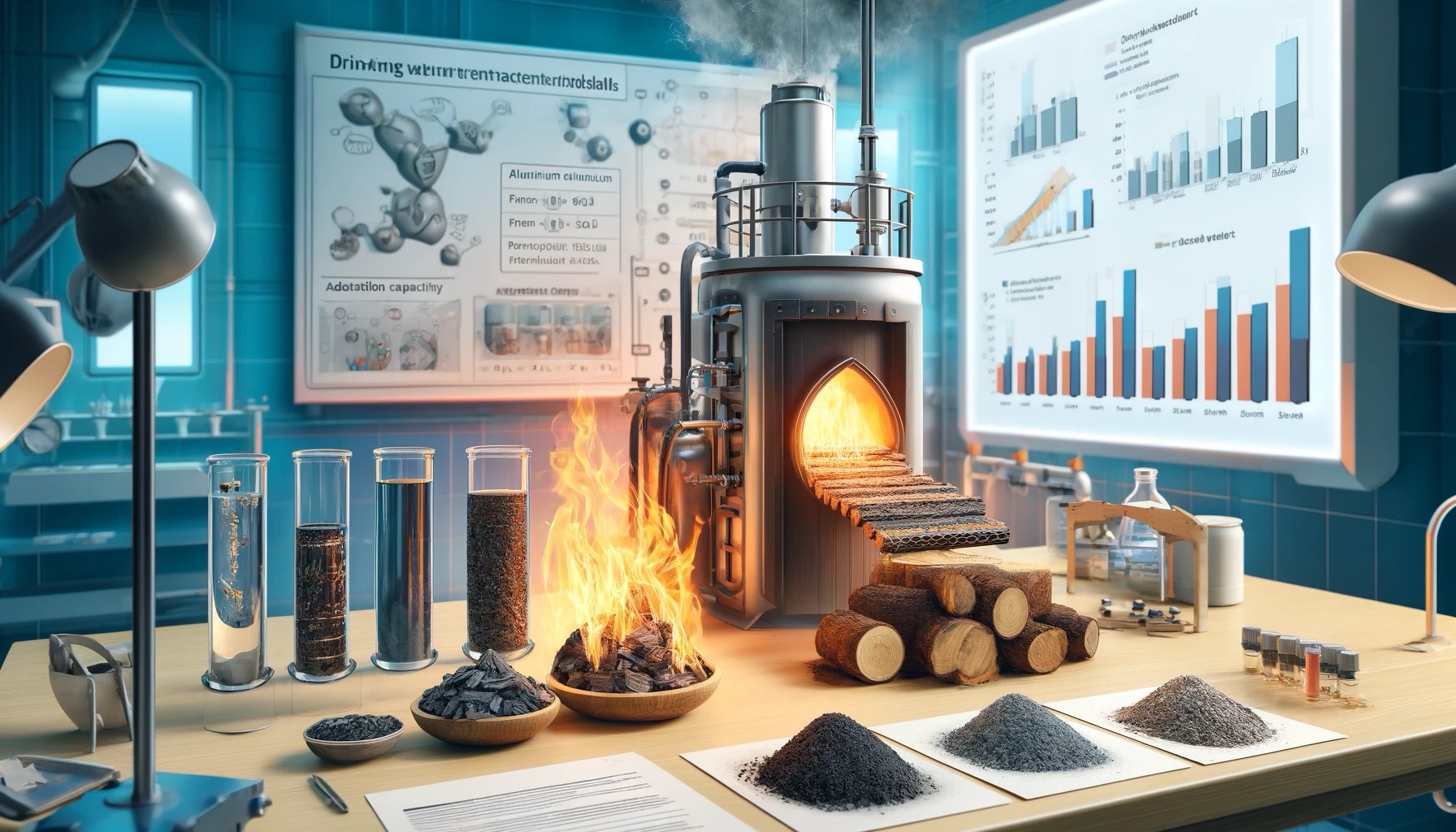
Drinking water treatment residual (DWTR) is an unavoidable byproduct of the water treatment process. Despite ongoing recycling efforts, concerns about the release of aluminum (Al) persist, posing potential environmental risks. A recent study explored pyrolysis as a method to mitigate Al release from DWTR, examining how different pyrolysis temperatures affect the properties, metal release risks, and adsorption capacity for organophosphorus pesticides, specifically trichlorfon.
The research found that higher pyrolysis temperatures increased the aromatic content of DWTR biochar while reducing the unstable fractions of both Al and Fe. This transformation led to a reduction in the risk of Al release, with the biochar meeting drinking water standards. Notably, the specific surface area of DWTR biochar initially increased with rising pyrolysis temperatures before decreasing. The elevated temperatures effectively converted unstable Al forms into more stable ones, thereby reducing the Al release risk.
Moreover, DWTR biochar proved effective in adsorbing trichlorfon, although its adsorption capacity decreased at higher temperatures. This adsorption was primarily driven by chemical interactions facilitated by active surface functional groups.
This study highlights the potential of pyrolysis as an eco-friendly and cost-effective strategy for managing DWTR. By transforming DWTR into biochar, not only is the risk of harmful Al release minimized, but the resultant biochar also offers valuable adsorption properties for contaminants like trichlorfon. Such advancements underscore the promise of sustainable waste management solutions in addressing environmental concerns associated with water treatment byproducts.


Leave a Reply