

Lui, et al (2024) Eco-friendly, stable, and high-performance biocharBiochar is a carbon-rich material created from biomass decomposition in low-oxygen conditions. It has important applications in environmental remediation, soil improvement, agriculture, carbon sequestration, energy storage, and sustainable materials, promoting efficiency and reducing waste in various contexts while addressing climate change challenges. More prepared by a twice-modification scheme: Saccharification of raw materials & thermal air oxidation of biochar. Journal of Environmental Management. https://doi.org/10.1016/j.jenvman.2024.123226
A new study in the Journal of Environmental Management presents a twice-modification (TM) method to produce eco-friendly, high-performance biochar (BC-M). This approach offers a sustainable solution for tackling phenolic pollutants, common in industrial wastewater and harmful to the environment.
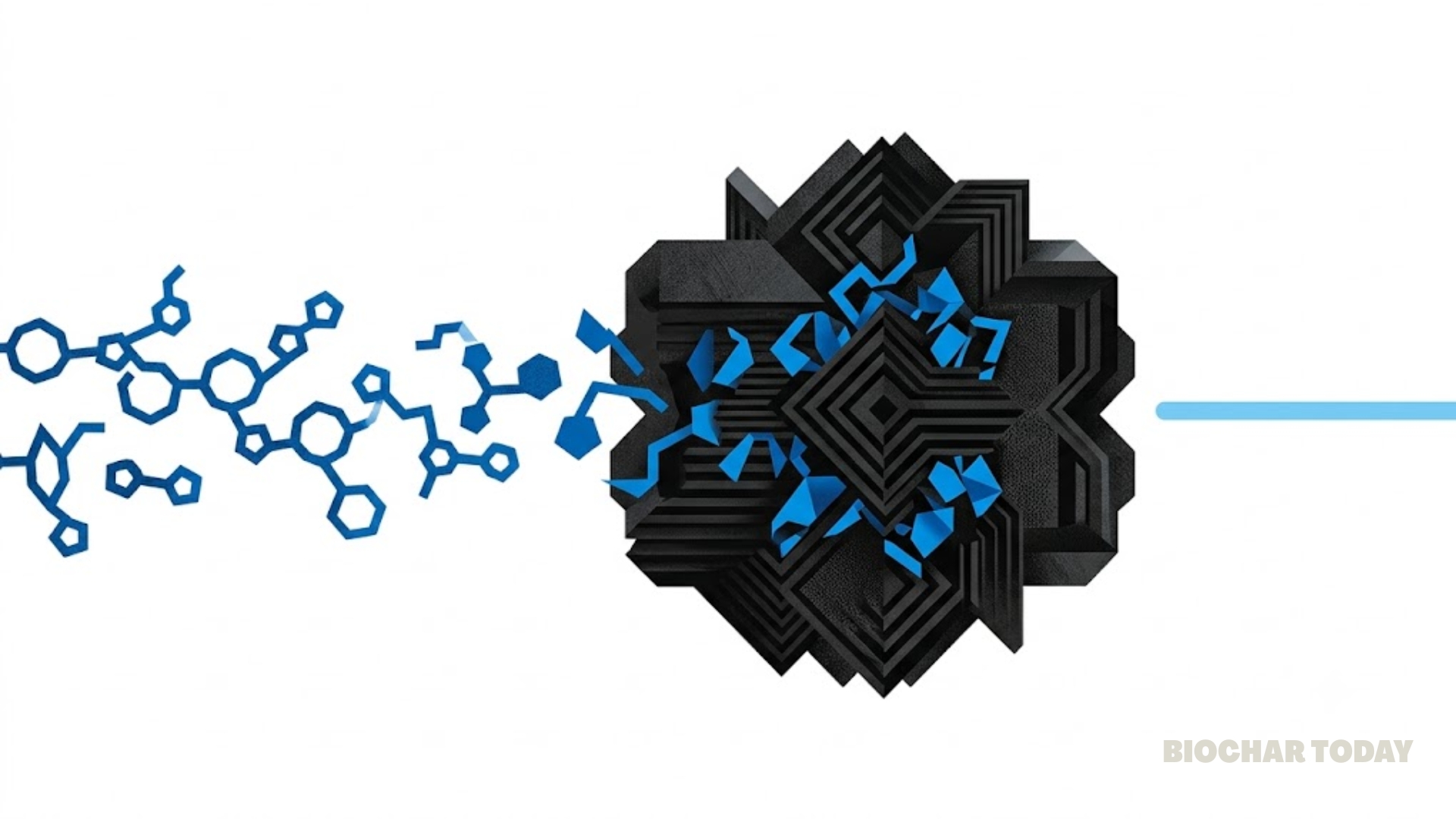
The TM process combines two steps: saccharification of raw lignocellulose materials and thermal air oxidation of the resulting biochar. Saccharification improves biochar stability by increasing its lignin content, while thermal air oxidation enhances its surface area and functional groups, boosting its adsorption capacity. This synergy addresses challenges like biochar mass loss and instability, which have hindered its broader use.
The study found that TM increased biochar’s specific surface area by 63.6%, pore volume by 139%, and functional groups by 50%–1271%. These improvements resulted in an adsorption capacity for phenolic pollutants that was 21%–2408% higher than unmodified biochar. Additionally, dissolved solid levels in BC-M were reduced by 97.5%, minimizing environmental risks.
The process is both cost-effective and sustainable. TM reduced carbon emissions by 0.70 t CO₂/yr/t compared to activated carbonActivated carbon is a form of carbon that has been processed to create a vast network of tiny pores, increasing its surface area significantly. This extensive surface area makes activated carbon exceptionally effective at trapping and holding impurities, like a molecular sponge. It is commonly More, offering a greener alternative. The findings suggest that TM biochar could play a crucial role in industrial wastewater treatment while supporting carbon neutrality goals.
This innovative dual-modification method highlights the potential of biochar as a low-cost, high-stability, and environmentally friendly material for pollutant removal.



Leave a Reply