
Hosseini, et al (2024) Remote magnetically stimulated xanthan-biochar-Fe3O4-molecularly imprinted biopolymer hydrogel toward electrochemical enantioselection of l-tryptophan. Analytica Chimica Acta. https://doi.org/10.1016/j.aca.2024.342837
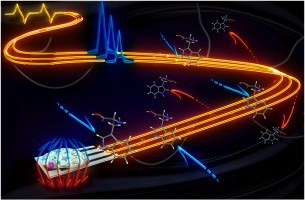
Researchers have developed an innovative magneto-responsive electrochemical sensor designed to detect L-Tryptophan (L-Trp), a crucial amino acid, with high precision. This device combines biocharBiochar is a carbon-rich material created from biomass decomposition in low-oxygen conditions. It has important applications in environmental remediation, soil improvement, agriculture, carbon sequestration, energy storage, and sustainable materials, promoting efficiency and reducing waste in various contexts while addressing climate change challenges. More, Fe3O4 nanoparticles, and molecularly imprinted polydopamine (MIPDA) within a xanthan hydrogel, providing an effective solution for monitoring L-Trp levels in human body fluids.
L-Trp is essential for protein synthesis, metabolic processes, and neurological health, influencing the production of serotonin and melatonin. Unlike most amino acids, L-Trp cannot be synthesized by the human body, making its detection important for health diagnostics. The sensor leverages the unique properties of its components to ensure high sensitivity and selectivity, operating within a linear detection range of 1.0–60.0 μM and a limit of detection as low as 0.44 μM.
Key operational factors such as pHpH is a measure of how acidic or alkaline a substance is. A pH of 7 is neutral, while lower pH values indicate acidity and higher values indicate alkalinity. Biochars are normally alkaline and can influence soil pH, often increasing it, which can be beneficial More, response time, and loading sample volume were meticulously optimized. The sensor demonstrated good reproducibility and selectivity, making it suitable for real-time analysis of L-Trp in various samples, including plasma and serum. The use of biochar-stabilized Fe3O4 ensures magnetic orientation, enhancing mass transfer and sensitivity, while the MIPDA layer provides precise molecular recognition.
This development marks an advancement in electrochemical chiral sensing, presenting an accessible, efficient method for healthcare monitoring. By facilitating on-site L-Trp evaluation, this sensor could play a role in early detection of health conditions, ultimately improving patient outcomes and advancing personalized medicine.





Leave a Reply