
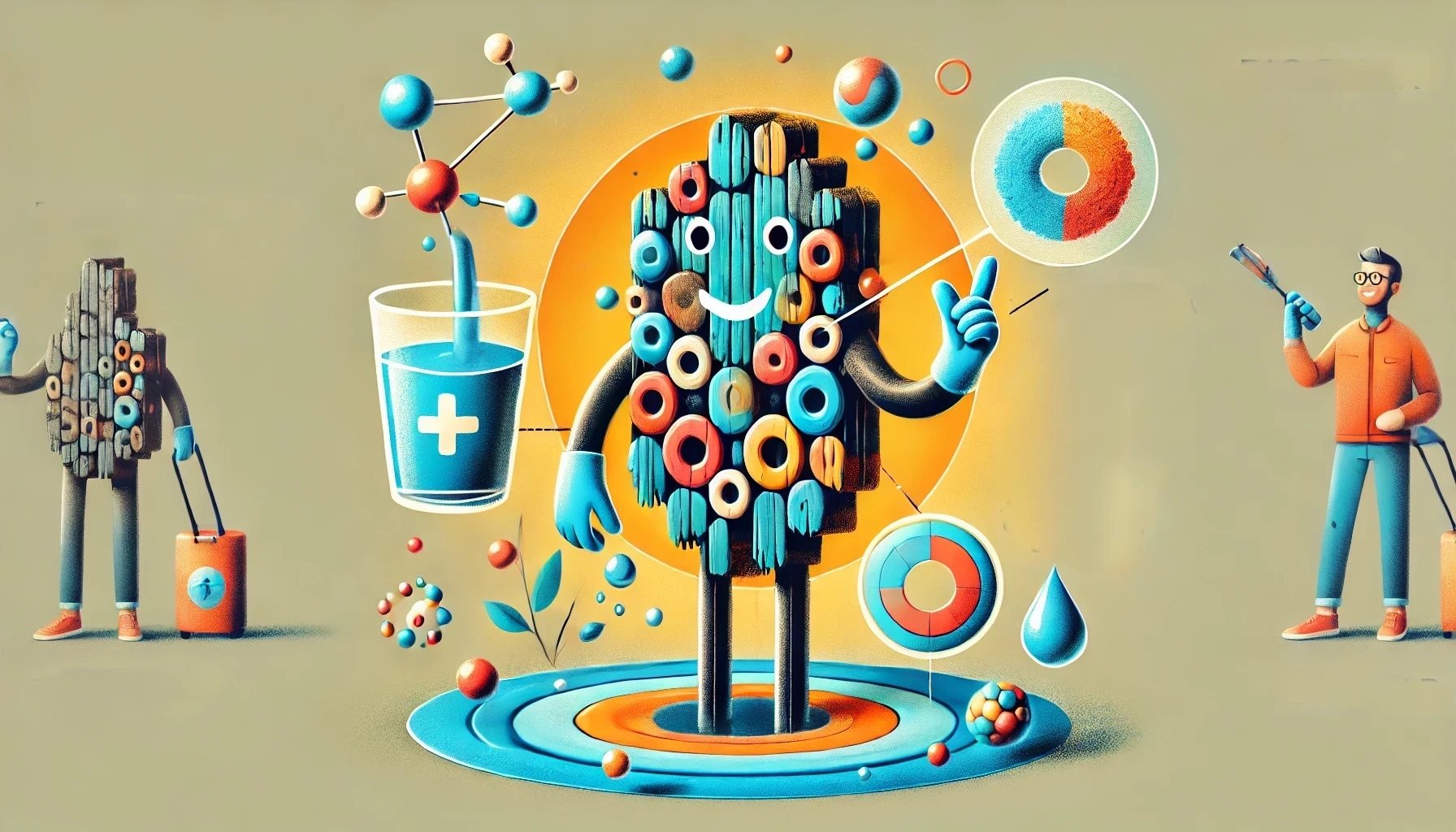
Tan, et al (2024) Preparation of biomass-derived porous biocharBiochar is a carbon-rich material created from biomass decomposition in low-oxygen conditions. It has important applications in environmental remediation, soil improvement, agriculture, carbon sequestration, energy storage, and sustainable materials, promoting efficiency and reducing waste in various contexts while addressing climate change challenges. More for efficient removal of iodized X-ray contrast media in water: Adsorption performance and underlying mechanism. Separation and Purification Technology. https://doi.org/10.1016/j.seppur.2024.128751
A team of researchers, including Qiang Tan and Zhonglin Chen, has developed a unique type of biochar (MBC) that can efficiently remove iodized X-ray contrast media (ICM) from water. Created through a simple one-step pyrolysisPyrolysis is a thermochemical process that converts waste biomass into bio-char, bio-oil, and pyro-gas. It offers significant advantages in waste valorization, turning low-value materials into economically valuable resources. Its versatility allows for tailored products based on operational conditions, presenting itself as a cost-effective and efficient More process, this biochar features an impressive specific surface area of 1435.1 m² g−1, allowing it to effectively adsorb ICMs like diatrizoic acid, iohexol, and iopamidol. The best results came from a pyrolysis temperature of 700℃ with a sodium hydroxide to sodium carbonate ratio of 1:3.
What makes MBC stand out is its large surface area and well-developed pore structure, which are crucial for trapping ICMs. Additionally, density functional theory (DFT) calculations showed that oxygen-containing functional groups on the MBC surface enhance hydrogen bonding with ICMs, boosting adsorption performance. The adsorption process follows pseudo-second-order kinetics and fits the Freundlich isotherm model, suggesting it’s both spontaneous and heat-absorbing.
Not only does MBC work well, but it’s also reusable. Recycling tests confirmed that it maintains its adsorption capacity over multiple cycles, making it a sustainable option for water purification. This study highlights the potential of biochar made through a straightforward pyrolysis method as an affordable and effective solution for removing stubborn pollutants from water.




Leave a Reply