
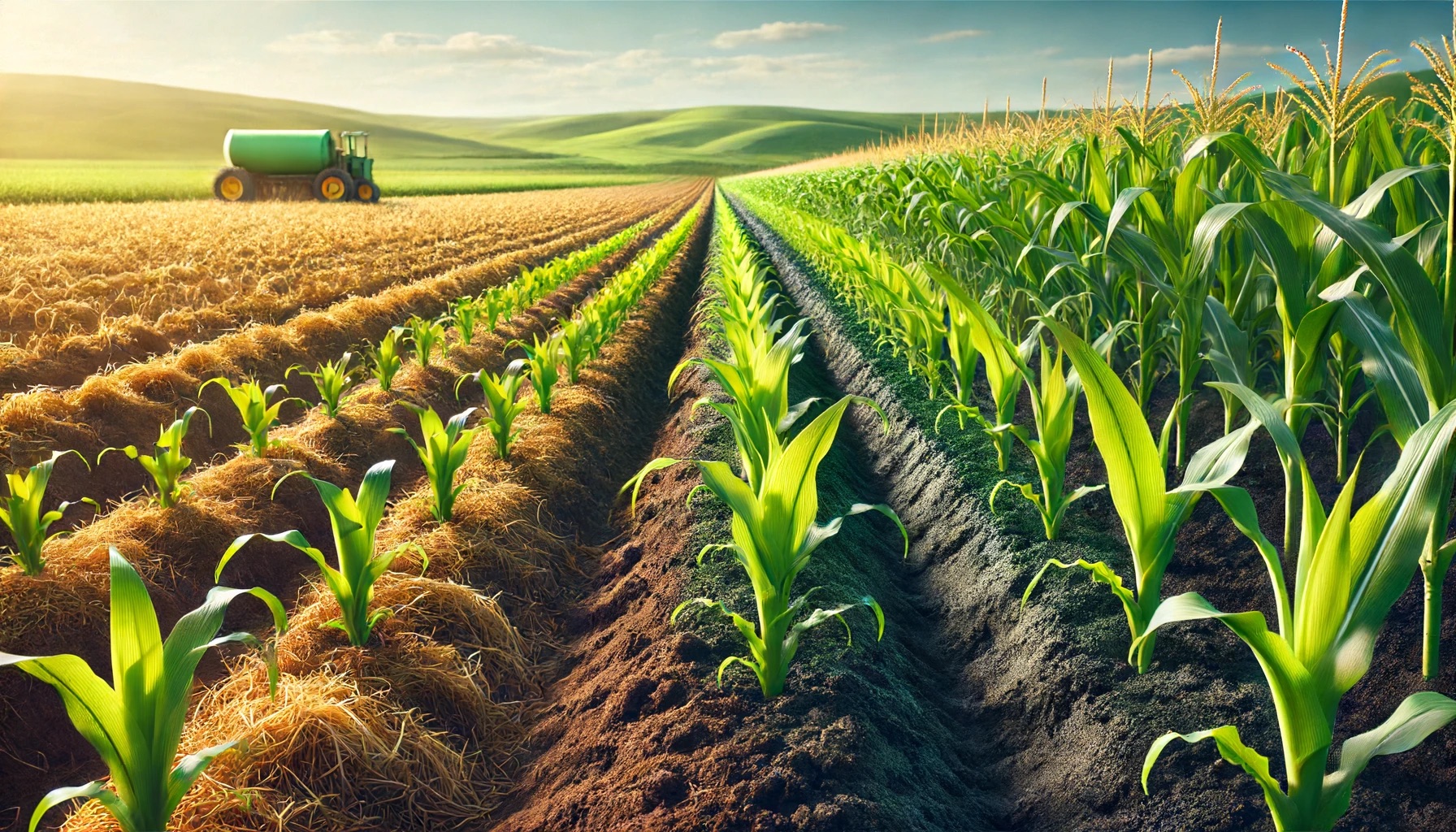
Jaffer, et al (2024) Sugarcane bagasse biocharBiochar is a carbon-rich material created from biomass decomposition in low-oxygen conditions. It has important applications in environmental remediation, soil improvement, agriculture, carbon sequestration, energy storage, and sustainable materials, promoting efficiency and reducing waste in various contexts while addressing climate change challenges. More boosts maize growth and yield in salt-affected soil by improving soil enzymatic activities. Journal of Environmental Management. https://doi.org/10.1016/j.jenvman.2024.121418
Soil salinization poses a major threat to agriculture, degrading soil quality and reducing crop yields. Researchers investigated whether sugarcane bagasse (SB) and its biochar (SBB) could improve soil health and maize growth under various salinity levels. The study assessed three application rates (0.5%, 1%, and 2%) of SB and SBB under three salinity conditions (1.66, 4, and 8 dS m−1), using a randomized block design.
The results indicated that SB and SBB both helped mitigate salinity effects, with 2% SBB showing the most promising outcomes. At this application rate, SBB significantly increased shoot length (up to 41.8%), root length (up to 39%), grain yield (up to 392.2%), and other growth parameters compared to untreated soil. Additionally, SBB reduced sodium content in maize roots and shoots and improved soil enzymatic activities, such as urease and phosphatases, which are critical for soil health.
Statistical analysis revealed positive correlations between soil enzymatic activities and plant growth metrics, while sodium levels were negatively correlated. A structural equation model showed that the type and amount of amendment significantly affected maize yield, explaining up to 95% of the variance in yield under different salinity levels.
Overall, the study concludes that applying 2% SBB is an effective strategy to enhance maize growth and yield by improving soil conditions in salt-affected areas. This approach not only aids in crop production but also offers a sustainable solution for managing agricultural waste and degraded soils.




Leave a Reply