
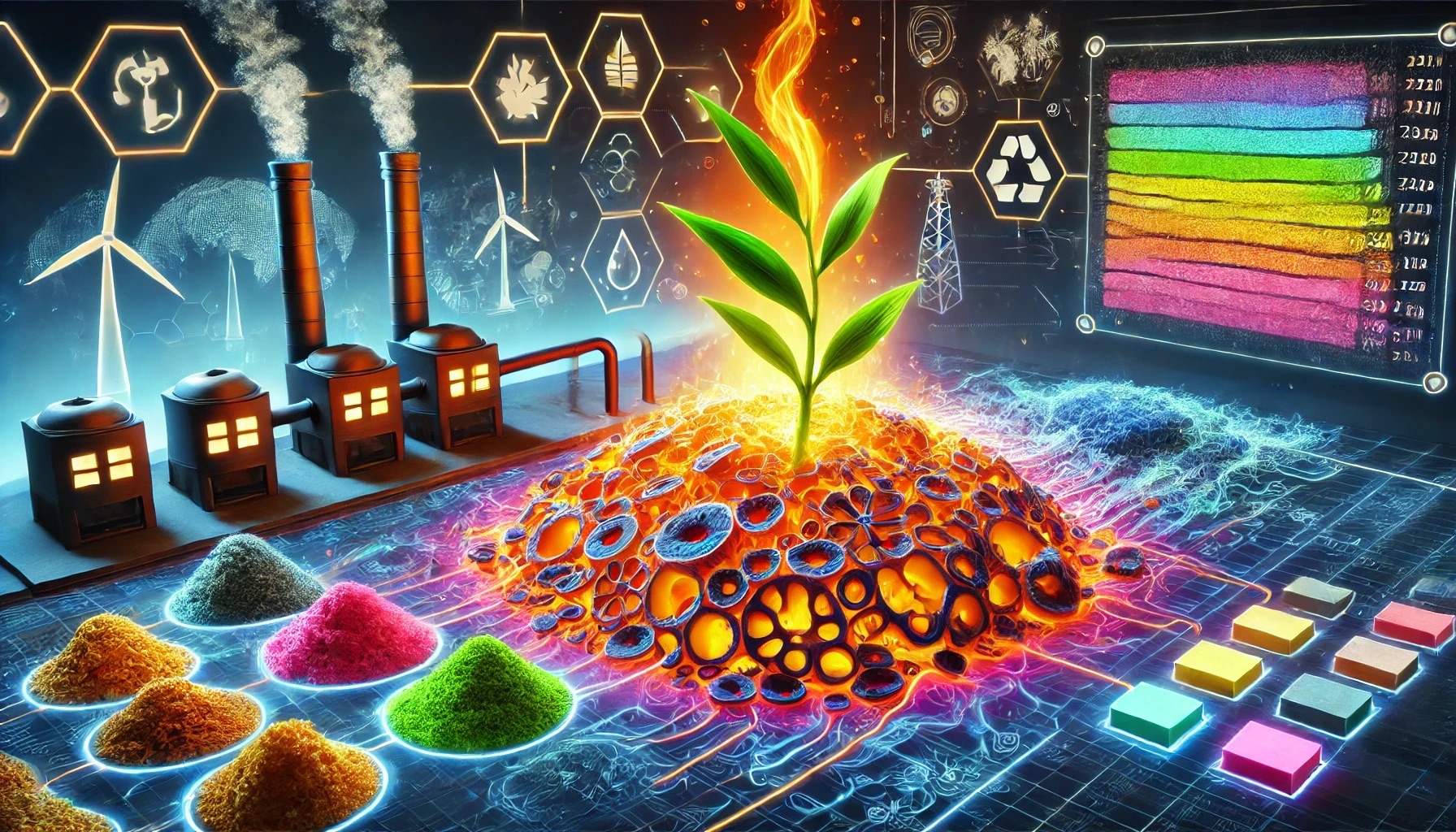

Biochar, a carbon-rich material derived from biomassBiomass is a complex biological organic or non-organic solid product derived from living or recently living organism and available naturally. Various types of wastes such as animal manure, waste paper, sludge and many industrial wastes are also treated as biomass because like natural biomass these More, holds significant promise in catalysis and adsorption processes due to its unique structure and properties. However, the complexity of biochar’s carbonization process has historically hindered the precise construction of its active sites, which are crucial for its effectiveness in various applications.
A recent study published in Bioresource Technology presents a novel approach to overcoming this challenge. The research introduces a reactive descriptor that integrates pyrolysisPyrolysis is a thermochemical process that converts waste biomass into bio-char, bio-oil, and pyro-gas. It offers significant advantages in waste valorization, turning low-value materials into economically valuable resources. Its versatility allows for tailored products based on operational conditions, presenting itself as a cost-effective and efficient More parameters and the intrinsic composition of biomass. By employing machine learning techniques and physical insights, the researchers developed a multidimensional fingerprint descriptor capable of accurately predicting active sites in biochar. The model demonstrated high predictive performance, with over 90% accuracy for C-C/C=C, C=O, and defect sites.
The study utilized SHapley Additive exPlanation (SHAP) analysis to highlight the importance of pyrolysis parameters and higher heating values in forming these active sites. Experimental validation confirmed the model’s predictive capabilities, underscoring its potential to streamline the screening process for biochar preparation.
This innovative approach simplifies the traditionally complex process of active site construction, paving the way for more efficient and accurate development of biochar. The proposed descriptors not only enhance the understanding of biochar’s active site formation but also offer a practical tool for optimizing its production. This advancement is expected to significantly contribute to the high-value utilization of biomass, with implications for environmental remediation, energy storage, and carbon capture.





Leave a Reply