


A recent study published in Separation and Purification Technology explores a novel approach for the degradation of tetracycline (TC) in wastewater using a biochar-supported FeCo-MOF derivative. The research, led by Zhaoxiang Ling and colleagues, addresses the significant challenge of antibiotic pollution in aquatic environments.
Key Findings
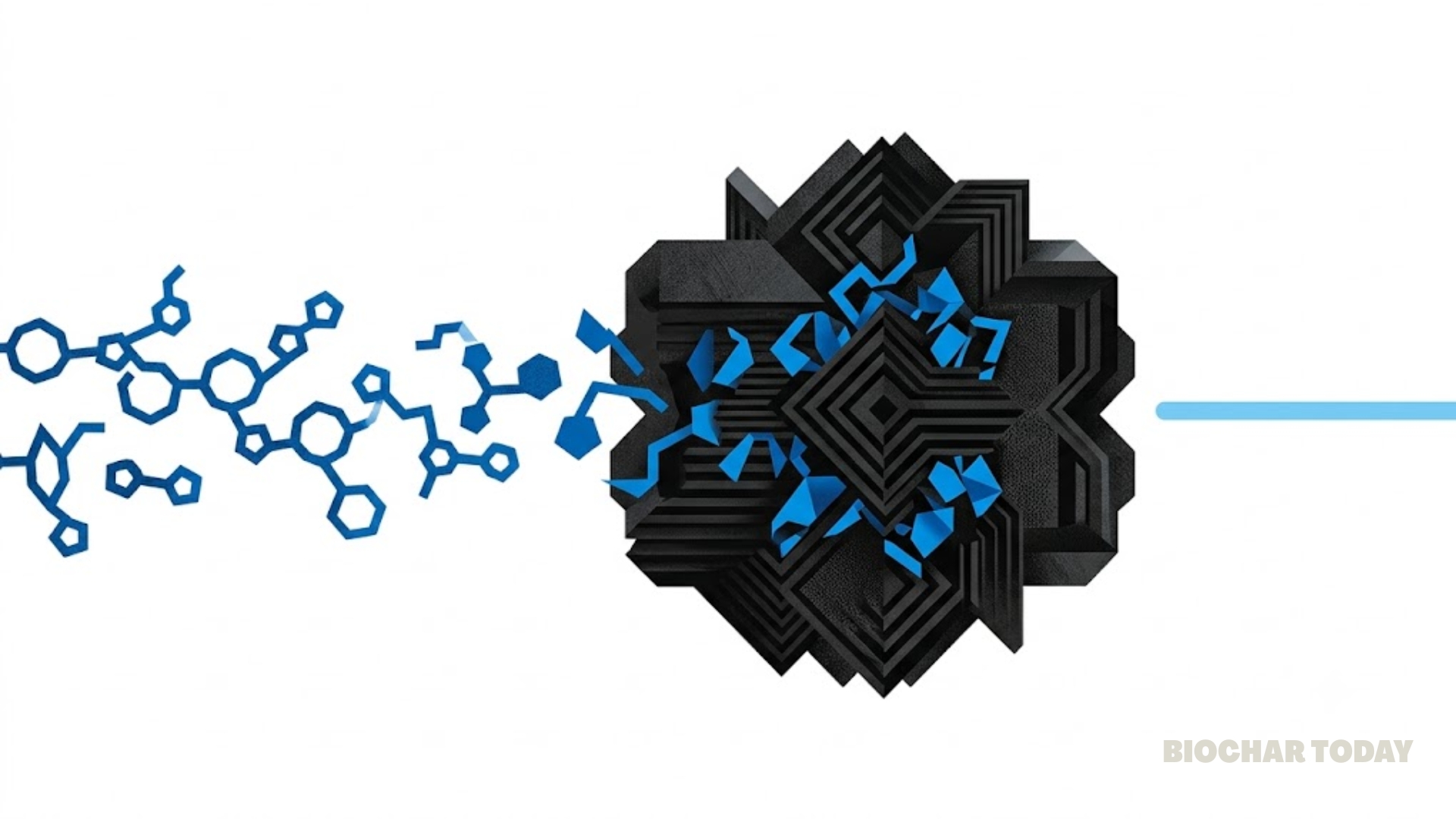
The study introduces the BC@CoFe composite, where biocharBiochar is a carbon-rich material created from biomass decomposition in low-oxygen conditions. It has important applications in environmental remediation, soil improvement, agriculture, carbon sequestration, energy storage, and sustainable materials, promoting efficiency and reducing waste in various contexts while addressing climate change challenges. More (BC) supports FeCo-MOF derivatives, mitigating common issues like agglomeration and structural collapse. This composite material was used to activate peroxydisulfate (PDS) in advanced oxidative processes (AOPs), achieving an impressive 97.7% degradation efficiency of TC within two hours. The BC@CoFe/PDS system demonstrated robust stability, maintaining a 73.23% degradation efficiency over 12 hours of continuous operation.
Mechanisms and Stability
Detailed analyses, including X-ray photoelectron spectroscopy (XPS) and density functional theory (DFT) calculations, revealed that the high catalytic performance is due to the synergistic interaction between Fe and Co within the composite. Reactive species such as singlet oxygen (^1O2), sulfate radicals (SO4•-), and hydroxyl radicals (·OH) played significant roles in the degradation process, with ^1O2 contributing the most.
Practical Applications
The study highlights the composite’s broad pHpH is a measure of how acidic or alkaline a substance is. A pH of 7 is neutral, while lower pH values indicate acidity and higher values indicate alkalinity. Biochars are normally alkaline and can influence soil pH, often increasing it, which can be beneficial More and temperature tolerance and resistance to background ion interference, suggesting its practical applicability in diverse water treatment scenarios. The reduced toxicity of the degradation products further underscores the environmental benefits of this approach.
Conclusion
The BC@CoFe composite offers a promising solution for efficient TC degradation in wastewater, combining high catalytic activity with environmental stability. This advancement opens new avenues for the development of sustainable and effective water treatment technologies.
For more details, access the full study here.



Leave a Reply