
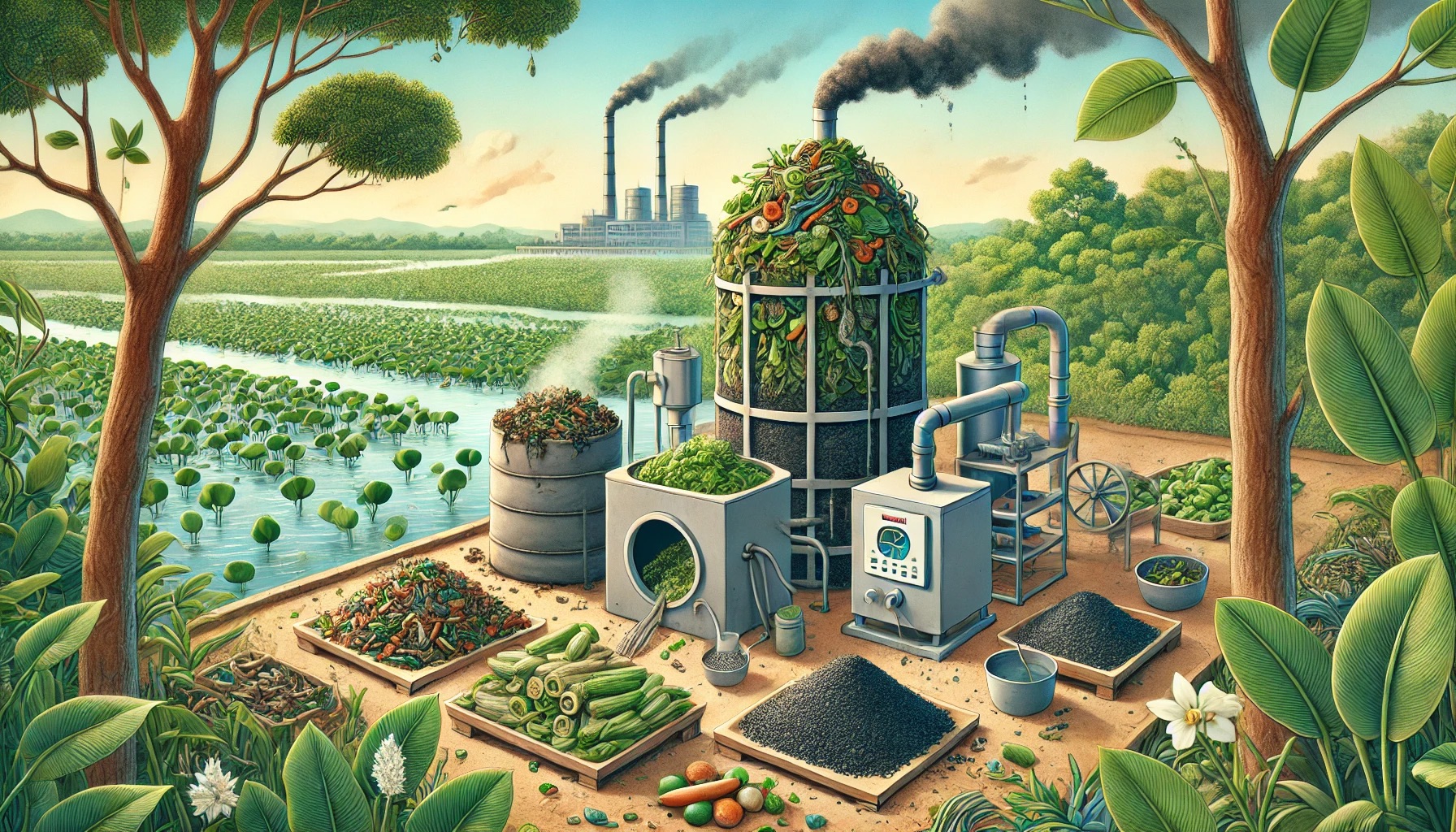
Dharnaik (2024) BIOCHAR PRODUCTION OF KITCHEN WASTE AND WATER HYACINTH BY LOW TEMPERATURE STEAM TORREFACTION. In book: Futuristic Trends in Construction Materials & Civil Engineering
The rise of industrialization and urbanization has led to a significant increase in waste generation, particularly food waste, resulting in environmental pollution. This issue is further compounded by water hyacinth, an invasive species that contributes to eutrophication in water bodies. A proposed solution to both problems is the production of biocharBiochar is a carbon-rich material created from biomass decomposition in low-oxygen conditions. It has important applications in environmental remediation, soil improvement, agriculture, carbon sequestration, energy storage, and sustainable materials, promoting efficiency and reducing waste in various contexts while addressing climate change challenges. More, a carbon-rich material produced through low-temperature steam torrefaction of kitchen waste and water hyacinth.
Biochar production involves heating organic matter at temperatures ranging from 200-300°C for 10-120 minutes in an oxygen-deprived environment. This process transforms waste into biochar, a material known for its ability to enhance soil quality, retain moisture, and sequester carbon.
The study tested different feedstockFeedstock refers to the raw organic material used to produce biochar. This can include a wide range of materials, such as wood chips, agricultural residues, and animal manure. More ratios of water hyacinth and kitchen waste to produce biochar. Key properties such as moisture content, volatile matterVolatile matter refers to the organic compounds that are released as gases during the pyrolysis process. These compounds can include methane, hydrogen, and carbon monoxide, which can be captured and used as fuel or further processed into other valuable products. More, ashAsh is the non-combustible inorganic residue that remains after organic matter, like wood or biomass, is completely burned. It consists mainly of minerals and is different from biochar, which is produced through incomplete combustion. Ash Ash is the residue that remains after the complete More content, and fixed carbon were analyzed. Results showed that biochar with higher water hyacinth content retained more water and exhibited higher fixed carbon, making it ideal for soil amendmentA soil amendment is any material added to the soil to enhance its physical or chemical properties, improving its suitability for plant growth. Biochar is considered a soil amendment as it can improve soil structure, water retention, nutrient availability, and microbial activity. More. Conversely, biochar from kitchen waste was better suited for fuel due to its higher volatile matter content.
This research highlights biochar’s potential as a sustainable waste management solution, reducing the environmental impact of waste while improving soil health. By adopting biochar production, we can address waste disposal issues, reduce the need for landfills, and promote environmentally friendly agricultural practices.



Leave a Reply