
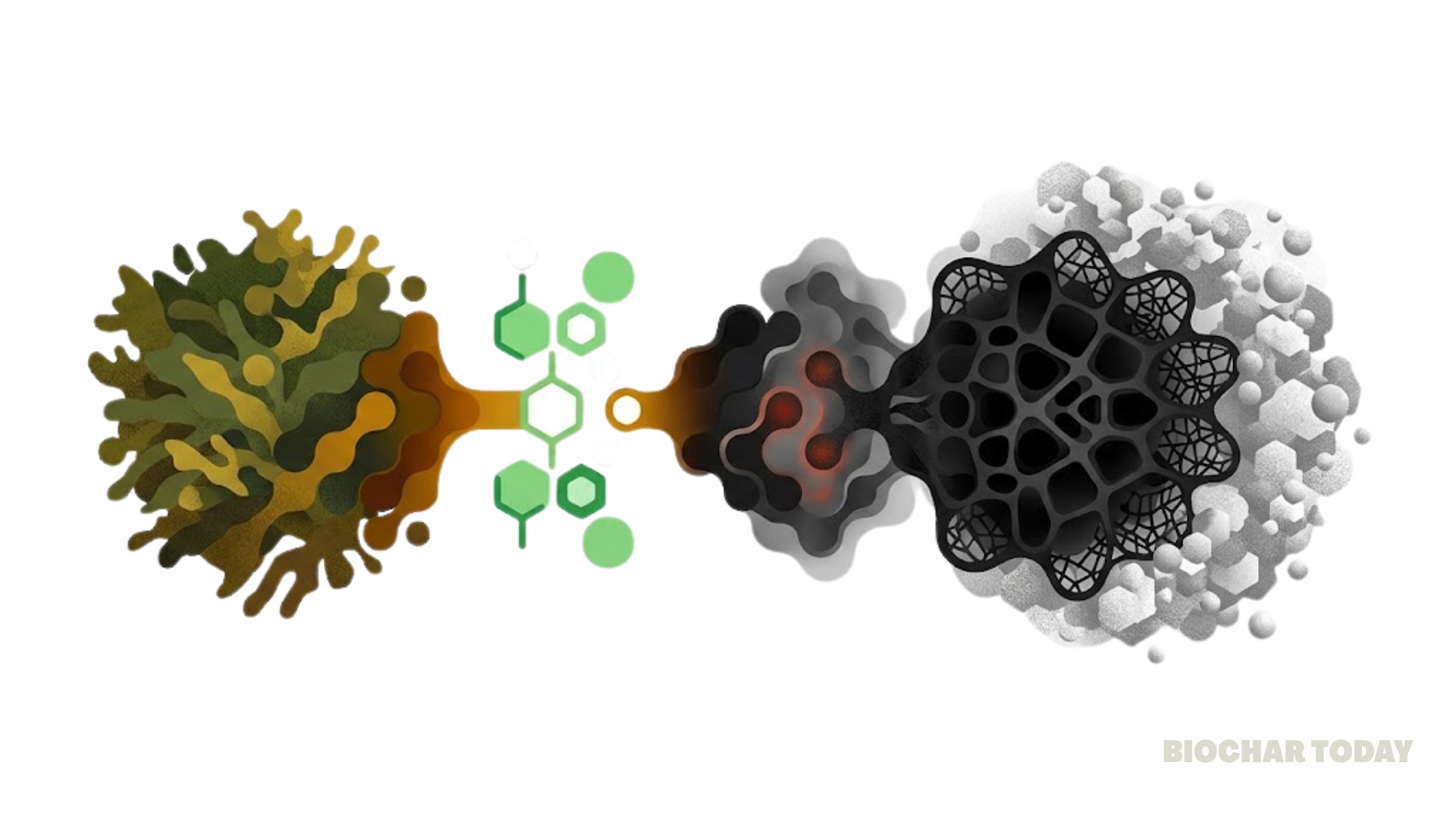
Prochnow, et al (2024) BiocharBiochar is a carbon-rich material created from biomass decomposition in low-oxygen conditions. It has important applications in environmental remediation, soil improvement, agriculture, carbon sequestration, energy storage, and sustainable materials, promoting efficiency and reducing waste in various contexts while addressing climate change challenges. More: From Laboratory to Industry Scale—An Overview of Scientific and Industrial Advances, Opportunities in the Brazilian Context, and Contributions to Sustainable Development. Processes. https://doi.org/10.3390/pr12051006
The transition from traditional waste management to sustainable practices is key to achieving the United Nations’ Sustainable Development Goals (SDGs). One promising approach is the production of biochar, a carbon-rich material derived from organic waste through processes like pyrolysisPyrolysis is a thermochemical process that converts waste biomass into bio-char, bio-oil, and pyro-gas. It offers significant advantages in waste valorization, turning low-value materials into economically valuable resources. Its versatility allows for tailored products based on operational conditions, presenting itself as a cost-effective and efficient More, hydrothermal carbonization, and gasificationGasification is a high-temperature, thermochemical process that converts carbon-based materials into a gaseous fuel called syngas and solid by-products. It takes place in an oxygen-deficient environment at temperatures typically above 750°C. Unlike combustion, which fully burns material to produce heat and carbon dioxide (CO2), gasification More. This article offers a comprehensive overview of biochar’s progress from research to industrial application, particularly focusing on its potential in Brazil.
Biochar’s unique properties, including high surface area and porosityPorosity of biochar is a key factor in its effectiveness as a soil amendment and its ability to retain water and nutrients. Biochar’s porosity is influenced by feedstock type and pyrolysis temperature, and it plays a crucial role in microbial activity and overall soil health. Biochar More, make it suitable for a range of environmental applications such as soil improvement, pollutant adsorptionBiochar has a remarkable ability to attract and hold onto pollutants, like heavy metals and organic chemicals. This makes it a valuable tool for cleaning up contaminated soil and water. More, and as a precursor for catalysts. This versatility has spurred significant scientific interest, resulting in numerous studies and patents aimed at optimizing production processes and expanding its applications.
Industrial interest in biochar is growing, with Europe seeing notable market expansion. Biochar production capacity increased significantly by the end of 2022, indicating strong market potential. The global biochar market is projected to continue its growth, highlighting the material’s economic viability.
In Brazil, the abundance of waste biomassBiomass is a complex biological organic or non-organic solid product derived from living or recently living organism and available naturally. Various types of wastes such as animal manure, waste paper, sludge and many industrial wastes are also treated as biomass because like natural biomass these More offers significant opportunities for biochar production. Utilizing agricultural residues, sewage sludge, and other organic wastes, Brazil can leverage biochar technology to address waste management challenges while contributing to a circular economy.
Furthermore, biochar production aligns with multiple SDGs. For instance, it can aid in water purification, addressing SDG 6 (Clean Water and Sanitation), by removing pollutants from water bodies. As biochar technology advances, it holds promise for integrating environmental sustainability with economic growth, positioning itself as a critical component of future waste management and sustainable development strategies.

Leave a Reply