
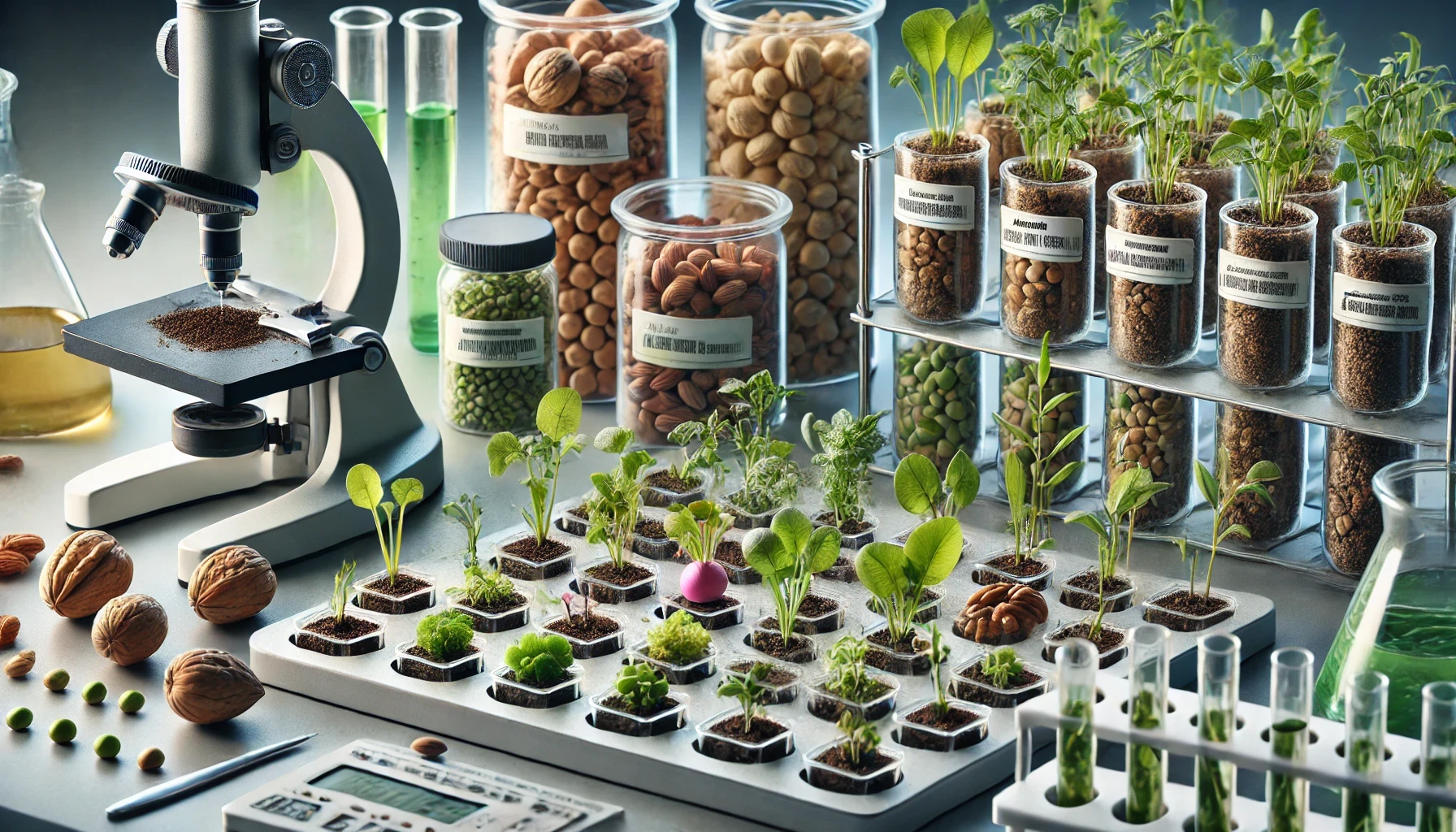
Zabaleta, et al (2024) Phytotoxicity Assessment of Agro-Industrial Waste and Its BiocharBiochar is a carbon-rich material created from biomass decomposition in low-oxygen conditions. It has important applications in environmental remediation, soil improvement, agriculture, carbon sequestration, energy storage, and sustainable materials, promoting efficiency and reducing waste in various contexts while addressing climate change challenges. More: Germination Bioassay in Four Horticultural Species. Agronomy. https://doi.org/10.3390/agronomy14112573
Biochar, a carbon-rich material produced by heating biomassBiomass is a complex biological organic or non-organic solid product derived from living or recently living organism and available naturally. Various types of wastes such as animal manure, waste paper, sludge and many industrial wastes are also treated as biomass because like natural biomass these More, shows promise for enhancing agricultural productivity and sustainability. A recent study examined biochar derived from six types of agro-industrial waste—almond, walnut, peanut, pistachio shells, asparagus spears, and brewer’s spent grains—to evaluate its phytotoxicity and effects on seed germination in green peas, lettuce, radish, and arugula. The findings underscore the potential of biochar to improve early-stage plant development.
The study compared the effects of both raw biowaste and biochar extracts on seed germination, growth, and vigor. Biochar consistently outperformed untreated biowaste in promoting seed health, as its production process helps neutralize potentially harmful compounds present in raw waste. Specifically, biochar from walnut and pistachio shells showed positive effects on seed vigor and root growth, while asparagus and almond waste demonstrated potential phytotoxicity due to high acidity and conductivity.
Overall, biochar’s basic properties, such as enhanced pHpH is a measure of how acidic or alkaline a substance is. A pH of 7 is neutral, while lower pH values indicate acidity and higher values indicate alkalinity. Biochars are normally alkaline and can influence soil pH, often increasing it, which can be beneficial More stability and nutrient retention, contributed to favorable germination outcomes. However, the results highlighted the importance of carefully selecting biomass sources and controlling pyrolysis conditionsThe conditions under which pyrolysis takes place, such as temperature, heating rate, and residence time, can significantly affect the properties of the biochar produced. More to avoid phytotoxicity and optimize biochar’s benefits. The research underscores biochar’s role in reducing agro-industrial waste while improving soil health and supporting sustainable agriculture practices. This innovative approach not only mitigates environmental waste challenges but also provides an effective soil amendmentA soil amendment is any material added to the soil to enhance its physical or chemical properties, improving its suitability for plant growth. Biochar is considered a soil amendment as it can improve soil structure, water retention, nutrient availability, and microbial activity. More option for enhancing crop productivity.




Leave a Reply