
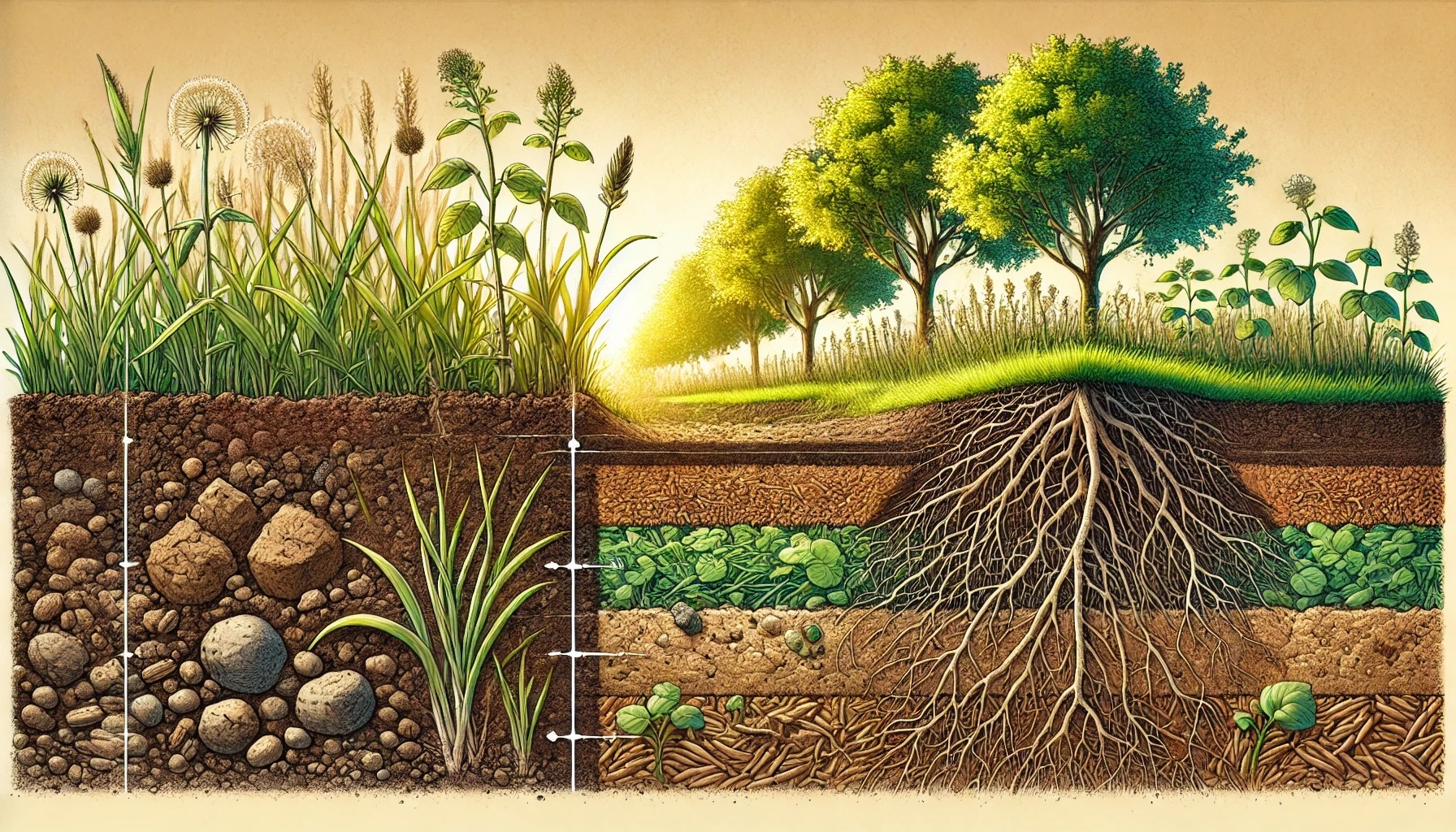
Yuan, et al (2025) BiocharBiochar is a carbon-rich material created from biomass decomposition in low-oxygen conditions. It has important applications in environmental remediation, soil improvement, agriculture, carbon sequestration, energy storage, and sustainable materials, promoting efficiency and reducing waste in various contexts while addressing climate change challenges. More effects on aggregation and carbon-nitrogen retention in different-sized aggregates of clay and loam soils: A meta-analysis. Soil and Tillage Research. https://doi.org/10.1016/j.still.2024.106365
A recent meta-analysis published in Soil and Tillage Research reveals how biochar improves soil aggregation and carbon-nitrogen retention in clay and loam soils. By analyzing data from 534 experiments across 100 studies, researchers found that biochar significantly enhances the stability and organic carbon content of soil aggregates—clusters of soil particles that improve soil structure and fertility.
Key findings show that clay soils respond more dramatically to biochar in terms of aggregation, while loam soils exhibit greater increases in organic carbon retention. Biochar reduces clay soil bulk density, fosters microbial growth, and enriches organic matter, leading to improved soil aggregation. In loam soils, biochar enhances macroaggregate formation, increasing soil stability and long-term carbon storage.
To optimize biochar’s benefits, long-term application (over three years) is crucial. Recommended rates differ by soil type: 10–20 t/ha for loam soils and 20–40 t/ha for clay soils. These rates ensure maximum carbon sequestration and aggregate stability.
Biochar’s porous nature also supports microbial habitats, enhances nutrient cycling, and promotes soil particle bonding. This makes it an effective tool for mitigating climate change by reducing atmospheric CO2 while improving soil health.
This study underscores biochar’s potential to tailor soil management strategies based on soil texture, offering sustainable solutions for agriculture and environmental conservation.



Leave a Reply