
Article Summary: Ning, et al. (2023) Enhanced degradation of ofloxacin by activation of peroxymonosulfate with biochar-FeVO4 under visible light assistance: The role of biocharBiochar is a carbon-rich material created from biomass decomposition in low-oxygen conditions. It has important applications in environmental remediation, soil improvement, agriculture, carbon sequestration, energy storage, and sustainable materials, promoting efficiency and reducing waste in various contexts while addressing climate change challenges. More in mediating charge transfer and mechanism insight. Applied Surface Science, In Press. https://doi.org/10.1016/j.apsusc.2023.159236
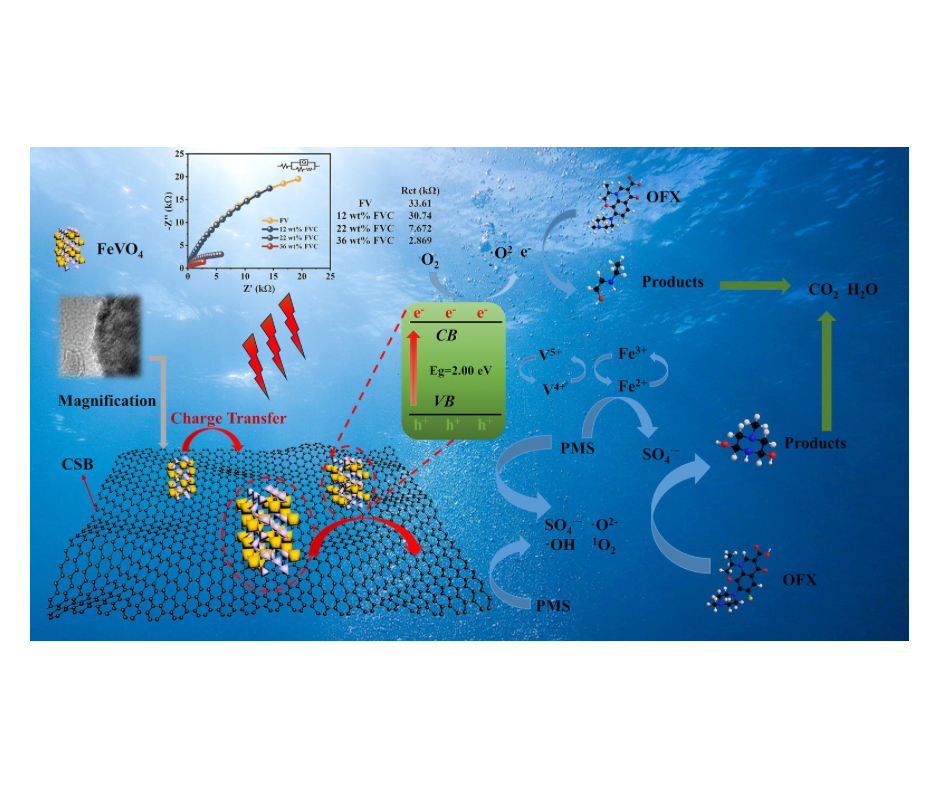
Researchers have developed a promising new photocatalyst for decomposing harmful antibiotics in wastewater. The key? Combining coconut shell biochar with iron vanadium oxide (FeVO4) nanoparticles, creating a powerful duo called FeVO4/coconut shell biochar composites (FVC).
This innovative material shines brighter than its individual components in degrading ofloxacin, a common antibiotic, under visible light. Biochar expands its light absorption range and acts as a charge transfer mediator, boosting its efficiency by nearly 65% compared to FeVO4 alone.
The team meticulously unraveled the degradation process, identifying key players like hydroxyl radicals, singlet oxygen, and superoxide radicals as the main culprits. Importantly, the FVC system remained stable and reusable, highlighting its potential for real-world applications.
This study showcases the remarkable potential of biochar in enhancing photocatalytic performance for environmental remediation. By harnessing the synergistic power of biochar and other materials, researchers are paving the way for cleaner water and a healthier planet.
Key takeaways:
- Biochar-enhanced photocatalyst FVC effectively degrades antibiotics under visible light.
- Synergistic effect between biochar and FeVO4 boosts efficiency by 65%.
- Hydroxyl radicals, singlet oxygen, and superoxide radicals identified as key degradation agents.
- FVC exhibits excellent stability and reusability, promising practical applications.



Leave a Reply