
Ruan & Wang (2024) Effects of biocharBiochar is a carbon-rich material created from biomass decomposition in low-oxygen conditions. It has important applications in environmental remediation, soil improvement, agriculture, carbon sequestration, energy storage, and sustainable materials, promoting efficiency and reducing waste in various contexts while addressing climate change challenges. More amendment on root growth and plant water status depend on maize genotypes. Agricultural Water Management, Vol. 293. https://doi.org/10.1016/j.agwat.2024.108688
Plants take up water through their roots, with root growth playing a crucial role in this process. Biochar, a charcoal-like material added to soil, is known to influence root growth and how much water plants can access. However, the exact mechanisms behind this are unclear.
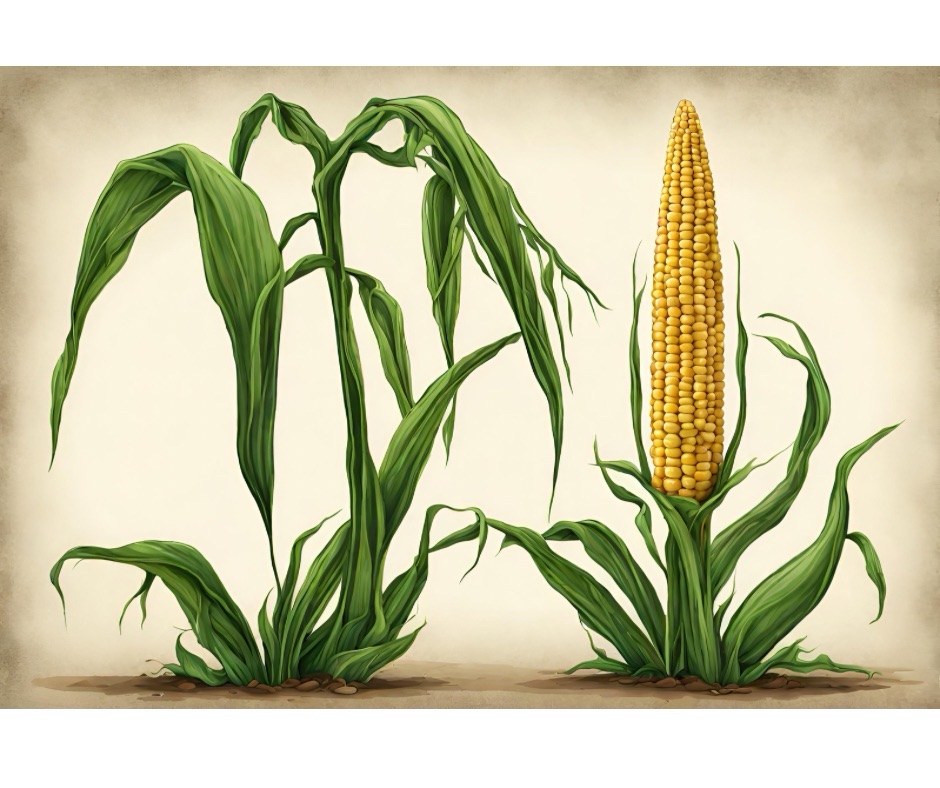
This study explored how biochar amendment affects root development and water uptake in two different maize (corn) varieties: KN5585, sensitive to changes in water availability, and Mo17, more tolerant of water stress. They compared root structure, internal properties, and water content in leaves under three different soil moisture levels, both with and without biochar.
The researchers found that biochar significantly increased potassium (K+) levels in the root sap of both maize varieties, while decreasing calcium (Ca2+) and sodium (Na+) levels. Interestingly, the water-sensitive KN5585 responded by raising the pHpH is a measure of how acidic or alkaline a substance is. A pH of 7 is neutral, while lower pH values indicate acidity and higher values indicate alkalinity. Biochars are normally alkaline and can influence soil pH, often increasing it, which can be beneficial More in the spaces between its root cells (apoplast) along with the increased K+. This change in pH led to fewer and shorter lateral roots, ultimately reducing the plant’s ability to take up water.
On the other hand, the more water-tolerant Mo17 variety showed no change in apoplastic pH or lateral root development with biochar amendment. Instead, the diameter of its water-transporting vessels (xylem) increased, allowing for more efficient water uptake and maintaining good water content in its leaves.
These findings reveal that biochar’s impact on root growth and water uptake in plants depends on their inherent tolerance to water stress. While it benefited the more tolerant Mo17, it actually hindered the water-sensitive KN5585. This highlights the importance of considering plant characteristics when using biochar for soil amendmentA soil amendment is any material added to the soil to enhance its physical or chemical properties, improving its suitability for plant growth. Biochar is considered a soil amendment as it can improve soil structure, water retention, nutrient availability, and microbial activity. More, especially in scenarios with varying water availability.
Future research could explore how to tailor biochar application or develop new biochar types that offer broader benefits for different plant varieties and soil conditions, promoting sustainable and productive agriculture.




Leave a Reply