
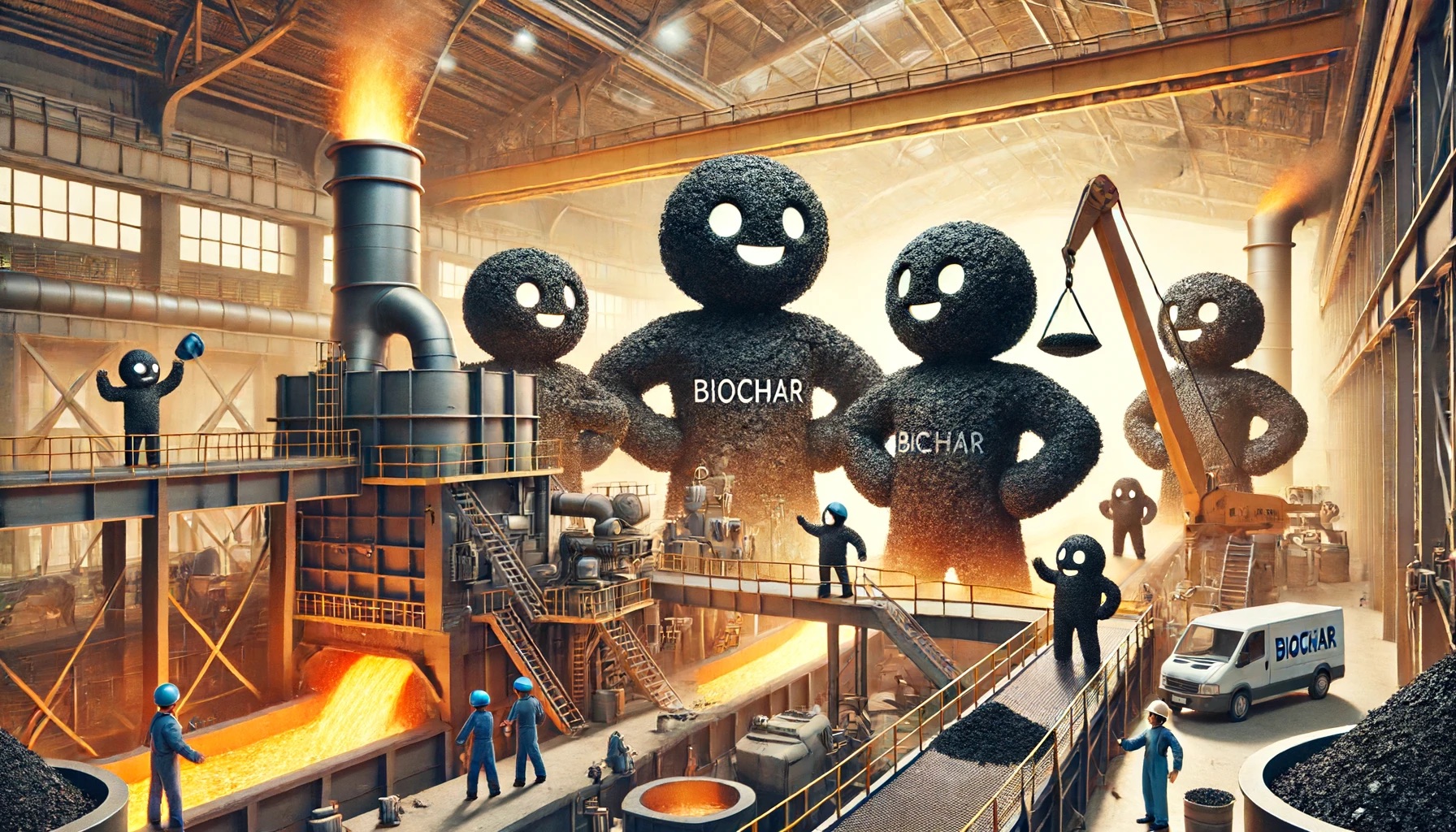
Domini, et al (2024) Potential and Environmental Benefits of BiocharBiochar is a carbon-rich material created from biomass decomposition in low-oxygen conditions. It has important applications in environmental remediation, soil improvement, agriculture, carbon sequestration, energy storage, and sustainable materials, promoting efficiency and reducing waste in various contexts while addressing climate change challenges. More Utilization for Coal/Coke Substitution in the Steel Industry. Energies. https://doi.org/10.3390/en17112759
The steel industry is one of the largest consumers of energy and emitters of CO2 globally. Efforts to reduce its environmental impact have led to the exploration of biochar as a substitute for traditional fossil fuels like coal and coke. Biochar, a carbon-rich material produced through the pyrolysisPyrolysis is a thermochemical process that converts waste biomass into bio-char, bio-oil, and pyro-gas. It offers significant advantages in waste valorization, turning low-value materials into economically valuable resources. Its versatility allows for tailored products based on operational conditions, presenting itself as a cost-effective and efficient More of organic matter, has shown promise in reducing the carbon footprint of steel production.
A recent review highlights the potential of biochar in various steelmaking processes, including blast furnaces (BF), basic oxygen furnaces (BOF), and electric arc furnaces (EAF). Biochar can be used as a partial replacement for coke in BF, where it can substitute up to 20% of the carbon without compromising the quality of the steel. This substitution can result in a CO2 emissions reduction of 19-28%. For EAFs, biochar can replace traditional carbon sources used for charge, injection, and foaming processes, with models suggesting up to 100% replacement in some scenarios.
The environmental benefits of biochar extend beyond CO2 reduction. Its use in steelmaking can improve slag foaming, reduce the need for other chemical additives, and enhance the overall efficiency of the production process. Biochar’s high reactivity and porous structure make it an effective alternative, though its variable properties depending on the source material and production process require careful optimization.
Studies have demonstrated that biochar from various biomassBiomass is a complex biological organic or non-organic solid product derived from living or recently living organism and available naturally. Various types of wastes such as animal manure, waste paper, sludge and many industrial wastes are also treated as biomass because like natural biomass these More sources, such as wood residues, agricultural waste, and sawdust, can be tailored for specific metallurgical applications. For example, biochar derived from coconut shells has shown high suitability for BF use, while biochar from sawdust and wood chips has been effective in sintering processes.
Overall, the integration of biochar into steel production represents a significant step towards more sustainable manufacturing practices. While further research and development are needed to optimize its use and ensure economic viability, biochar offers a promising solution to the environmental challenges facing the steel industry.




Leave a Reply